

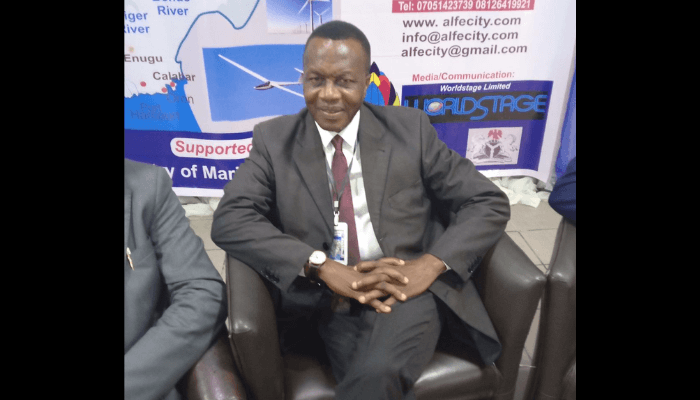
Lagos: Mr Soji Adeleye, Chief Executive Officer of Alfe City Institution, has said the blue economy has the potential to generate over $1.5 trillion for the nation’s Gross Domestic Product (GDP), up from its current $450 billion, if fully developed and integrated into national planning.
He made this assertion at the Citizens and Stakeholders’ Engagement Forum on the practical implementation of the National Policy on Marine and Blue Economy, held in Lagos on Saturday.
Adeleye called for the establishment of the Nigerian Blue Economy Commission (NBEC), expressing that this would be a modern autonomous entity to provide oversight, coherence, and drive policy implementation in the sector.
The Federal Ministry of Marine and Blue Economy organised the forum.

He noted that a bill to establish the commission had been introduced in the National Assembly and urged the Federal Government to push for its urgent passage.
“This commission must be research-driven, technology-savvy, and financially empowered to serve as the institutional anchor of Nigeria’s blue economy,” he stated.
Highlighting global examples, Adeleye mentioned Seychelles, Norway, Morocco, Gambia, and Portugal as countries that have successfully leveraged the blue economy through innovation, inclusion, and sustainability.
He said that the blue economy offers Nigeria a unique and holistic solution to address key economic challenges such as unemployment, infrastructure deficit, and lack of diversified growth centres.
“This is a generational opportunity for Nigeria to transform its economic landscape and create a future that young people across the country can be proud of,” he said.
Adeleye outlined how various segments of the blue economy could significantly contribute to the country’s economic growth.
He identified the various components of the blue economy that could contribute to the GDP if well explored.
According to him, they include Maritime Trade and Port Logistics, which generate between $150 and $200 billion, and Integrated Transport Infrastructure, which contributes up to $180 billion.
He also mentioned Special Economic Zones and Industrial Hubs ($350 billion); Offshore Energy and Marine Resources ($250 billion); Services, Employment, and Blue-Tech ($120 billion); and AfCFTA-enabled Regional Trade ($150 billion).
“This projection hinges on speed, scale, coordination, and policy discipline, a Marshall Plan style transformation with Nigerian ingenuity at the helm,” he said.
Adeleye, a strong advocate of the blue economy, called for a shift in focus from general marine issues to the broader concept of the “blue economy,” which he described as symbolic of Nigeria’s sustainable development ambitions.
He proposed the development of 10 new seaports integrated with transport corridors and industrial zones to serve as economic growth centres.
He said that Nigeria’s 853-kilometre coastline remained vastly underutilised, while the existing ports were overburdened and outpaced by regional competitors.
“The proposed ports would enhance Nigeria’s cargo handling capacity, attract regional transhipment business currently going to ports like Lomé and Tema, enable value-added exports, create jobs, and boost logistics efficiency under the AfCFTA framework,” he said.