

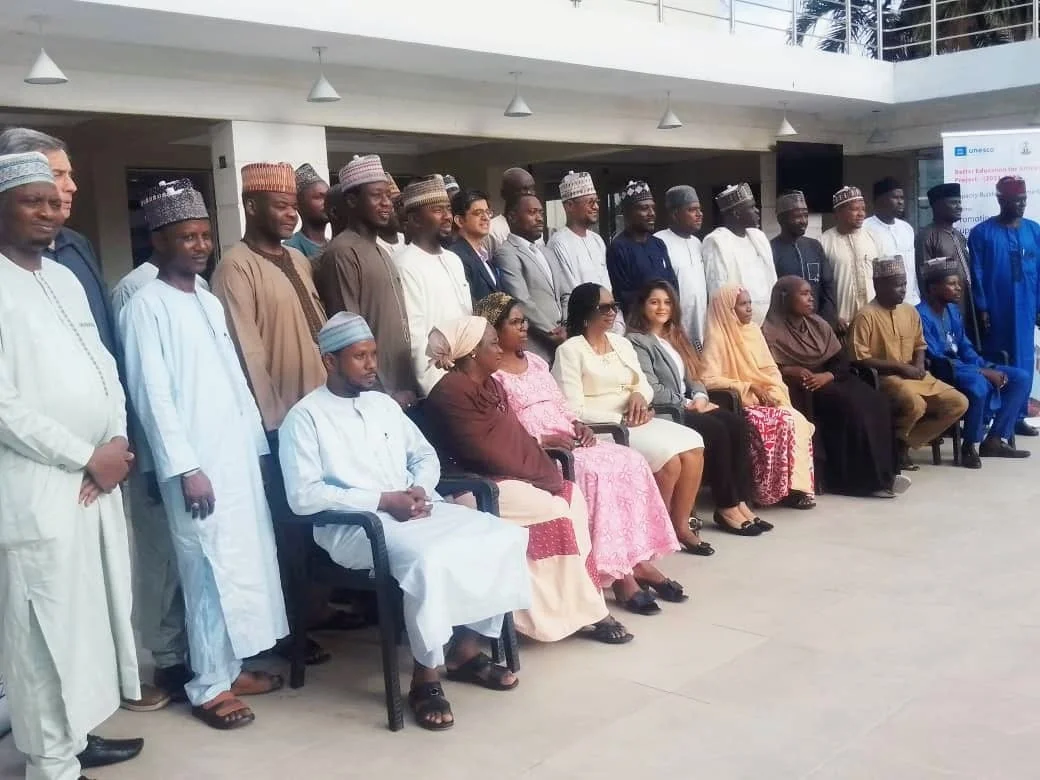
Kano (Nigeria): The Federal Government states that the ongoing reforms in Technical and Vocational Education and Training (TVET) have made significant progress, with more than one million Nigerians already enrolled in Master’s 6 and 12 programmes.
The programme, organised in collaboration with UNESCO and supported by the Government of the Republic of Korea, is designed to build the capacity of TVET managers, leaders, and decision-makers to align technical education with labour market needs.
Dr Muyibat Olodo, Director of Technology and Science Education at the Federal Ministry of Education, stated this in Kano on Tuesday at a capacity-building workshop for TVET stakeholders under the Better Education for Africa’s Rise (BEAR) III Project.
Represented by Deputy Director Mrs Stella Uhuegbu of the ministry, Olodo stated that verification of the learners was ongoing. At the same time, over 15,000 students were expected to resume this weekend at Federal Technical Colleges across the country.
She explained that the reforms were part of the government’s broader agenda to revitalise TVET, equip young Nigerians with relevant skills, and align training programmes with labour market demands.

She said the workshop was not just another training, but “a strategic intervention to equip key stakeholders with the skills necessary to effectively implement the BEAR III Project and advance Nigeria’s TVET reform agenda.”
Olodo disclosed that the current reforms had already recorded encouraging results, with over one million Nigerians enrolled for Master’s 6 and 12 programmes, while verification of learners was ongoing.
“The 10-week online training you have completed has broadened your horizon, and the practical skills you will gain from this in-person workshop will help produce a workforce that is not only competent but also globally competitive,” she said.
The director urged participants to show commitment and fully engage in the programme to ensure its success.
She added that their active participation would contribute to building a more robust, responsive, and globally relevant TVET system for Nigeria.
She commended the support of UNESCO and the Republic of Korea for the BEAR III Project, describing it as a strategic intervention to strengthen capacity in Nigeria’s TVET sector.
Earlier, UNESCO Representative to Nigeria and Head of the Abuja Office, Mr Mendy Albert, said the initiative aimed to strengthen the strategic planning capacities of TVET managers, leaders, and decision-makers across Nigeria.
Represented by Mr Manish Josh, BEAR III Regional Coordinator, Albert stated that TVET remained a national priority in Nigeria due to its role in equipping young people with employable skills and creating sustainable pathways for job creation and self-employment.
“The objectives of this programme include strengthening strategic planning, aligning TVET programmes with labour market needs, and supporting institutions to develop and refine plans that promote quality and relevance in training,” Albert said.
He urged the participants, drawn from federal and state education agencies, technical institutions, and the private sector, to maximise the opportunity and share the knowledge gained with their colleagues and institutions.
Prof. Mohammad Walare, one of the participants who spoke to journalists, commended the Federal Government and development partners for the invaluable opportunity.
They also pledged to share their knowledge with others to benefit.