

Saudi Arabia did not target Nigeria. Due to poor planning, a weak naira, and two years of underused slots, Nigerian Muslims lost nearly 30,000 pilgrimage seats
TheDigger Intelligence Unit
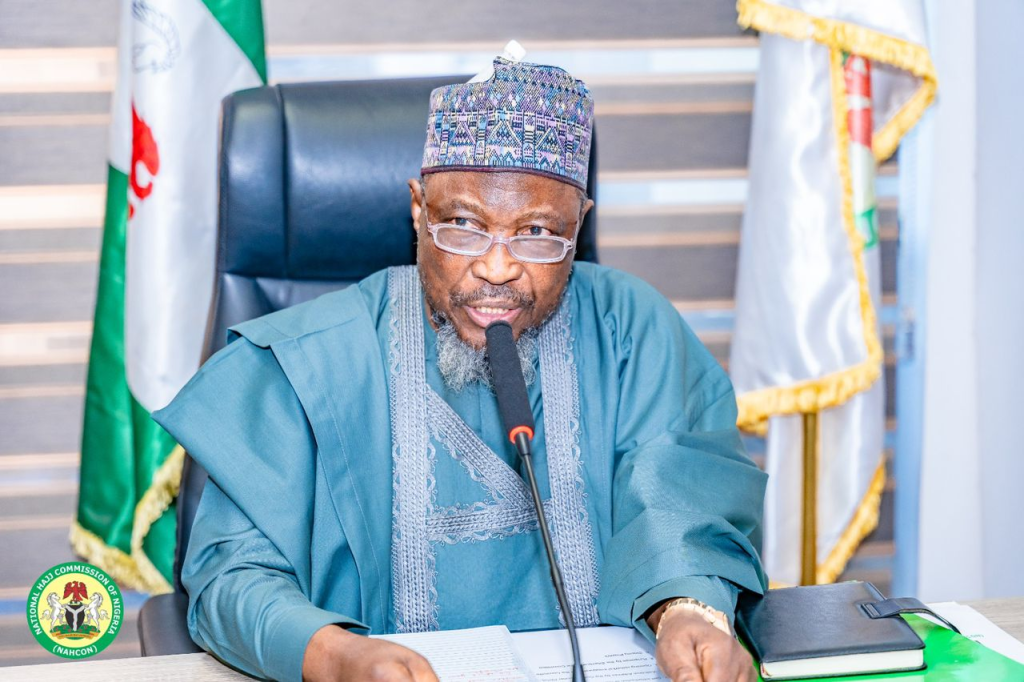
NAHCON Chairman Amb. Ismail Yusuf said Monday the 2026 Hajj quota cut was “a global adjustment, not targeted at Nigeria.” While meant to calm nerves, the data suggests a more troubling story—one that starts in Abuja, TheDiggerNews can authoritatively report.

This is how the Nigerian government’s decisions and actions led to a major loss of Hajj slots—a case study in how self-inflicted missteps caused a national setback.
The Number First
Saudi Arabia reduced Nigeria’s allocation for the 2026 Hajj to 66,910 slots on the NUSUK Masar portal, down from the previously allocated 95,000. That is a cut of 28,090 slots — nearly 30 per cent of Nigeria’s entitlement, gone.
Of the remaining 66,910 slots, 51,513 are designated for state pilgrims and officials, while 15,397 are reserved for licensed tour operators. And now, following further administrative complications around data uploads, NAHCON Chairman Yusuf says the working figure for state pilgrims has been tightened further still to just 40,250.
For context, Nigeria ranks fifth globally in Hajj allocations, behind Indonesia, Pakistan, India and Bangladesh, and is the top African participant, ahead of Algeria, Egypt and Sudan. The scale of what has been lost is therefore significant — not just numerically, but in terms of Nigeria’s standing as Africa’s premier Hajj-sending nation.
Why Saudi Arabia Cut The Quota
To understand why the quota was cut, look beyond the “global adjustment” framing. NAHCON provided clear evidence: Nigeria failed to fully utilise its allotted quota during the 2024 and 2025 Hajj operations, which led to the reduction.
NAHCON’s Commissioner of Operations, Anofiu Elegushi, explained that the reduction follows Nigeria’s underutilisation of its 2025 Hajj quota, as fewer than 60,000 pilgrims took up the 95,000 allocated slots. That results in a utilisation rate of barely 63 per cent. Saudi Arabia, which manages one of the world’s most complex annual logistics operations, responded directly by reassigning the unused capacity.
Elegushi added that officials will review and adjust future allocations to each state based on how well they utilise their quotas in 2025, so the pain is not over. States that send fewer pilgrims than their allocated quota require will face further internal cuts within the already-reduced national quota.
TheDiggerNews findings reveals that Nigeria maintained the previous slot of 95,000 for three years before underutilising it, which triggered the reduction. Saudi Arabia exercised patience. Nigeria exhausted its time.
The Root Cause: A Naira In Freefall
Why did Nigeria send fewer than 60,000 pilgrims when it had 95,000 slots? Economics drove this outcome.
The Tinubu administration announced that for 2025, the government would no longer subsidise Hajj payments for pilgrims, ending the long-standing concessionary exchange rate offered by the Central Bank of Nigeria. With the naira at N1,650 to a dollar and the standard Hajj fare at approximately $6,000, the cost for each pilgrim could rise to N10 million.
Millions of Nigerian Muslims planned and saved for pilgrimage under a subsidised system; this change dealt them a devastating blow. As the naira slid against the dollar, many Nigerians struggled to afford pilgrimage costs.
The 2025 Hajj cost crisis did not emerge overnight. In 2024, the Hajj Commission pegged fees at N4.9 million per pilgrim in December, when the naira traded at N897 to the dollar — a rate that soon collapsed. State governments across the country then launched emergency subsidies as pilgrims scrambled to cover the difference. The Nigerian government earmarked at least N100 billion for the 2024 pilgrimage — a staggering public expenditure that still fell short of the quota.
By 2025, the lack of a subsidy safety net and fares approaching N10 million per person inevitably forced tens of thousands of intending pilgrims to stay home; they simply could not afford to go.
Nigeria Not Alone — But In A Special Category
Here is where Ambassador Yusuf’s “global adjustment” framing contains a grain of truth — but only a grain. Saudi Arabia suspended the issue of short-term visas for 14 countries, including Nigeria, India, Pakistan, Bangladesh, Egypt, Indonesia, Iraq, Jordan, Algeria, Sudan, Ethiopia, Tunisia, Yemen, and Morocco, during the 2025 Hajj season. The pressure on pilgrimage management is genuinely global.
But a critical distinction exists. Other countries facing high costs chose different paths. Pakistan reduced the price of the state-run Hajj program and debuted a flexible payment system. Bangladesh, which also struggled with costs, at least tried to fill its quota through creative financing. Nigeria, by contrast, removed its subsidy entirely at the wrong time—and paid for it with empty seats that Saudi Arabia then reassigned.
The Administrative Failure On Top Of The Economic Failure
The economic crisis explains why pilgrims could not afford to go. But a second, avoidable layer of failure compounded the problem: administrative chaos prevailed.
NAHCON confirmed that new state allocations will now depend on how many pilgrims each state successfully ferries in 2025 — a performance-based system that punishes states which underperform regardless of the reason. Some states that struggle to fill their slots due to affordability issues will now receive fewer slots in 2026, compounding the problem.
Chairman Yusuf’s meeting on Monday revealed that uploaded data exceeded the approved figure — meaning states tried to register more pilgrims than their quota allows, even as the overall national quota shrank. He directed states to urgently reconcile records and withdraw excess entries, warning of administrative bottlenecks if they do not resolve the issue before the Saudi visa deadline on 1st Shawwal.
The Cost Correction That Came Too Late
To its credit, the government has now reversed course on the affordability crisis. After President Tinubu directed an immediate review of 2026 Hajj fares, Vice President Kashim Shettima instructed NAHCON to produce new, reduced fares within two days. He cited the continued appreciation of the naira against the dollar to justify passing savings to pilgrims.
This cost correction is certainly welcome. However, it comes only after significant damage. Now, Nigeria must prove it can fill its quota before it is restored—Saudi Arabia’s system is clear: perform or lose.
The Bottom Line
Nigeria’s 2026 Hajj quota crisis illustrates what happens when a government withdraws crucial financial support without an alternative, amid historic currency instability. Millions of Muslims, waiting for their religious obligation, are now affected by these domestic policy failures. Saudi Arabia did not target Nigeria—Nigeria’s own choices invited the crisis.
The result: nearly 30,000 seats will remain empty in 2025. Authorities will reduce the quota by 30 per cent for 2026. The NAHCON chairman now urges states to inform the public that authorities did not single out Nigeria.
In the end, Nigeria’s crisis is self-inflicted, not imposed from outside.