He electrified the crowd, but behind the numbers and the rhetoric lies a troubling question: Can Peter Obi deliver on promises his own record leaves unfunded? KEHINDEADEGOKE writes.
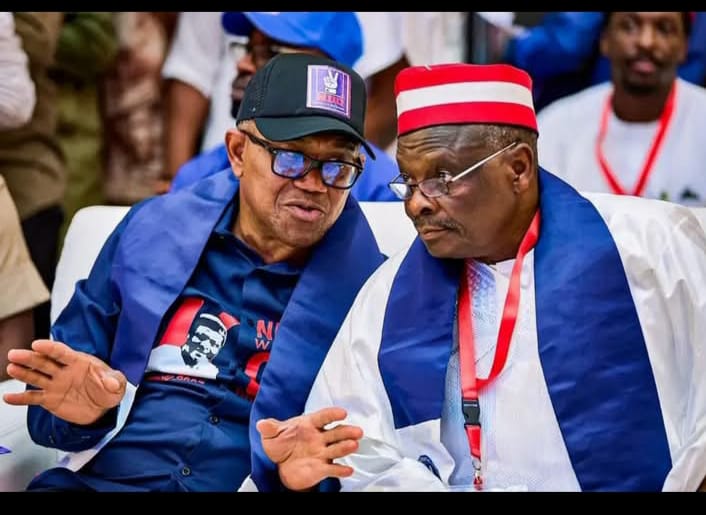
Peter Obi arrived at the Nigeria Democratic Congress‘s special convention in Abuja on Saturday, May 30, 2026, clad in his most familiar garment — the language of numbers, urgency, and national rebirth. He spoke with the measured cadence of a man who had studied Nigeria’s wounds long enough to catalogue them fluently. The crowd responded. The internet buzzed. The Obidient machinery reactivated.
He spoke with the measured cadence of a man who had studied Nigeria’s wounds long enough to catalogue them fluently. The crowd responded. The internet buzzed. The Obidient machinery reactivated.
But when the applause fades, and the speech is laid flat on the dissection table, what remains is a document that is more diagnostic than prescription — rhetorically gripping, analytically selective, and fiscally hollow. It is, at most, a compelling campaign manifesto. At its most honest, it is a set of promises from a man whose gubernatorial record raises uncomfortable questions about whether he has ever truly delivered at scale.

This is that honest reading.
The Two-Tier Economy He Refused To See Whole
In the fourth paragraph of his address, Obi declares, “Businesses are struggling, communities are suffering.” It is a line designed to land — and it does, because it contains enough truth to pass without scrutiny in an applause-heavy hall.
But Nigeria in 2026 is not a monolith of suffering. It is a brutally stratified economy in which tier-one financial institutions are declaring record profits, paying dividends, and expanding their balance sheets — even as the SME layer that employs the overwhelming majority of Nigeria’s private-sector workforce suffocates under energy costs, naira volatility, and collapsed purchasing power.
Fidelity Bank, in which Obi holds a substantial and publicly known investment interest, is among the institutions that have rewarded shareholders in recent times. So have several of its peers. This is not a trivial detail. A man who stood before Nigeria and painted a picture of universal business suffering — while sitting on the equity of institutions that are prospering in that same environment — has an obligation to acknowledge the distinction, or at a minimum to declare his conflict of interest.
He did neither. The omission is not accidental. It is convenient.
The Achievements He Buried In Silence
There is a particular brand of intellectual dishonesty that operates not through falsehood but through omission. Peter Obi deployed it masterfully on Saturday.
In an address that touched on security, healthcare, education, hunger, electricity, unemployment, corruption, business and economy, the rule of law, and democracy, Obi found no space — not one sentence — to acknowledge any measurable achievement of the administration he seeks to replace.
This is not a defence of President Tinubu. It is an observation about analytical honesty. The removal of the fuel subsidy, the restructuring of NNPC Limited, and the unification of Nigeria’s multiple exchange rates — however painful their consequences — were structural corrections long overdue. Federal revenue has improved. Certain infrastructure corridors have recorded progress. These are contestable claims, but they are not invisible ones.
A candidate who brands himself as data-driven and evidence-based, who peppers his speech with Global Hunger Index rankings and terrorism assessment scores, but who finds no data point that reflects any government achievement in three years, is not doing analysis. He is doing opposition theatre. And opposition theatre, however entertaining, is not governance.
The Unity Sermon From A Man Who Ran The Most Tribal Major-Party Campaign In Recent Memory
Perhaps the most arresting section of Obi’s speech is his passionate appeal for national unity. “Nigeria cannot advance while fragmented by ethnic, religious, regional, or narrow political divides,” he declared, invoking Will Durant on civilisational self-destruction for philosophical weight.
It is a beautiful passage. It is also delivered by a man who, in 2023, ran a presidential campaign that his own critics — including several from outside the APC establishment — described as the most ethnically concentrated major-party operation in recent Nigerian electoral history.
The facts of record are these: Obi’s campaign structure was dominated overwhelmingly by Igbo operatives. Reports — widely circulated and never conclusively rebutted — indicated that his campaign coordinators in states including Sokoto and Lagos were of Igbo extraction. The “Yes Daddy” phenomenon, in which campaign messaging carried unmistakable ethnic and religious undertones, became a flashpoint of national conversation. His 2023 electoral support was geographically concentrated in the South-East to a degree that no serious psephologist disputes.
None of this disqualifies Peter Obi from the presidency. None of it makes him a bigot. But a candidate who opens a new campaign with a unity sermon, without any acknowledgement of — let alone reckoning with — the ethnic optics of his last outing, is asking Nigerians to have very short memories. The NDC-Kwankwaso alliance being constructed may represent a genuine course correction. But Obi did not say so. He simply preached unity as though 2023 did not happen.
That is not healing. That is erasure.
The ₦54 Trillion Question He Never Answered
Here is the most consequential failure of Saturday’s speech, and the one that should most concern any serious Nigerian voter.
Peter Obi promised, within four years, to: double national health insurance coverage; raise the healthcare budget to a minimum of 10% of GDP from its current sub-5% level; establish a fully functional primary healthcare centre in all 8,809 wards nationwide; ensure at least 50% of Nigeria’s 30,000 PHCs are operational; deliver a minimum 10,000 additional megawatts of electricity; aggressively fund MSMEs through tax incentives and special interest rates; and build new schools, train teachers, and invest heavily in vocational infrastructure.
In the same speech, he pledged to reduce corruption and cut governance costs.
What he did not do — in a single sentence, paragraph, or aside — was explain where the money comes from.
Nigeria’s 2025 federal budget was approximately ₦54 trillion, carrying a deficit exceeding ₦13 trillion. Debt service consumed nearly 30% of revenue. The fiscal space for Obi’s agenda, as enumerated, does not exist under the current revenue architecture without a radical transformation of Nigeria’s tax base, borrowing framework, or both.
This is not a technocratic complaint. This is the fundamental question of governance. Healthcare at 10% of GDP, electricity expansion, ward-level PHC construction, MSME financing, school investment — these are not rhetorical commitments. They carry price tags. Enormous ones. And a man who built his entire political brand on financial prudence, who made “saving Anambra’s money” the centrepiece of his gubernatorial legacy, delivered an acceptance speech in 2026 with no revenue mobilisation strategy, no borrowing philosophy, no divestment plan, and no fiscal framework of any kind.
It is the equivalent of an architect presenting blueprints for a skyscraper with no foundation drawings.
What Anambra Remembers -And then there is the record
Peter Obi served as governor of Anambra State for 8 years from 2006 to 2014. He is rightly credited with financial discipline: he cleared debts, saved funds, and handed over a state in better fiscal health than he met it. That is a genuine achievement, and it deserves acknowledgement.
But consider what those eight years did not produce. Anambra’s permanent Government House — a basic symbol of institutional permanence — was not built during Obi’s tenure. It took Governor Charles Soludo, inheriting a state that Obi had governed for eight years and his successor Willie Obiano for another eight, to finally construct a befitting seat of government after 32 years of Anambra’s existence as a state. A man who now promises hospitals in every one of Nigeria’s 8,809 wards could not, in eight years, build a Government House for his own state.
The questions around Hero Beer — the beverage company developed with what critics alleged was state financial facilitation — and the placement of state funds in financial institutions with which Obi had personal relationships have never been conclusively answered in the public domain. They were raised in 2023. They were not resolved. They remain.
Frugality is a virtue. But frugality that manifests as institutional inertia — saving money while infrastructure, including the permanent government house, stands unbuilt, and state resources find their way into ventures of personal adjacency — is not fiscal discipline. It is a different thing entirely.
Antecedents matter. And Obi’s antecedents, examined honestly, do not fully support the scale of what he promised in Abuja on Saturday.
The Numbers That Don’t Quite Add Up
A speech built on data deserves to be tested by data.
Obi’s land-to-population comparison in the agriculture section — designed to shame Nigeria for its food insecurity — conflates total national landmass with arable, cultivable land. Vietnam’s extraordinary rice productivity is not explained by landmass per capita. It is explained by irrigation infrastructure, agricultural policy architecture, land tenure systems, and decades of state investment in rural productivity. The comparison, as presented, is rhetorically powerful and analytically incomplete.
His electricity pledge — 10,000 additional megawatts over four years — sounds ambitious until you place it against the context he himself provides: South Africa and Egypt generate over 40,000MW each. Even if Obi delivers on his full pledge, Nigeria at the end of his term would still be generating roughly 14,000MW for a population of over 200 million. That is not a solution. That is a slightly less acute crisis.
And his correct dismissal of Nigeria’s official 4% unemployment figure as a misrepresentation of reality — accurate though it is — comes without any interrogation of how that figure is produced, by which body, or what methodological reforms his administration would pursue to generate honest data. For a candidate of numbers, that is a missed opportunity.
The Dig
Mr Peter Obi is a more disciplined communicator than almost any of his rivals in Nigeria’s 2027 field. His speech on Saturday was well-structured, emotionally calibrated, and packed with enough statistics to give it the texture of serious policy thinking. It will consolidate his base. It will re-energise the Obidient movement. It will generate the kind of social media momentum that his campaign machinery is built to harvest.
But a speech is not a government. And the distance between what Peter Obi promises and what Peter Obi has demonstrated the capacity to deliver — measured against eight years in Anambra, a legacy of frugality without infrastructure, a 2023 campaign that preached inclusion while practising concentration, and an acceptance address with no fiscal spine — is a distance that Nigerian voters deserve to interrogate seriously before February 2027.
The eloquence is real. The ambition may be genuine. But until Peter Obi explains where the money is coming from, how he intends to generate it, who is paying for the 8,809 PHCs, what happens to his Fidelity Bank equity if he wins, and why Anambra still needs Soludo to build its Government House, his New Nigeria remains exactly what it sounded like on Saturday: a beautiful, detailed, and unfunded promise.
Nigeria has had enough of those.
𝐊𝐞𝐡𝐢𝐧𝐝𝐞 𝐀𝐝𝐞𝐠𝐨𝐤𝐞 𝐢𝐬 𝐚𝐧 𝐚𝐰𝐚𝐫𝐝-𝐰𝐢𝐧𝐧𝐢𝐧𝐠 𝐢𝐧𝐯𝐞𝐬𝐭𝐢𝐠𝐚𝐭𝐢𝐯𝐞 𝐣𝐨𝐮𝐫𝐧𝐚𝐥𝐢𝐬𝐭 𝐰𝐢𝐭𝐡 𝐦𝐨𝐫𝐞 𝐭𝐡𝐚𝐧 𝟏𝟓 𝐲𝐞𝐚𝐫𝐬 𝐨𝐟 𝐝𝐢𝐬𝐭𝐢𝐧𝐠𝐮𝐢𝐬𝐡𝐞𝐝 𝐞𝐱𝐩𝐞𝐫𝐢𝐞𝐧𝐜𝐞 𝐞𝐱𝐩𝐨𝐬𝐢𝐧𝐠 𝐬𝐭𝐨𝐫𝐢𝐞𝐬 𝐭𝐡𝐚𝐭 𝐦𝐨𝐮𝐥𝐝 𝐩𝐮𝐛𝐥𝐢𝐜 𝐝𝐢𝐬𝐜𝐨𝐮𝐫𝐬𝐞. 𝐖𝐢𝐭𝐡 𝐭𝐡𝐫𝐞𝐞 𝐢𝐧𝐝𝐮𝐬𝐭𝐫𝐲 𝐧𝐨𝐦𝐢𝐧𝐚𝐭𝐢𝐨𝐧𝐬 𝐭𝐡𝐫𝐨𝐮𝐠𝐡𝐨𝐮𝐭 𝐝𝐢𝐯𝐞𝐫𝐬𝐞 𝐛𝐞𝐚𝐭𝐬, 𝐡𝐞 𝐡𝐚𝐬 𝐞𝐚𝐫𝐧𝐞𝐝 𝐫𝐞𝐜𝐨𝐠𝐧𝐢𝐭𝐢𝐨𝐧 𝐟𝐨𝐫 𝐟𝐞𝐚𝐫𝐥𝐞𝐬𝐬 𝐫𝐞𝐩𝐨𝐫𝐭𝐢𝐧𝐠, 𝐢𝐧𝐜𝐢𝐬𝐢𝐯𝐞 𝐚𝐧𝐚𝐥𝐲𝐬𝐢𝐬, 𝐚𝐧𝐝 𝐚 𝐜𝐨𝐦𝐦𝐢𝐭𝐦𝐞𝐧𝐭 𝐭𝐨 𝐚𝐜𝐜𝐨𝐮𝐧𝐭𝐚𝐛𝐢𝐥𝐢𝐭𝐲. 𝐀𝐬 𝐌𝐚𝐧𝐚𝐠𝐢𝐧𝐠 𝐄𝐝𝐢𝐭𝐨𝐫 𝐚𝐧𝐝 𝐂𝐄𝐎 𝐨𝐟 𝐓𝐡𝐞𝐃𝐢𝐠𝐠𝐞𝐫𝐍𝐞𝐰𝐬.𝐜𝐨𝐦, 𝐀𝐝𝐞𝐠𝐨𝐤𝐞 𝐥𝐞𝐚𝐝𝐬 𝐚 𝐩𝐢𝐨𝐧𝐞𝐞𝐫𝐢𝐧𝐠 𝐧𝐞𝐰𝐬𝐫𝐨𝐨𝐦 𝐝𝐞𝐝𝐢𝐜𝐚𝐭𝐞𝐝 𝐭𝐨 𝐞𝐱𝐩𝐨𝐬𝐢𝐧𝐠 𝐮𝐧𝐬𝐞𝐞𝐧 𝐭𝐫𝐮𝐭𝐡𝐬, 𝐚𝐦𝐩𝐥𝐢𝐟𝐲𝐢𝐧𝐠 𝐦𝐚𝐫𝐠𝐢𝐧𝐚𝐥𝐢𝐬𝐞𝐝 𝐯𝐨𝐢𝐜𝐞𝐬, 𝐚𝐧𝐝 𝐞𝐬𝐭𝐚𝐛𝐥𝐢𝐬𝐡𝐢𝐧𝐠 𝐧𝐞𝐰 𝐬𝐭𝐚𝐧𝐝𝐚𝐫𝐝𝐬 𝐢𝐧 𝐢𝐧𝐯𝐞𝐬𝐭𝐢𝐠𝐚𝐭𝐢𝐯𝐞 𝐣𝐨𝐮𝐫𝐧𝐚𝐥𝐢𝐬𝐦.
𝐓𝐡𝐞𝐃𝐢𝐠𝐠𝐞𝐫𝐍𝐞𝐰𝐬.𝐜𝐨𝐦 | 𝐰𝐰𝐰.𝐭𝐡𝐞𝐝𝐢𝐠𝐠𝐞𝐫𝐧𝐞𝐰𝐬.𝐜𝐨𝐦 | 𝟎𝟖𝟎𝟑𝟗𝟏𝟑𝟓𝟒𝟕𝟐 | 𝐈𝐛𝐚𝐝𝐚𝐧, 𝐍𝐢𝐠𝐞𝐫𝐢𝐚
editor@thediggernews.com