

By Kehinde Adegoke
A viral screenshot shared by a political aide has triggered fresh alarm over INEC’s handling of voter data, after the image appeared to show the continuous voter registration details of veteran Nollywood actor Emeka Ike. The controversy has raised questions about whether sensitive information from an INEC-administered system may have been exposed online.
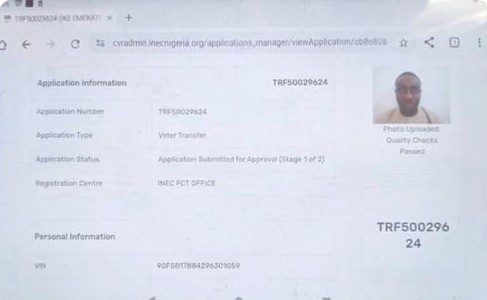
At the centre of the uproar is a post attributed to Lere Olayinka, a media aide to the FCT Minister, Nyesom Wike, that reportedly displayed Emeka Ike’s voter-transfer details while mocking the actor’s move from Ehime Mbano in Imo State to an area in Abuja. The screenshot has since been widely circulated, with critics arguing that it appears to reveal more than just ordinary voter-transfer information.
What the screenshot shows

Reports circulating online claim that the browser tab displayed the URL:cvradmin.inecnigeria.org, suggesting a restricted INEC administrative platform rather than the commission’s public voter portal. A separate INEC guide confirms that the public continuous voter registration portal is cvr.inecnigeria.org, not the admin subdomain cited in the viral screenshot.
That difference matters because the public portal is designed for voter registration, transfer requests, and identity checks, while an admin interface would normally be reserved for authorised staff handling internal records and approvals. The online claims have therefore snowballed into allegations of backend access, though no official confirmation of a breach had been found in the material reviewed.
The controversy has become politically sensitive because it touches both electoral trust and personal data privacy. If the screenshot truly came from an internal system, it would raise serious questions about who had access to the record and how a private voter file became public in the first place.
The matter also comes amid earlier concerns about data protection in Nigeria’s electoral system. INEC has previously engaged with the Nigeria Data Protection Commission to strengthen safeguards for voters’ personal information, while the NDPC has repeatedly pushed for stronger election data protection standards. That makes the viral screenshot more than a social-media spat: it has become a test of how securely Nigeria’s electoral institution manages sensitive citizen data.
What is clearly verifiable at this stage is that a screenshot linked to Emeka Ike’s voter-transfer details is circulating online; the post has been attributed to Lere Olayinka in multiple online reports and reposts, and the public INEC registration portal is separate from the admin subdomain referenced in the viral material.
What remains unverified is the central allegation that a ruling-party operative had direct, unrestricted access to INEC’s internal backend or that the commission’s entire voter database has been compromised. Those are serious claims that require official confirmation or forensic proof.
The growing online reaction is likely to force INEC to explain whether the screenshot originated from a legitimate internal workflow, a leaked staff account, or a manipulated image. It may also prompt the Nigeria Data Protection Commission to examine whether any privacy law was breached in the handling or public sharing of the voter record.
For now, the scandal remains an allegation-driven controversy with serious implications for electoral privacy, institutional trust, and the public’s confidence in INEC’s digital systems. If verified, it would not just be a political embarrassment; it would be a significant data-security failure at the heart of Nigeria’s democratic process.