
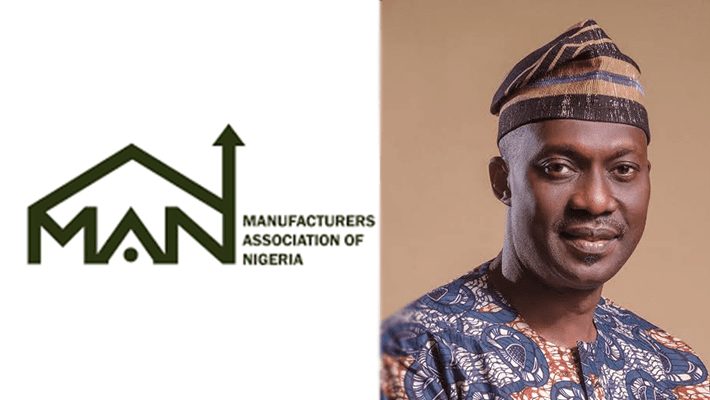
Lagos: The Manufacturers Association of Nigeria (MAN) has urged the Lagos State Government to reconsider its decision to ban Single-Use Plastics (SUP) effective July 1, 2025.
Its Director-General, Mr Segun Ajayi-Kadir, said in a statement on Monday that the decision is not informed by credible data and claims.
The state government had announced its plan to ban SUP due to its adverse health and environmental impact.
Ajayi-Kadir noted that the state Ministry of Environment had yet to publish any study to substantiate the claim.

He said that if the ban were allowed to take effect, it would have adverse economic and social impacts on the state and the country.
The MAN D-G stated that plastic was a versatile and highly durable material that supported mankind in various endeavours across industries.
He said that the failure to manage plastic waste may result in adverse environmental and social impacts.
“MAN shares the global concern on the challenges created by plastic waste mismanagement.
“We recognise that a policy environment that enables circularity is indispensable in ending plastic pollution in Nigeria as a country and globally.
“The approach to achieving circularity in the plastic system needs to be life-cycle oriented, contextually relevant, and systemic, with strong consideration for the interaction of the societal system, human behaviour, and environmental impacts,” he said.
Ajayi-Kadir noted that the ban pronouncement process was not inclusive, participatory or consultative.
He said that addressing SUP waste mismanagement through a ban would not bring a sustainable solution but a replacement for the polluting material.
He noted that evidence had shown that the major cause of SUP pollution in Nigeria, including Lagos, was inadequate waste collection and management systems.
Ajayi-Kadir said that advancing circularity through improved recycling solutions would have enormous economic, environmental, and social benefits.
“The global plastic recycling industry was valued at $55.71 billion in 2023 and projected to reach $114.18 billion by 2032, with a compound annual growth rate (CAGR) of 8.3 per cent between 2025 and 2032.
“Providing an enabling environment for expanding mechanical and or chemical recycling in the state should be a significant priority.
“Therefore, advancing provision for improving plastic waste collection is critical to harness the associated value fully.
“State governments need to support improved plastic recycling with infrastructure, especially the leasing of lands as dumpsites for sorting at scale to enable recyclers to access plastic feedstocks,” he said.
The MAN D-G listed the ban’s consequences, which include adverse economic, operational, and social implications across the value chain.
Ajayi-Kadir emphasised that manufacturers understood the need to evolve into recent trends of reusable plastic products, improved product design aligned with circularity, and cleaner production processes.
He said the plastic industry sector under the association was committed to transitioning to newer business models, fostering expansion in mechanical and chemical recycling.
He added that the sector was also exploring the production of plastic from biomass and captured carbon while adopting cleaner disposal systems.
“These developments should be enabled with the availability of circular feedstock and government incentivising investments in these circular solutions.
“MAN will continue to work collaboratively with producer responsibility organisations as prescribed by the National Sectoral Regulations to fulfil our national obligations.
“It is, therefore, unhelpful and needlessly disruptive to introduce parallel arrangements in any state in the country,” he said.