

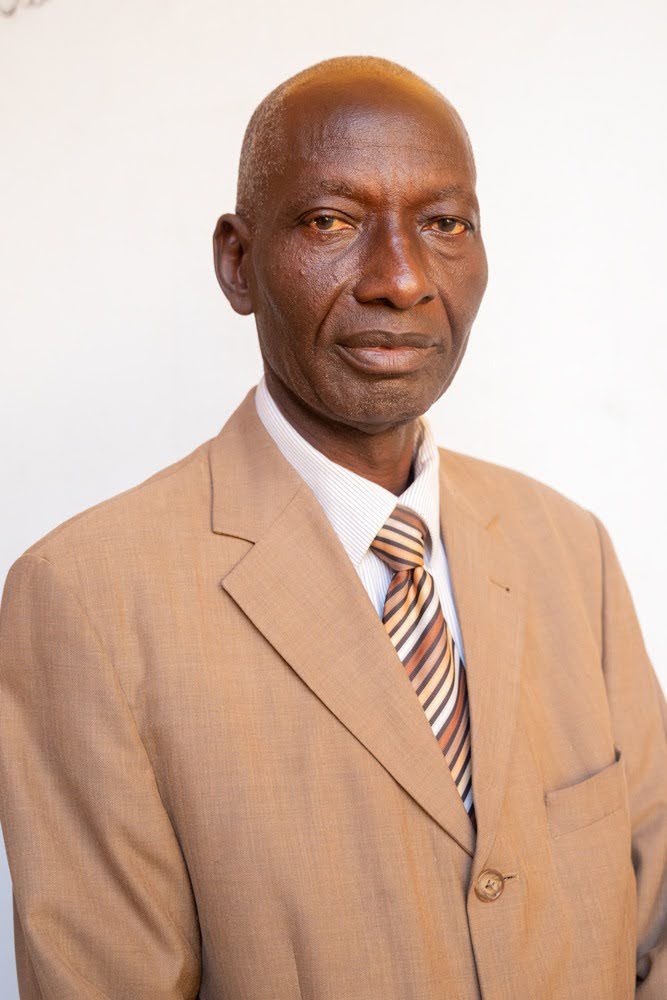
Veteran Demographer and Academic, Dr Abiodun Owolabi, breaks silence on Nigeria’s Census challenges in this explosive interview. Dr Abiodun Owolabi, the former Director of the Lagos State Office of the National Population Commission (NPC), brings decades of census field experience to the forefront in this exclusive sit-down with KEHINDE ADEGOKE. A former lecturer in Mathematics and Statistics at Ahmadu Bello University, Zaria, and a senior NPC staff member from 1990 to 2014, Dr Owolabi was a key player in Nigeria’s 1991 and 2006 national population counts. Now serving as Dean of the Faculty of Management and Social Sciences at Thomas Adewumi University in Kwara State, he opens up about the real story behind Nigeria’s population data, the politics of planning, and why accurate counts are vital for national survival:
The last population census in Nigeria was conducted in 2006, which is now 19 years ago. In your opinion, how often should a national population census be conducted?
Thank you very much for your question. Yes, the last population census in Nigeria was indeed conducted in 2006, which, when you put it on record, means that 19 years ago, and that is contrary to the United Nations Population Fund (UNFPA), which stipulated and mandated that censuses should be conducted every 10 years, to meet the National Planning Policy. However, a population census should be conducted every 10 years if we are to move at par with Global demand but the peculiarity of Nigeria is due to lack of funds and inadequate planning and at the same time the way we prioritise our programs, so National Population Census has to be given a priority such that every 10 years Nigeria should meet up with the Global demand International Standards.
What are the consequences of not conducting a population census for 19 consecutive years?

The answer is self-evident, so that once you derail you have to start all over again. You can see that from 1963-1973 they were trying to meet up with the 10 years, however they said 1973 is the world of politics that people referred to it as negotiated figures which means that we were unable to rely on that 1973 figure. So we were supposed to conduct in 1983 but we were unable to perform that one until 1991, you can see the number of years, it’s almost the same as what we’re talking about now. However, the consequence is that when you plan without a clear vision and accurate figures, you are working towards failure, essentially planning to fail. There’s no planning that can be effective without precise data, and when data is not available, what are you planning? Even within your household, you know the number of people you are responsible for feeding, and that depends on the quantity and variety of items to be provided. Consequently, you cannot have a meaningful National Planning.
How has the prolonged delay in conducting a census affected national planning and development?
Just like I said, it’s pronounced and that is what we are facing nowadays in terms of school enrollment, in terms of arranging examination; you all know what happened in Jamb (Joint Admission Matriculation Board), the recently conducted one, because people were unable to plan based on figures, so that had contributed to underdevelopment. As far as I’m concerned when figures are not known, what type of National Planning are you talking about, you are going to be underestimated, then there is going to be a shortage of facilities and so the national growth will be affected, and that is what we are facing now in Nigeria. Let our people know the importance of accurate figure, let them know why we want to conduct National Population and Housing Census that the Population Commission Introduced in 2006, meaning that the housing components is there, the type of material used in the house and people stay in a room, and then are they not overstressing the capacity of the building, and at the end of the day people are still sabotaging the efforts of the Federal Government, and that is what we are facing nowadays. You can see how the poverty level is increasing. Some people cannot afford to rent a house because the available houses cannot meet the demand of those looking for shelter. At the end of the day, what do you expect? That will result in some people not having a place to stay.
In 2006, Nigeria’s population was officially recorded as 140,431,790, comprising 71,345,488 males and 69,086,302 females. As a former National Population Commission (NPC) Director, how accurate or credible were those figures in your assessment?
In 2006, we had just 140,000,000 (One Hundred and Forty Million) people, according to the figures provided by the National Population Commission, comprising 71,000,000 (Seventy-One million) males and 69,000,000 (Sixty-Nine million) Females. I am not in a position to say whether it is accurate or not. There is what we call the Marginal Error, approved by the International Community, which states that no census is 100% correct. Still, as long as we can meet up with the required percentage, we will judge it to be okay, so for that 2006, some people went to Census Tribunal, I can remember that Lagos State Government went to the Tribunal like other states too trying to compare with population figure of Kano and at the end of the day, they went to the Tribunal and the matter is yet to be resolved up till now and that is why people are running away from having census conducted. Still, I believe and I want to put it across to the government that the best way to do that is for the government to be firm that censuses must be conducted every 10 years to meet the global demand and my advice to the government is that they shouldn’t shy away from their responsibilities, let the census be conducted. How can you conclude that your estimation is near perfection, because it is not? The best thing is to go back to the field and let the Census be conducted with proper awareness and sensitisation and let people know the advantages and disadvantages of having accurate figure, at the end of the day, let them not introduce politics into this, sharing of national cakes should not be tied to the number of figures you have.
From your experience as a former NPC Director in Lagos State, would you say the Commission has been adequately funded and supported to deliver on its critical mandate?
Yes, from my experience as a Former State Director at the National Population Commission, Lagos State Office, the government has not been funding the Commission as expected. Although I may not be in the position, the Chairman of the Commission remains in place, and we have members of the Commission. We have people we’re answerable to in the Commission. These individuals keep telling us that the Commission is not being funded, which is why we were unable to meet our statutory responsibilities as a commission and why we need to upgrade our systems. We also need to go to the field to collect vital statistics, such as registration and people travelling outside the country; we need to be monitoring those as well. The growth rate is calculated by subtracting the number of deaths from the number of births. Based on that, we should be able to project. However, if the fund is not made available as expected, what do you expect? We will find it challenging to visit health centres to collect the required information and data. The situation is now totally different from what it used to be. People are not as mobile, and when some individuals use their money to commit, what do you expect? They sit under the tree and formulate whatever they want, and that is why inadequate funding has hurt the operation of the National Population Census.
Could you share some of your personal experiences and key takeaways from your time as a Director with the National Population Commission?
In my personal experience, in 1991, I was a comptroller in a local government, and we were able to conduct the Census because, during the regime of Shehu Alhaji Musa, funds were released on time, even in surplus. As a result, we conducted the Census very well. By 2006, we were still one way or the other measuring up to standard because materials were also provided and that was the first time they conducted digital Census where we were using OMRC, we were able to do a comprehensive job that time and by that time, I was at the headquarters of the National Population Commission, we were moving from one place to another taking the GPS, taking the reading of GIS of some of these locations and by that time, I was a field officer, we moved from one place to another and we were able to do what is expected. Still, some lapses were also recorded in 2006, which is why, to this day, the aggregate down to the locality remains relevant. However, we were able to transition from manual coding to digital coding, so that is what I can say. I wish the National Population Commission the very best as they plan to conduct another digital census. Let me quickly address a critical issue: when data is collected, it is expected to be analysed, and then when the data is analysed, it is expected to be interpreted. They try to populate the figures; it is better to be disseminated because when you collect data without analysing and interpreting it, it is useless. You will arrange a stakeholders’ meeting where you will present the figures and help people understand them, as some individuals may view the statistics without being able to interpret them; demographers should be able to do so. Move from one place to another with the Public Affairs department to ensure that people are sensitised and can continue to disseminate most of these things. Ultimately, data will be understood at the grassroots level.