

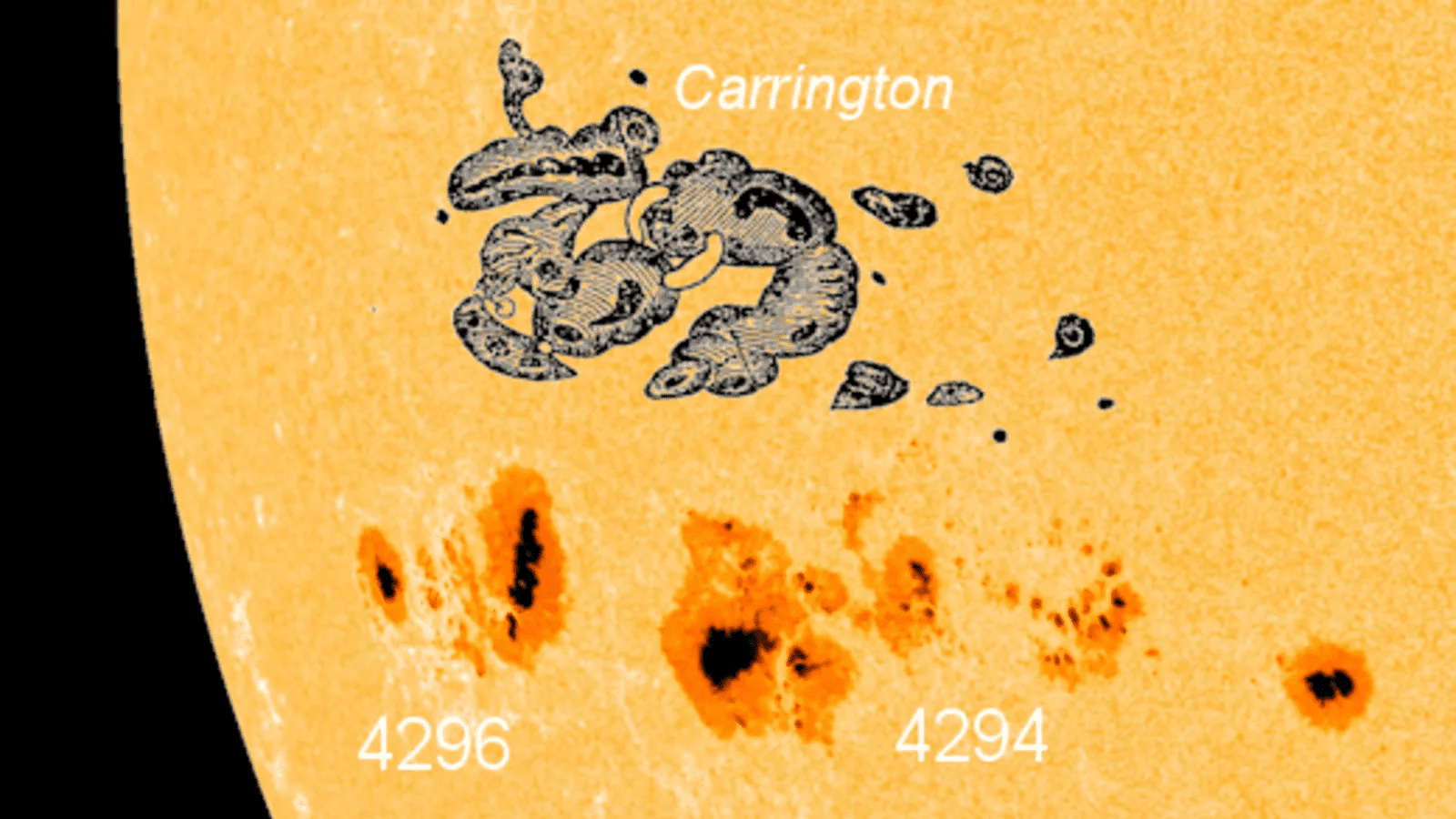
Scientists warn that colossal sunspot AR 4294–4296, rivalling the Carrington Event, could unleash powerful flares that disrupt satellites, power grids, and communications while dazzling skies with auroras.
Abuja — A massive sunspot complex, dubbed AR 4294–4296, has appeared on the Earth-facing side of the Sun, sparking concern among scientists who warn it is comparable in size to the one that triggered the historic Carrington Event of 1859.
The sprawling dark patches, first spotted by NASA’s Perseverance rover from Mars before rotating into view on November 28, are magnetically entangled and cover nearly 90% of the area of the Carrington sunspot.
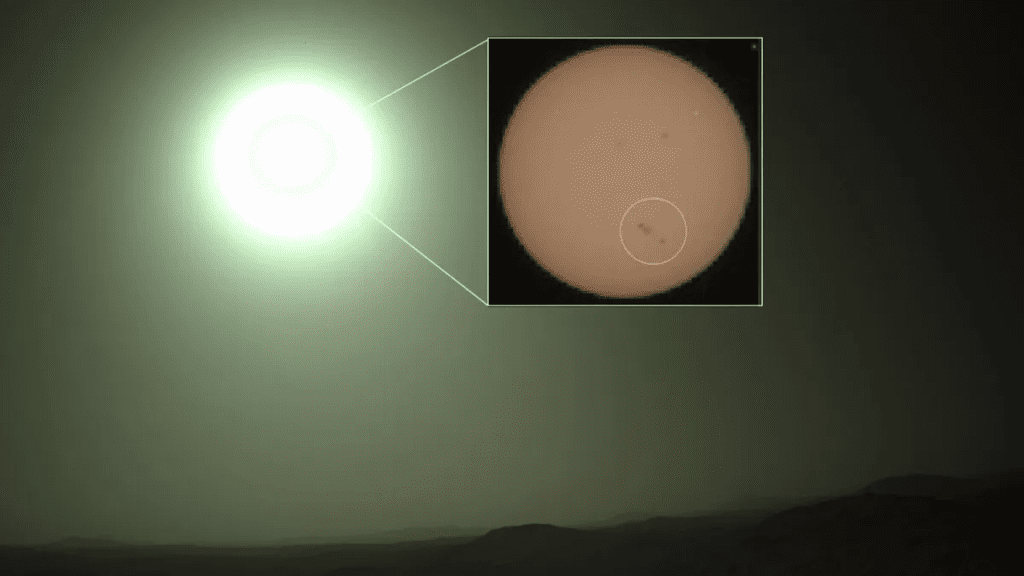
Experts say the complex is one of the largest seen in the past decade and has the capacity to unleash X-class solar flares, the most powerful category on the NOAA scale.

Sunspots are regions of intense magnetic activity that can erupt into solar flares and coronal mass ejections (CMEs). If directed at Earth, these blasts can trigger geomagnetic storms, disrupting satellites, communications, and power grids, while painting vivid auroras across the skies.
The Carrington Event of 1859 remains the strongest solar storm ever recorded, unleashing an estimated X45 flare that crippled telegraph systems worldwide. Simulations suggest that a storm of similar magnitude today could knock out every satellite in orbit and cause damage exceeding $1 trillion.
While the size of AR 4294–4296 raises alarm, scientists caution that size alone does not guarantee disaster. The configuration of its magnetic fields and the frequency of eruptions will determine its impact.
The complex has already produced a potential X-class flare while still on the Sun’s far side, but so far, there are no apparent signs of a Carrington-level superstorm.
Still, researchers are keeping a close watch. If the sunspot rotates past Earth without significant eruptions, it may survive long enough to reappear later in December, potentially setting the stage for another round of monitoring.