
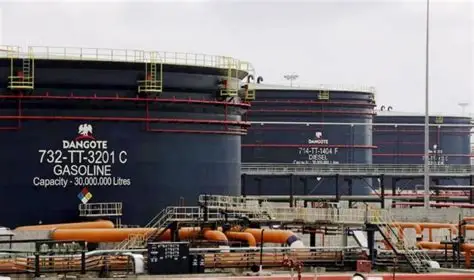
Nigeria’s Dangote oil refinery has started its first global fuel tenders, which could mark a big change in the international fuel market, according to a trade source who shared a summary of the tender document.
The refinery is offering 44,000 metric tons of jet fuel for loading between March 20 and 22, and at least 40,000 tons of gasoil with a maximum sulphur content of 50 ppm for loading between March 15 and 30.
Industry traders say the volumes, although modest globally, are meaningful within the region. With West Africa importing 200,000–250,000 tons of gasoil per month, Dangote’s tender could fulfil about 20% of that demand.
For jet fuel—an additional crucial commodity—imports are smaller but strategically important, especially for major buyers like Nigeria and Ghana.

Dangote’s entry might shift the balance, making West Africa less dependent on traditional external suppliers.
The market response is mixed. Some traders believe the tenders show that the $20 billion refinery is increasing production, and say regular exports could help reduce shortages and lower Nigeria’s imports.
Others are more cautious, pointing to recent pricing disputes between Dangote and local marketers that caused supply interruptions last year.
Analysts say the refinery is built to process 650,000 barrels of crude oil per day, giving it the ability to influence both African and global fuel markets.
Its arrival is already challenging European refiners, who have long supplied West Africa, and could also threaten Asian suppliers’ market share. This points to a possible shift in established trade patterns.
Going forward, energy analysts remark that if Dangote continues to export large amounts of fuel, it could influence global fuel prices.
By cutting Nigeria’s need for imports and creating extra supply for export, Dangote might put pressure on traditional suppliers’ profits and set new standards for jet fuel and diesel prices.
This could force European and Asian refiners to rethink their production and pricing to stay competitive. a symbolic milestone, signalling that Africa’s largest refinery is beginning to test its reach in international markets.
Traders expect further tenders in the coming months as the plant gradually expands its product slate and creates credibility with buyers.