
With drones circling Bauchi’s skies and 200 U.S. troops on the ground, Nigeria’s fight against insurgency enters a new phase—one that blends hope, scepticism, and geopolitical intrigue. TOYE FALEYE reports
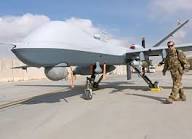
The sound of drones above Bauchi’s airfield has become a constant in daily life. Children look up at the faint silhouette of a Reaper, wondering what it might see.
In villages affected by raids, families displaced by violence hope that this new presence will lead to fewer nights of fear.
Yet in Abuja’s corridors of power and in cafés where activists gather, debates emerge over whether this partnership is a necessary support or a potential threat to the nation’s independence.

A Partnership Born of Necessity
Nigeria’s request for U.S. support underscores the urgency of a 17‑year insurgency that has defied local solutions.
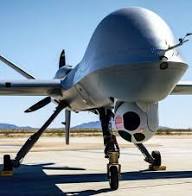
The arrival of MQ‑9 Reaper drones and American advisors marks a tactical shift. Nigeria now leans toward intelligence-driven warfare.
These drones, capable of remaining airborne for more than a day, sweep across northern Nigeria’s vast terrain, tracking insurgent movements and transmitting real‑time data to command centres.
A U.S. defence official explained: “The drones were deployed alongside troops at Nigeria’s request, primarily to support intelligence‑gathering efforts.”
This indicates that Nigeria requested the deployment to address gaps in domestic surveillance and intelligence, not a forced intervention by the U.S.
Training, Not Combat
The 200 U.S. troops are not here to fight. Their mission is to train Nigerian forces, analyse drone data, and advise commanders—ensuring that Nigeria remains in control of operations while benefiting from advanced surveillance. From Washington, officials have stressed limits. “The troops are not embedded with Nigerian frontline units. The drones focus solely on intelligence gathering. They are not conducting airstrikes.”Nigerian military leaders have welcomed the move. Former Chief of Army Staff, Lt. Gen. Kenneth Minimah, remarked, “Nigeria’s fight against terrorism has reached a stage where intelligence and training support are critical.
The presence of U.S. assets in Bauchi will help sharpen our response.”
Public Opinion In Bauchi’s markets, traders speak of a new vigilance. “If these drones can stop the men who burned our fields, then let them stay,” says Musa, a farmer who lost his harvest to insurgent raids. To him, the partnership offers protection. But in Lagos, activist Aisha Bello voices unease. “Foreign troops may train us today, but what happens when they leave tomorrow? Nigeria must not outsource its sovereignty.” sovereignty.”
Northern communities, fatigued by ongoing violence, regard the partnership as an opportunity for improved security, whereas critics warn that ongoing reliance on foreign military support could lead to dependency.
Islamist militants, too, may exploit the U.S. presence for propaganda, framing Nigeria as compromised by Western influence.
Regional Ripples
France, once the dominant Western military actor in West Africa, has largely withdrawn after years of hostility in Mali and Burkina Faso. The U.S. departure from Niger in 2024 left a vacuum. Nigeria’s invitation now gives Washington a new foothold in the region.
ECOWAS, fractured by coups and political instability, sees Nigeria’s partnership with the U.S. as both a stabiliser and a potential flashpoint. Russia and China, meanwhile, watch from the wings. Moscow is ready to denounce “neo-colonialism.” Beijing chooses to counterbalance with economic ties, not military rivalry. rivalry.
The Human Dimension
Beyond geopolitics, the deployment touches everyday lives. In Bauchi, residents speak of a new sense of vigilance, with drones overhead symbolising both protection and intrusion.
Families forced from their homes express hope that better intelligence will reduce raids on their villages.
“I sleep better now,” says Fatima, a mother of three living in a displacement camp. “Maybe the drones will see the men before they Soldiers in Nigeria’s ranks express cautious optimism. They note U.S. training could sharpen their skills, but also worry expectations may outpace reality. “We are learning new tactics,” says Corporal Ibrahim, “but the fight is still ours to win.” to win.”
Echoes of Nigeria has long balanced foreign partnerships with its sovereignty. From Cold War alignments to peacekeeping across Africa, it seeks independence while welcoming support when needed.
This deployment revives a familiar tension for Nigeria, as it again faces the challenge of balancing the benefits of external assistance with the preservation of national autonomy.
Older citizens recall the days when Nigeria resisted being drawn too deeply into foreign military alliances. Today, those echoes return, as the nation weighs the benefits of advanced technology against the risks of dependency.
The future of this partnership depends on results. If insurgent attacks fall, public support for U.S. involvement will grow. Nigeria may then strengthen its role as ECOWAS’s security anchor.y anchor.
If the partnership yields little progress, critics will intensify concerns over foreign dependency, and militants may use narratives of foreign control to undermine support.
For Washington, success in Nigeria could reassert its influence in West Africa after setbacks in Niger, proving that smaller, intelligence‑driven missions can achieve more than sprawling ones. Nigeria’s challenge is to absorb foreign training and technology into its military framework. The fight against terrorism must retain a distinctly Nigerian character.
As drones patrol and troops train quietly, Nigerians across communities face an urgent question: Will this foreign-supported phase deliver peace, or prolong uncertainty in their long war?