
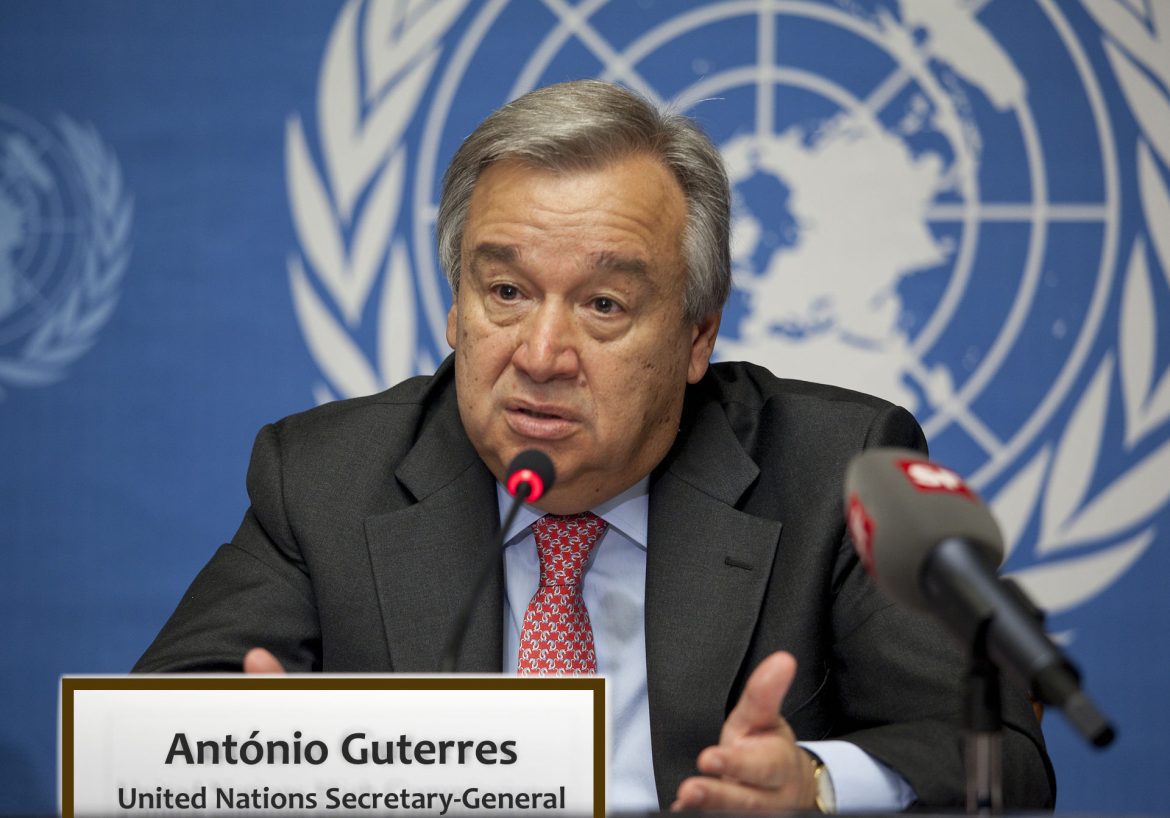
New York: UN Secretary-General António Guterres has warned that the escalating Gulf war by the United States and Israel against Iran is “out of control”.
Guterres urged all parties to de-escalate, prioritise diplomacy, and appointed a senior envoy to lead peace talks.
Speaking in New York, the UN chief said the conflict has far surpassed leaders’ expectations.
“The world faces the threat of a wider war, surging human suffering, and a deeper global economic shock,” he said.

He added bluntly: “This has gone too far.”
Despite escalating tensions and continuous military attacks, Guterres maintained there is still a path forward.
“Diplomacy must prevail,” he said. “War is not the answer”. We need a way out of this disaster.”
“Diplomacy is the way out. Full respect of international law is the way out. Peace is the way out.”
He confirmed he has appointed veteran diplomat Jean Arnault as his Personal Envoy to lead UN efforts to end the conflict.
Guterres regretted that the war had upended the entire region with shockwaves spreading worldwide.
He highlighted risks to global energy markets, emphasising the impact on oil and gas supplies reliant on the Strait of Hormuz.
He said the envoy will work “more directly on the ground” to support all efforts for mediation and peace.
According to him, he will engage with all parties and assess the conflict’s far-reaching impacts.
Guterres urged the United States and Israel that “it is time to end the war”, while calling on Iran “to stop attacking neighbours uninvolved in the conflict”.
He also stressed that freedom of navigation, particularly through the Strait of Hormuz, must be respected.
He warned that disruption of the Strait limits oil, gas, and fertiliser exports, threatening global supply chains. The Secretary-General also cautioned against the broader global fallout, noting that markets are “in turmoil” and humanitarian operations are constrained.
He said the economic shock is hitting the most vulnerable hardest, particularly in developing countries already struggling with debt and rising costs.
He identified fertiliser shortages as endangering future global food production and security.“Without fertilisers today, we might have hunger tomorrow,” he warned, adding that soaring energy prices risk fuelling inflation and deepening poverty worldwide.