
London and Paris convene a coalition to secure the world’s most volatile oil chokepoint as Gulf tensions escalate.
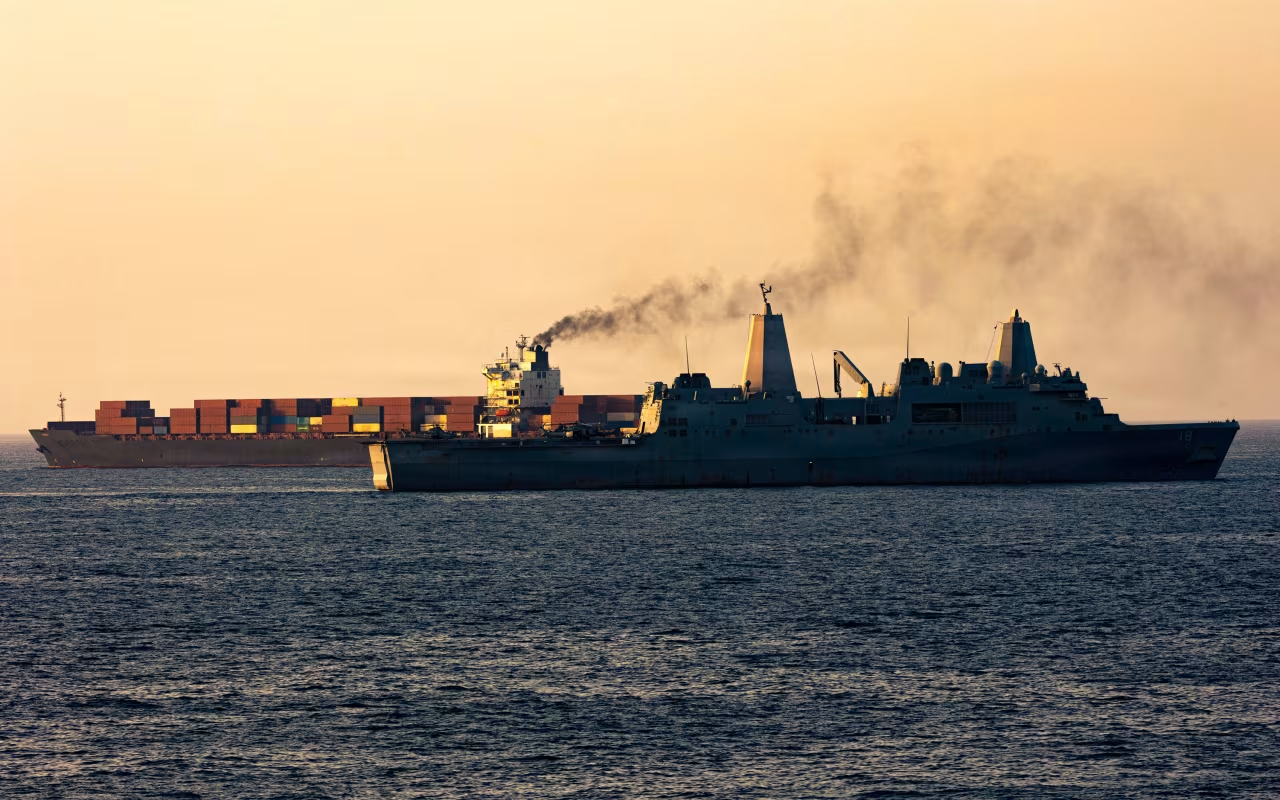
Britain and France have shifted from rhetoric to action, convening a coalition to patrol the Strait of Hormuz—a narrow Gulf passage through which a fifth of the world’s oil flows — and escalating tensions now threaten global energy security. By stepping forward, London and Paris position themselves as the Western vanguard against escalation in one of the planet’s most volatile maritime chokepoints.
On Wednesday, more than 30 nations will send military planners to London for a two-day conference after the UK and France called for reopening the Strait of Hormuz, which has remained closed for nearly two months.
During the London conference, military planners will outline their countries’ capabilities, define command-and-control structures, and discuss deployment of forces to the region, according to the UK’s defence ministry.

The ministry stated that these military plans will proceed as soon as conditions allow, following a sustainable ceasefire agreement.
After the virtual summit, the UK and France are coordinating sessions at the UK’s Permanent Joint Headquarters in Northwood, north London, leading efforts to build a coalition to reopen the strait.
Last Friday, Britain’s Prime Minister Keir Starmer and French President Emmanuel Macron hosted a virtual international summit attended by 51 countries, where they confirmed their intention to establish “an independent and strictly defensive multinational mission,” said the UK’s defence ministry.
“The task, today and tomorrow, is to translate the diplomatic consensus into a joint plan to safeguard freedom of navigation in the Strait and support a lasting ceasefire,” said John Healey, Britain’s defence minister.
Since Iran effectively closed the crucial waterway in retaliation for US-Israeli strikes, very few vessels have passed through, choking off a considerable portion of the world’s oil and gas supply from global energy markets.