The Joint Revenue Board Act, 2025 promised harmony and fairness but hid centralised power, a surveillance-ready database, and borrowing powers that could reshape Nigeria’s fiscal future. KEHINDE ADEGOKE reports.
On June 26, 2025, tucked away in the Federal Gazette, a law was born that few Nigerians noticed. It was called the Joint Revenue Board Act. To the casual eye, it looked like another bureaucratic reform. But in reality, it rewired the nation’s tax system, shifting power from the states to Abuja, and creating a new architecture of control that could define how every naira is tracked, taxed, and spent.
The Abuja Advantage
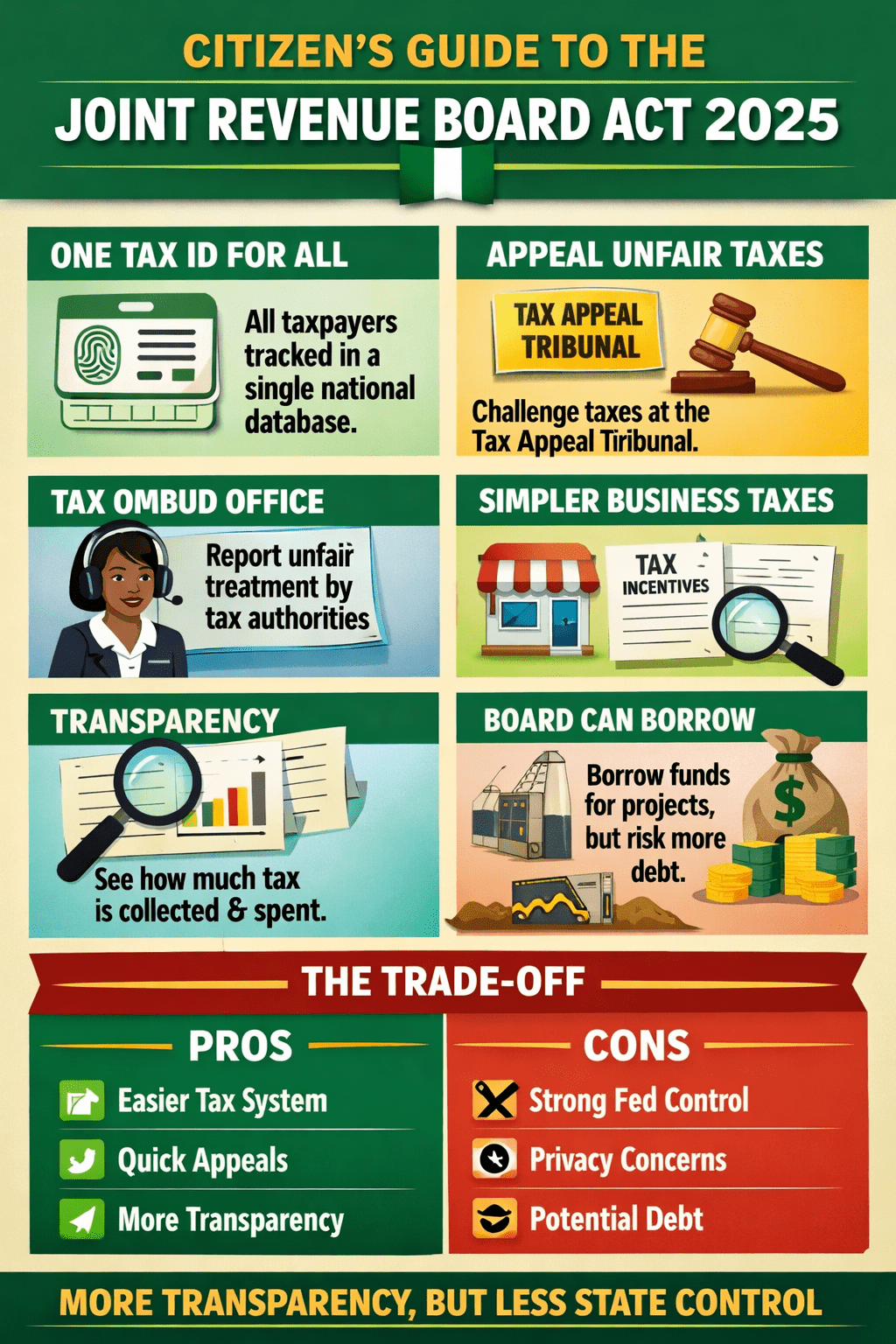
The Act places the Executive Chairman of the Nigeria Revenue Service at the helm of a new Joint Revenue Board, instantly tilting the balance of fiscal power toward the federal centre. State chairmen sit on the Board, but the structure ensures Abuja’s dominance. Conflict‑of‑interest clauses are written into the law, but enforcement mechanisms remain vague, leaving loopholes wide enough for abuse. Borrowing powers allow the Board to raise funds directly with approval from the National Economic Council, bypassing traditional budgetary scrutiny. Even more striking, the Board itself is exempt from income tax, shielding its operations from the very obligations it enforces on citizens.
The State Squeeze

For decades, states have fought to assert fiscal autonomy, often clashing with federal agencies over who controls what. This Act quietly resolves the battle in Abuja’s favour. Harmonisation of levies and rates sounds like relief for businesses, but it also strips states of the flexibility to design tax regimes suited to local economies. The promise of uniformity masks the reality of diminished state power.
The Citizen’s Dilemma
Perhaps most consequential is the mandate to build a unified taxpayer database. Every Nigerian’s financial footprint — from salaries to business earnings — will be integrated into a single system. Efficiency is the promise; surveillance is the risk. Citizens gain new rights: the ability to challenge unfair taxes at a Tax Appeal Tribunal, and to lodge complaints with a newly created Tax Ombud Office. Yet the Ombud is appointed by the President, tying taxpayer protection to political influence. The Tribunal is funded from the Consolidated Revenue Fund, giving it independence but also tethering it to federal appropriations.
Everyday Impact
For citizens, the law means tighter monitoring under a single Tax ID, as well as a clearer path to appeal unfair taxes. For businesses, harmonised levies reduce confusion, while published exemptions expose favouritism. For workers and consumers, the publication of revenue data promises transparency, but borrowing powers risk future debt burdens that could translate into new taxes.
The Dig
This is not just a tax law. It is a blueprint for how Nigeria will see, track, and touch every naira earned. It consolidates authority, dispute resolution, and oversight under one umbrella. It promises fairness, but whispers consolidation.
The Joint Revenue Board Act doesn’t just collect taxes — it collects power. Nigeria’s fiscal future now runs through Abuja, with citizens caught between the rhetoric of reform and the reality of centralised control.
𝐊𝐞𝐡𝐢𝐧𝐝𝐞 𝐀𝐝𝐞𝐠𝐨𝐤𝐞 𝐢𝐬 𝐚𝐧 𝐚𝐰𝐚𝐫𝐝-𝐰𝐢𝐧𝐧𝐢𝐧𝐠 𝐢𝐧𝐯𝐞𝐬𝐭𝐢𝐠𝐚𝐭𝐢𝐯𝐞 𝐣𝐨𝐮𝐫𝐧𝐚𝐥𝐢𝐬𝐭 𝐰𝐢𝐭𝐡 𝐦𝐨𝐫𝐞 𝐭𝐡𝐚𝐧 𝟏𝟓 𝐲𝐞𝐚𝐫𝐬 𝐨𝐟 𝐝𝐢𝐬𝐭𝐢𝐧𝐠𝐮𝐢𝐬𝐡𝐞𝐝 𝐞𝐱𝐩𝐞𝐫𝐢𝐞𝐧𝐜𝐞 𝐞𝐱𝐩𝐨𝐬𝐢𝐧𝐠 𝐬𝐭𝐨𝐫𝐢𝐞𝐬 𝐭𝐡𝐚𝐭 𝐦𝐨𝐮𝐥𝐝 𝐩𝐮𝐛𝐥𝐢𝐜 𝐝𝐢𝐬𝐜𝐨𝐮𝐫𝐬𝐞. 𝐖𝐢𝐭𝐡 𝐭𝐡𝐫𝐞𝐞 𝐢𝐧𝐝𝐮𝐬𝐭𝐫𝐲 𝐧𝐨𝐦𝐢𝐧𝐚𝐭𝐢𝐨𝐧𝐬 𝐭𝐡𝐫𝐨𝐮𝐠𝐡𝐨𝐮𝐭 𝐝𝐢𝐯𝐞𝐫𝐬𝐞 𝐛𝐞𝐚𝐭𝐬, 𝐡𝐞 𝐡𝐚𝐬 𝐞𝐚𝐫𝐧𝐞𝐝 𝐫𝐞𝐜𝐨𝐠𝐧𝐢𝐭𝐢𝐨𝐧 𝐟𝐨𝐫 𝐟𝐞𝐚𝐫𝐥𝐞𝐬𝐬 𝐫𝐞𝐩𝐨𝐫𝐭𝐢𝐧𝐠, 𝐢𝐧𝐜𝐢𝐬𝐢𝐯𝐞 𝐚𝐧𝐚𝐥𝐲𝐬𝐢𝐬, 𝐚𝐧𝐝 𝐚 𝐜𝐨𝐦𝐦𝐢𝐭𝐦𝐞𝐧𝐭 𝐭𝐨 𝐚𝐜𝐜𝐨𝐮𝐧𝐭𝐚𝐛𝐢𝐥𝐢𝐭𝐲. 𝐀𝐬 𝐌𝐚𝐧𝐚𝐠𝐢𝐧𝐠 𝐄𝐝𝐢𝐭𝐨𝐫 𝐚𝐧𝐝 𝐂𝐄𝐎 𝐨𝐟 𝐓𝐡𝐞𝐃𝐢𝐠𝐠𝐞𝐫𝐍𝐞𝐰𝐬.𝐜𝐨𝐦, 𝐀𝐝𝐞𝐠𝐨𝐤𝐞 𝐥𝐞𝐚𝐝𝐬 𝐚 𝐩𝐢𝐨𝐧𝐞𝐞𝐫𝐢𝐧𝐠 𝐧𝐞𝐰𝐬𝐫𝐨𝐨𝐦 𝐝𝐞𝐝𝐢𝐜𝐚𝐭𝐞𝐝 𝐭𝐨 𝐞𝐱𝐩𝐨𝐬𝐢𝐧𝐠 𝐮𝐧𝐬𝐞𝐞𝐧 𝐭𝐫𝐮𝐭𝐡𝐬, 𝐚𝐦𝐩𝐥𝐢𝐟𝐲𝐢𝐧𝐠 𝐦𝐚𝐫𝐠𝐢𝐧𝐚𝐥𝐢𝐬𝐞𝐝 𝐯𝐨𝐢𝐜𝐞𝐬, 𝐚𝐧𝐝 𝐞𝐬𝐭𝐚𝐛𝐥𝐢𝐬𝐡𝐢𝐧𝐠 𝐧𝐞𝐰 𝐬𝐭𝐚𝐧𝐝𝐚𝐫𝐝𝐬 𝐢𝐧 𝐢𝐧𝐯𝐞𝐬𝐭𝐢𝐠𝐚𝐭𝐢𝐯𝐞 𝐣𝐨𝐮𝐫𝐧𝐚𝐥𝐢𝐬𝐦.
𝐓𝐡𝐞𝐃𝐢𝐠𝐠𝐞𝐫𝐍𝐞𝐰𝐬.𝐜𝐨𝐦 | 𝐰𝐰𝐰.𝐭𝐡𝐞𝐝𝐢𝐠𝐠𝐞𝐫𝐧𝐞𝐰𝐬.𝐜𝐨𝐦 | 𝟎𝟖𝟎𝟑𝟗𝟏𝟑𝟓𝟒𝟕𝟐 | 𝐈𝐛𝐚𝐝𝐚𝐧, 𝐍𝐢𝐠𝐞𝐫𝐢𝐚
editor@thediggernews.com