
DR Congo’s historic qualification collides with a deadly outbreak, testing football’s resilience against fear, politics, and fragile trust, reports TOYE FALEYE.
A Dream Interrupted
When DR Congo clinched a World Cup spot in Kinshasa, the city went wild. Cars honked for hours, radios blared, and kids wore the team colours like a celebration painted on their faces.
For a country that hadn’t been to the tournament in more than fifty years, it felt like something bigger than sport — a collective gasp of joy.

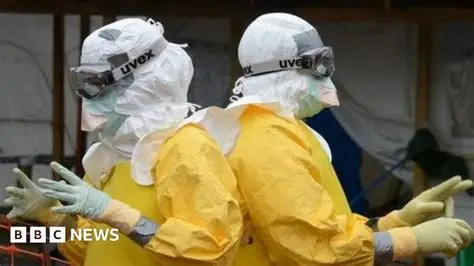
But that joy was shadowed by worry. News of the Bundibugyo Ebola strain in the northeast — and its spread into Uganda — crept into conversations. Suddenly, people were smiling through the same fear they’ve seen before.
Echoes of the Past
West Africa’s 2014–2016 Ebola crisis is still a fresh scar. That outbreak killed thousands and set off a global panic. Health experts now say the chance of the virus hitching a ride with fans or players is very small. Still, governments remember how fast things spiralled last time and are acting cautiously.
Mistrust and Rumours
In villages around Ituri, the bigger problem is mistrust. Rumours fly: some call the outbreak a curse, others suspect aid workers.
“When people don’t trust health authorities, fear spreads faster than the disease,” says infectious disease specialist Isabel Brosius. For communities already living with violence and neglect, this feels like yet another betrayal.
A Team Displaced
The national team hasn’t been spared. Their training camp in Kinshasa was moved to Belgium. Players now live in a sealed routine that feels away from home—quiet, careful, removed.
A friendly against Chile was shifted to France after local authorities raised concerns. And when the squad arrives in Houston, they’ll have less time to adapt before facing Portugal. Coach Sébastien Desabre stresses adaptability, but the constant disruption takes a toll.
Border Lines and Bans
Host countries have tightened rules. The U.S. set a 21-day requirement for travellers from the DR Congo, Uganda, and South Sudan.
Canada banned residents from those nations for 90 days. Mexico stepped up airport checks. These moves aim to be cautious, but they have left many fans stranded after years of saving.
The Cost for Fans
For supporters, the cost is personal. Jean‑Pierre, a mechanic in Kinshasa, sold his car to buy tickets and travel. Now he watches the tournament from home. “I wanted to show my son the world,” he said.
Veron Mosengo-Omba, president of FECOFA, has asked FIFA to refund fans who can’t go. FIFA says it will review the cases, but for many, the chance to be there is gone.
More Than Football
This story isn’t just about a team or a tournament. It’s about how global events collide with local realities—fear, politics, and fractured trust.
The players must focus on the pitch while the people who raised them face barriers to sharing the moment. The World Cup can be a unifying spectacle, but it doesn’t float above the world’s hard edges.
Science vs Stigma
Across the globe, public health officials are fighting battles on two fronts: the threat of disease and the shadow it casts on people’s lives.
In the host cities, you see volunteers handing out leaflets at metro stations, answering anxious questions, trying to show with a smile that there’s nothing to fear from a handshake or a flag from Kinshasa.
Organisers know that suspicion lingers long after the headlines fade, and that trust is built one honest conversation at a time.
Medical teams are on standby, but experts stress that facts must outpace fear.
“Ebola is not the only challenge—misinformation is just as dangerous,” says Dr Brosius. “We have to win the trust game as much as the medical one.”
Football’s Power to Heal
Yet, even in the shadow of crisis, football shows its unique power to bring people together. In Kinshasa’s neighbourhoods, children still chase battered balls through dusty streets, their laughter undimmed.
The national team’s qualifying run has inspired a sense of hope and pride that endures despite uncertainty. Community groups and local leaders use watch parties and radio broadcasts to bridge divides, offering moments of normalcy and joy.
Looking Ahead
As the World Cup unfolds, the world will watch not just for goals and glory but for signs that unity and resilience can outshine fear.
For the DR Congo and its supporters, at home or far from the stadiums, the tournament is a reminder that the beautiful game endures, even when the world feels unsteady.