

Geneva, (Switzerland): Behind the speeches and policy documents, Nigeria’s renewed pledge to eliminate child labour carries the weight of millions of young lives whose childhoods are often spent in fields, workshops, and markets instead of classrooms.
At the 114th Session of the International Labour Conference, Magaji Ademu, Director of the Labour Inspectorate Department, spoke with conviction about Nigeria’s commitment.
“We issued a red card on child labour in the whole world. This shows that all countries should eradicate it totally,” he said, echoing the urgency of a global campaign that treats child labour as a violation of innocence.
Nigeria’s National Child Labour Policy and National Action Plan, validated with support from the International Labour Organisation, will be launched in Abuja on June 16.

These frameworks are designed to give children back their right to safety, education, and play — rights often denied in rural communities where poverty forces families to rely on their labour.
Ademu acknowledged the challenges: weak enforcement of laws and the difficulty of reaching remote areas where child labour is most entrenched.
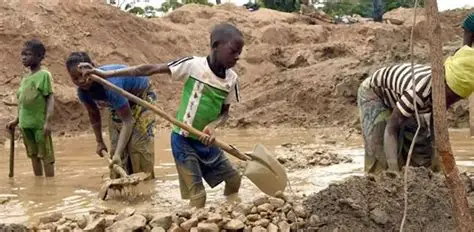
For children in those villages, the promise of protection often feels distant. A boy carrying bricks instead of books, or a girl selling food on the roadside instead of learning in school, embodies the gap between policy and reality.
The government insists it is working with stakeholders to strengthen enforcement and close structural gaps. Aligning with the Moriakishi Declaration, Nigeria is committing to strong political will, social protection, and effective law enforcement. But the true measure of success will be whether children in the most vulnerable communities see their lives change.
For now, the pledge is a beacon of hope. It signals that Nigeria recognises the urgency of protecting its youngest citizens, not just in words spoken in Geneva, but in actions that must reach the dusty roads and crowded markets where childhood is too often sacrificed.