

Abuja: The Federal Government says Nigeria is battling a largely preventable nutrition crisis, with 58 per cent of women of reproductive age living with anaemia.
Assistant Director of Nutrition, Mrs Helen Achimugu, made this announcement on Tuesday in Abuja.
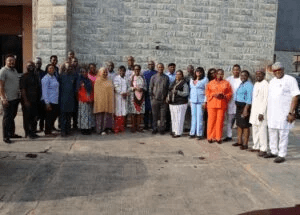
She addressed journalists at a CS-SUNN media training on anaemia prevention.
The training has “Media as Catalysts for an Anaemia-Free Nigeria” as the theme.

Citing the 2023 Nigeria Demographic and Health Survey (NDHS), Achimugu stated that 58 per cent of Nigerian women of reproductive age—meaning women aged 15 to 49—are affected by anaemia, a condition that is both preventable and treatable.
She added that children also carry a heavy burden, with Nigeria having the highest number of stunted children in Africa and the second highest in the world, according to available data.
She explained, “We have about 35 million children experiencing stunted growth (chronic malnutrition), 14 million who are wasted (suffering from acute malnutrition), and 24 million children who are anaemic in Nigeria.”
“This is not only a health issue; it is a national development emergency requiring urgent, coordinated action,” she said.
Achimugu said micronutrient deficiencies, known as “hidden hunger,” were widespread among children under five and women of reproductive age.
“They are called hidden hunger because the signs are not always visible, but the impact on health, learning and productivity is profound,” she said.
She attributed the trend to poor dietary diversity, food insecurity and socio-economic factors, noting a higher prevalence in northern Nigeria.
Achimugu identified iron, iodine, zinc, folate and vitamin A as essential micronutrients for growth and immunity.
“When these nutrients are lacking or taken in excess, the body cannot function properly,” she said.
She explained that malnutrition causes stunting, wasting, underweight and impaired cognitive development.
“In developing countries, malnutrition contributes to about 60 per cent of cases of pneumonia, diarrhoea, malaria and measles,” she said.
Achimugu described anaemia as low haemoglobin levels, often caused by iron deficiency, with serious consequences for maternal and child health.
“It dramatically increases the risk of maternal death, low birth weight and poor child growth. Immediate intervention is critical,” she said.
She explained that the Federal Government has launched interventions such as food fortification, supplementation, and dietary diversification, especially Multiple Micronutrient Supplements (MMS) for pregnant women, to reduce the burden of the disease.
“MMS contains 15 essential vitamins and minerals and should be taken daily by pregnant women,” she said.
Achimugu stated that MMS is now on Nigeria’s Essential Medicines List and that public health facilities provide it free of charge.
She explained, “One bottle lasts about six months and greatly reduces the risk of anaemia during and after pregnancy.”
She stressed the media’s role in driving awareness and advocacy.
“If the media is not there, we cannot take this message to every household,” she said.
Earlier, CS-SUNN Executive Secretary, Mr Sunday Okoronkwo, described anaemia as a persistent yet urgent and preventable public health challenge demanding immediate attention.
“The most affected are women and children, and they depend on the media to speak up for them,” he said.
Okoronkwo urged journalists to tell human-centred stories that could drive policy action.
“Prevention through adequate nutrition is more cost-effective than emergency interventions,” he said.
30 journalists from Nasarawa, Kano, Kaduna, Lagos, Niger, Bauchi and the Federal Capital Territory are participating in the training.