

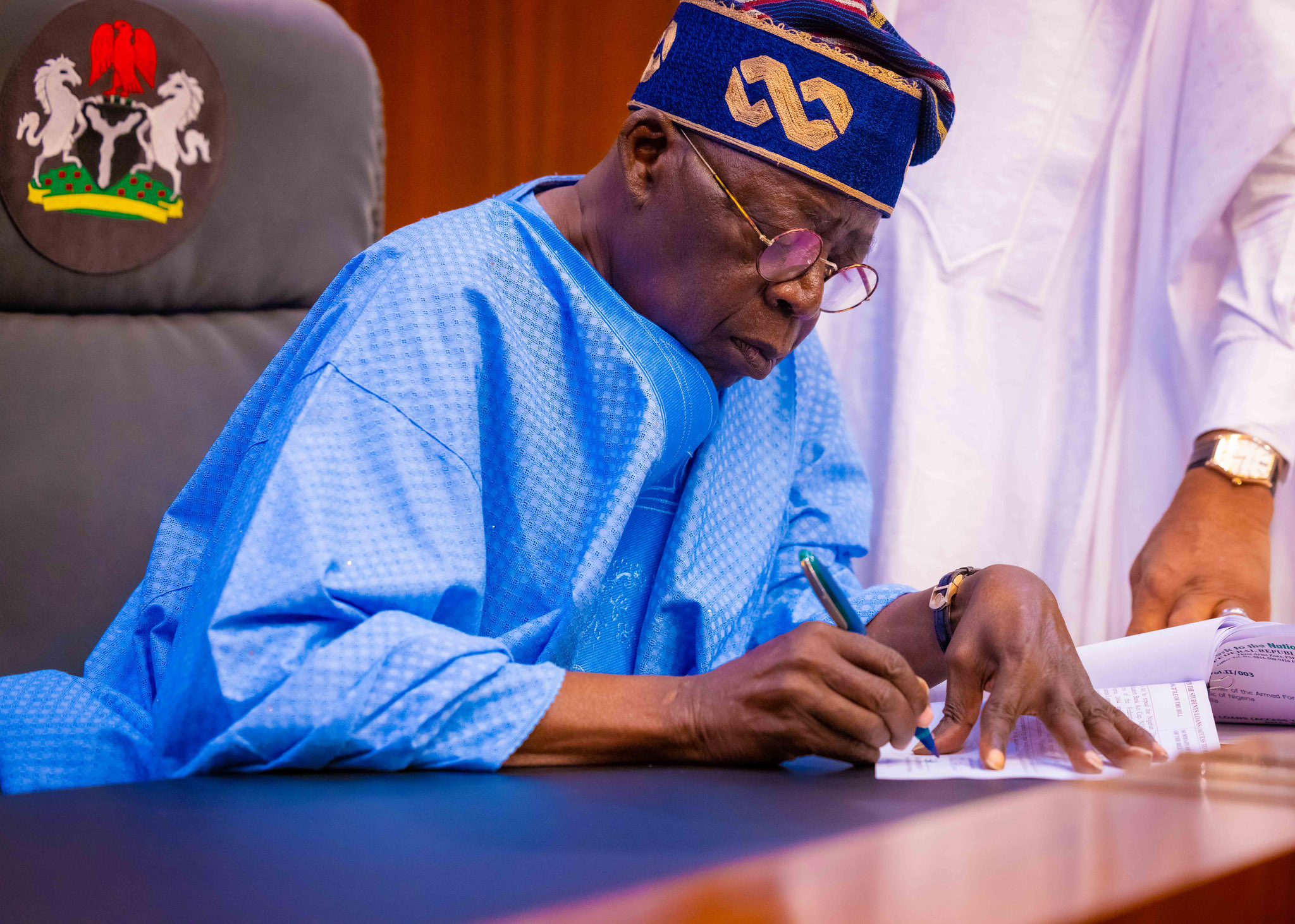
Abuja: President Bola Tinubu has urged Nigeria’s political class to submit fully to the dictates of the rule of law, stressing that the Electoral Act remains the binding framework for democratic conduct and must be respected without exception.
Speaking at an interfaith breakfast for APC executives, NWC members, and IPAC at the State House, Tinubu, who branded himself a ‘die-hard’ democrat, recalled his democratic credentials, noting his past experiences, from detention to co-founding NADECO.
“We are all democrats, and we all subscribed to this democracy voluntarily, willingly, and we’ve been at it selflessly in the last 26 years. Some of us have the bruises from it, struggling for it. We went to detention, and we protested. We went into exile and all of that. We formed NADECO. We got here,” Tinubu told the gathering.
He described his commitment as a lifelong philosophy rooted in national unity, saying, “I am a die-hard democrat, fully committed to a united Nigeria. This principle guides me.”

Addressing IPAC National Chairman Yusuf Dantalle directly, Tinubu insisted that party affiliation remains voluntary, even under pressure.
“We are all democrats, voluntarily, party alliances, party ideologies or no ideology, party boat, party platform, in whichever form, it’s voluntary. Be persecuted for it. So, no threat from any democrat,” he said.
The remarks come amid opposition parties’ criticisms over the Electoral Act amendments, which Tinubu signed into law on February18, following National Assembly approval.
Opposition parties and civil society criticised provisions such as optional electronic result transmission, new party register rules, direct primaries, a 21-day deadline for digital registers, and limits on court intervention.
Tinubu insists that the rule of law is democracy’s core.
“The rule of law must prevail in any democracy, yes, the rule of law. The majority will have their say and their way, and the minority will have their say and might not have their way. That is the sweetness, the essence of democracy,” he said.
He called for intellectual debate over confrontation: “Argue it, debate it intellectually, interrogate each other, honestly and sincerely, but we are committed to the same thing, peace and stability of the country, and we adhere to it.”
On signing the amended Electoral Act, Tinubu addressed IPAC concerns head-on. “That I signed the Electoral Act, I have no choice. I don’t want to throw the country into a turmoil of arguments; there is an overwhelming majority in the National Assembly that passed the law. If I had serious questions or reservations about it, I would have raised them.
But I have none; I submitted myself to the principle of the rule of law and democracy. I signed, the rest is history. We’ll meet at the polls,” he stated flatly.
Recalling his opposition days, he added that restraint was key, except against military rule. “I’m a registered voter. I’m on the same platform with you, or not, I’m going to stick to my platform. When it was against me years past, I toed the line.”
Earlier, Dantalle hailed Tinubu as a “listening father and an inclusive president,” but flagged flaws in the Act.
He noted IPAC’s quiet work with the Independent National Electoral Commission, INEC, to avert 2023 election chaos and appealed for tweaks, easing the 21-day membership register deadline with National Identification Numbers (to avoid disenfranchisement), restoring indirect primaries for smaller parties, and reinstating government subventions for party administration.
“We are not saying give us money to go and spend, no, but prudently what we can use to take care of the administration of our political parties. You are a product of multi-party democracy, Your Excellency,” Dantalle pleaded.
He sought federal help to relocate IPAC from its rented space, citing buried crises to aid governance.
Tinubu closed on a firm yet conciliatory note. “The game is sweet only when you are winning. It’s alright, we must accommodate one another, we must help one another. We must strengthen the platform. But is it democracy? Yes, there must be peace, stability and commitment to the rule of law,” he said.