
The Silent Fault Lines of Ajaokuta Steel
TheDigger Intelligence Unit
Few African industrial projects are as symbolic as Ajaokuta Steel Company. Conceived in the late 1970s to anchor Nigeria’s industrial revolution, it was to be the nation’s manufacturing centrepiece.
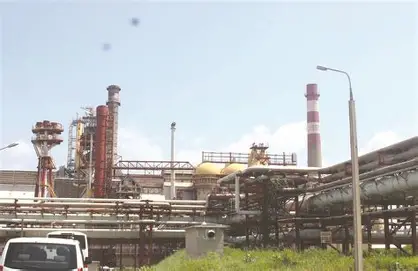
Today, the sprawling complex in Kogi State stands as a monument to ambition without achievement. It is a vast industrial graveyard where furnaces have never truly roared.

Beyond the Headlines
The Nigerian press has long reported on the political theatre surrounding Ajaokuta: the billions of naira allocated annually, the promises of revival from successive governments, and the occasional announcement of foreign investors supposedly ready to breathe life into the plant.
Yet beneath these headlines lies a sobering reality. The operational gaps that keep Ajaokuta dormant are rarely discussed. These truths expose mismanagement and show how big the challenge ahead is.
Voices of Industry
The debate over Ajaokuta’s future came into sharp focus in September 2025 when Africa’s richest man, Aliko Dangote, declared bluntly that the plant “isn’t going to succeed.”
He argued that global technological advances have overtaken the project. This makes revival impossible. “We can continue to fool ourselves.
We can keep being passionate about this. It’s not possible,” he told journalists, stressing that while steel is vital to national development, Ajaokuta itself is a lost cause.
Dangote’s remarks struck a nerve. For decades, Ajaokuta has consumed billions of naira in allocations without producing a single ton of steel.
His view is hard-nosed and business-like. The plant is technologically obsolete. It drains finances and is tangled in politics.
But engineers pushed back. Engineer Otis Anyaeji, former president of the Nigerian Society of Engineers, publicly challenged Dangote’s assessment.
He insisted that Ajaokuta’s core technologies remain relevant. Its failure comes from systemic mismanagement, not technical impossibility.
“I disagree with Industrialist Dangote’s view that Ajaokuta Industrial Complex will never work,” Anyaeji said, pointing to the need for policy consistency and modernisation rather than abandonment.
Obsolete Machinery, Forgotten Skills
Technology lies at the heart of the problem. Ajaokuta was built on Soviet-era designs from the 1970s. Some of the machinery was outdated even before the first furnace was lit.
Decades of neglect have left much of it unusable. Revival is often framed as a matter of ‘repairs.’ But the truth is harsher. The plant needs a complete technological overhaul.
Equally troubling is the human factor. Nigeria lacks many metallurgical engineers or technicians trained to operate a modern steel plant.
Without a deliberate program to train experts, any attempt to restart Ajaokuta will fail because of skill shortages.
Supply Chains and Power Struggles
Steelmaking is not just about furnaces. It is about supply chains. Nigeria has iron ore. But the coking coal needed for steelmaking must be imported.
That reliance on imports raises costs and exposes the plant to fluctuations in the global market. The transport infrastructure to move materials to Ajaokuta is also underdeveloped. This is another obstacle.
Energy is perhaps the most glaring weakness. Steelmaking uses huge amounts of electricity. It requires continuous power at an industrial scale.
Nigeria’s national grid is unstable. It cannot meet the demand. Ajaokuta would need its own power plant. Yet this is rarely discussed in talk of reviving the plant.
The Environmental Blind Spot
Modern steel plants are bound by strict emission and waste management standards. Ajaokuta’s design predates these norms, making costly retrofits unavoidable.
The environmental implications of restarting the plant without modernisation are profound, but they seldom feature in public debate.
Lessons from Abroad
Other nations have faced similar challenges but managed to overcome them.
India’s Bhilai Steel Plant, built in collaboration with the Soviet Union in the 1950s, underwent successive modernisation programs that kept it competitive.
China’s Baosteel was once a small project. It became a global powerhouse through constant investment in technology, workforce training, and integration with other industries.
These examples show that revival is possible — but only when modernisation is pursued with seriousness, transparency, and long-term commitment.
What Revival Really Means
Reviving Ajaokuta is not simple. It needs dismantling old machinery, installing modern furnaces and rolling mills, building a dedicated power supply, and training new metallurgists. It also requires environmental safeguards.
It is also about connecting the plant to Nigeria’s wider industrial sector. This includes the automotive, construction, and shipbuilding industries. The goal is for Ajaokuta’s steel to support national growth rather than sit unused in warehouses.
The price tag for such modernisation would be staggering, likely in the range of five to seven billion dollars. The timeline would stretch across a decade.
Political will is also needed. It must last through multiple administrations. This is rare in Nigeria’s unstable governance.
A Monument to Ambition
The voices of Dangote and Anyaeji capture the tension at the heart of Ajaokuta’s story. One sees a relic beyond saving; the other sees a project that can still be modernised.
Both perspectives share a key truth. Unless technology, skills, supply chains, energy, and environmental issues are confronted, Ajaokuta will stay a monument to ambition, not a source of growth.
The silent fault lines of Ajaokuta Steel reveal a stark crossroads. Nigeria faces a choice: confront deep-seated technological, managerial, and infrastructural realities, or allow Ajaokuta to remain a symbol of unrealised ambition. The future of the steel giant—and what it represents for national industrialisation—depends on recognising these hard truths and acting decisively.