

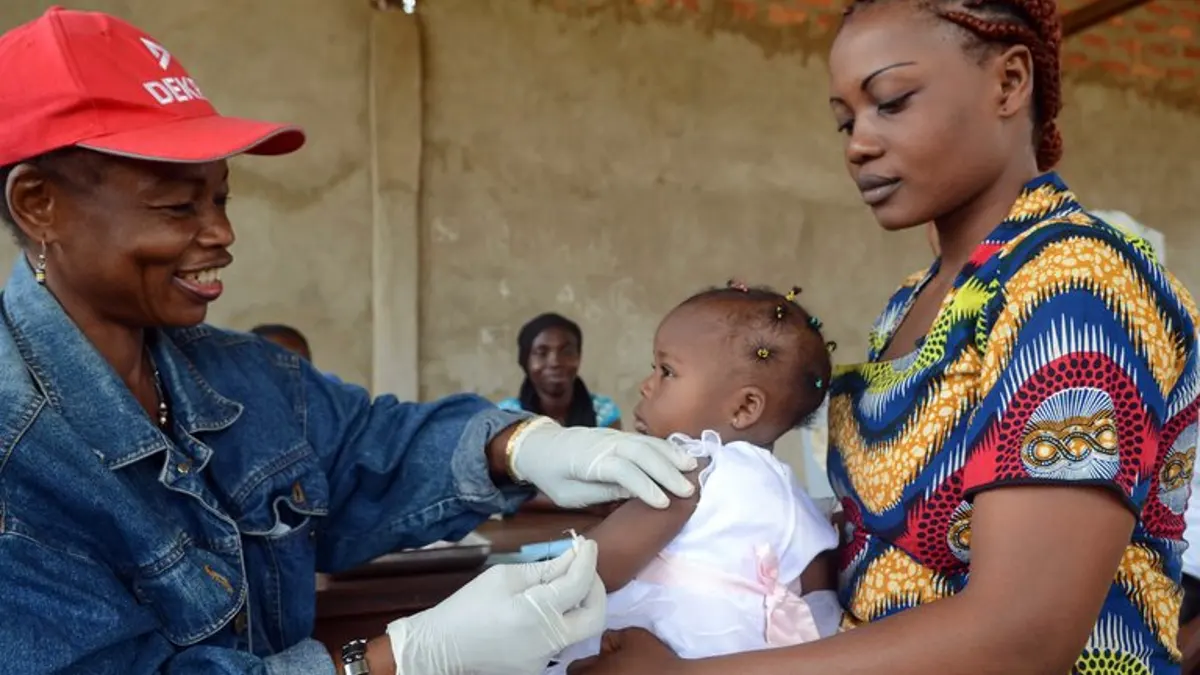
Measles vaccinations have saved nearly 20 million lives in Africa since 2000.
The findings come in the first-ever detailed analysis of immunisation targets in Africa, published on Wednesday by the World Health Organisation (WHO) and Gavi, the Vaccine Alliance.
It also documents progress and challenges in expanding immunisation coverage against a broad range of vaccine-preventable diseases, as well as ongoing efforts to meet targets under the global 2030 Immunisation Agenda.
The analysis covers the years from 2000 to 2024, during which vaccination coverage increased in Africa as 44 countries introduced a second dose of a measles-containing vaccine into routine programmes.

Coverage rates rose from five per cent to 55 per cent during this period, while supplemental inoculation campaigns delivered 622 million vaccinations.
Together, these efforts have halved measles deaths in the African region and led to a 40 per cent drop in overall cases.
Additionally, nine countries reported consistently low measles incidence rates in 2023 and 2024, while Cabo Verde, Mauritius and the Seychelles were verified in 2025 as having eliminated measles and rubella – the first sub-Saharan African countries to achieve this milestone.
“Africa has made remarkable progress in less than a generation, expanding immunisation and saving millions of young lives,” Dr Mohamed Janabi, WHO Regional Director, said.
But the progress is uneven, with certain regions and communities—particularly those in remote or conflict-affected areas—experiencing lower vaccination rates and higher disease incidence. Too many children remain unprotected as key targets are still missed. We must urgently strengthen routine immunisation to leave no child behind.
Routine schedules currently protect against 13 vaccine-preventable diseases, compared to 8 in 2000.
Since then, meningitis deaths have fallen by nearly 40 per cent, the malaria vaccine has been introduced in 25 countries, and at least 1.9 million lives were saved through vaccination in 2024 alone— some 42 per cent due to measles vaccination.
The 2030 Agenda envisions a world where all people fully benefit from vaccines. It aims for 90 per cent coverage at four key life stages to protect against diphtheria, pertussis (whooping cough), measles and the human papillomavirus (HPV).
Despite the progress made to date, Africa is still off track to reach the 90 per cent target, as immunisation coverage remains uneven and many children are still being missed.
WHO and Gavi call for continued investment and strong political commitment to sustain gains and protect future generations.
They are also working with governments to expand vaccination coverage, including accelerating and scaling up the introduction of new vaccines such as those for malaria and HPV.
The new analysis “demonstrates the immense life-saving power of vaccines when immunisation is prioritised as a matter of policy,” Dr Sania Nishtar, the Gavi CEO., said.
“Progress has been made, but continued effort is vital to consistently reach every child, especially in fragile and remote areas,” she added.