
Table of Contents
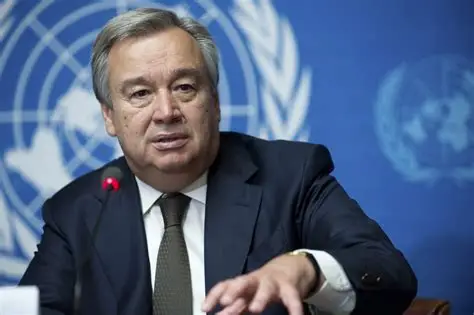
António Guterres will step down as Secretary-General of the United Nations on December 31, concluding a decade characterised by significant challenges and widespread debate over the UN’s authority.
His departure triggers a contest among four candidates vying to lead the organisation amid deep global divisions and eroding confidence in international cooperation.
Tradition suggests the next Secretary-General should come from Latin America, which last held the post in 1991 with Javier Pérez de Cuéllar. Three of the contenders are from Latin America, while one African candidate faces an uphill battle. Their candidacies highlight both personal credentials and the political dynamics influencing the UN’s future direction.
Michelle Bachelet: Reformist Firebrand or Global Provocateur?
Michelle Bachelet, who was Chile’s first female president and also served as UN High Commissioner for Human Rights, has a reputation for resilience and a drive for reform.

Twice elected as president and a consistent advocate for human rights, she has faced criticism over her report on the Uyghurs from Beijing, while her support for abortion rights has unsettled some in Washington.
Though Brazil and Mexico support her bid, Chile withdrew its endorsement under its current conservative government. Bachelet’s campaign raises a central question: is the UN prepared for a leader who confronts powerful nations head-on?
Rafael Grossi: Nuclear Negotiator in the Global Spotlight
Rafael Grossi of Argentina, currently head of the International Atomic Energy Agency, offers a contrasting profile. He enjoys backing from Washington and is widely regarded as an adept negotiator with nuclear-armed states—a crucial skill in today’s volatile international climate.
Grossi pledges to refocus the UN on its foundational mission of preventing conflict, echoing the U.S. priorities. Still, some observers are concerned that his close relationship with the United States may compromise his autonomy. His candidacy underscores the ongoing sway of American interests over the UN leadership selection process.
Rebecca Grynspan: Behind-the-Scenes Deal Maker
Rebecca Grynspan of Costa Rica presents a more understated but capable option. As leader of UNCTAD, she played a key role in brokering the 2022 Black Sea Initiative, which enabled Ukraine to continue exporting grain despite ongoing conflict.
While not as publicly prominent as her rivals, Grynspan commands respect among diplomats for her coalition-building and negotiation skills.
Her candidacy represents practical competence over spectacle, appealing to those seeking a reliable rather than polarizing leader.
Macky Sall: Africa’s Long-Shot Challenger
Macky Sall, Senegal’s former president, is the sole African contender but is seen as a long shot. While he played a role in Burundi’s progress, he lacks broad regional support, with 20 African Union members opposing his candidacy.
Allegations of crackdowns on protests during his presidency have also damaged his image.
Limited backing from both Africa and the Security Council leaves Sall with slim prospects, reflecting Africa’s persistent struggle for greater representation within the UN.
Leadership at a Turning Point: What’s at Stake for the UN
Each of the four candidates brings a distinct approach to leadership. Bachelet champions moral authority and is willing to confront human rights violations, which could unsettle influential nations.
Grossi combines robust diplomacy with American support, raising concerns about his independence.
Grynspan prioritises coalition-building and pragmatic solutions over charisma. Although Sall is not expected to win, his candidacy embodies Africa’s ongoing quest for a stronger voice at the highest levels of the UN.
In the end, the selection will signify more than just the UN’s new leader—it will point to the organization’s future path in a fractured world.
The Security Council’s decision—whether it favors ideals, practical solutions, or political interests—will shape whether the UN can restore its legitimacy and relevance moving forward.