

Table of Contents
Meta has seen record profits, spent $135 billion on AI, and cut 8,000 jobs in a single year. This investigation explores how Meta’s move to an AI-first workforce marks a major shift for the future of work everywhere.
A Sudden Shift: Mass Layoffs Redefine Meta
On a grey Tuesday in May 2026, Meta employees worldwide woke up to the same harsh signal: a calendar notification. Some thought it was just a routine check-in, while others sensed something was wrong.
Within minutes, thousands of laptops froze, Slack channels went quiet, and inboxes filled with sudden meeting requests. By noon, it was clear that 8,000 jobs were gone.
In Dublin, a product manager stared at her frozen screen, realising she had just lost the job she had held for seven years. In Menlo Park, a recruiter texted colleagues, “I think I’m out. My calendar just disappeared.”

The same story played out across continents. Meta was not in crisis; profits were soaring, revenue was up, and the stock price was rising. Yet, at its most successful, the company decided to cut back.
An Unprecedented AI Investment
Just hours after the layoffs, executives announced a new capital spending plan of $115 to $135 billion for 2026. The money was not going to new offices or perks, but to GPUs, data centres, and massive computational infrastructure. Eighteen new data centres were being built across the United States and Europe. Billions were also spent on acquisitions, including a $14.3 billion stake in Scale AI.
Meta’s future was now focused less on human talent and more on computational power. Leaders talked about becoming “AI-native,” a term that sounded impressive on earnings calls but felt different inside the company. It meant fewer managers, quicker decisions, and more workflows run through dashboards rather than people.
Winners and Losers in Meta’s Workforce
Reality Labs, which was once the centre of Meta’s metaverse plans, lost over a thousand jobs. Recruiting teams were cut, sales and mid-level managers were reduced, and many engineers outside of AI divisions were affected. Meanwhile, about 7,000 employees were moved to roles related to AI.
These employees were told they would move into new job categories: AI Builders, who handle prompt-tuning and model monitoring; AI Pod Leads, who manage machine-focused workflows; and AI Org Heads, who oversee automation pipelines.
Retraining programs like “AI Transformation Week” had mixed results. Some employees felt confident in their new roles, but others saw the reassignment as only temporary.
Employee Anxiety and Uncertainty
On Meta’s forums and internal chats, employees shared their worries and uncertainty. One engineer wrote, “Every process I document feels like training data for the system that will replace me.” Another posted, “Meta is dead and depressing. They care only about AI.”
Sentiment analysis found that over 80 per cent of employee reactions to AI initiatives were negative. Culture ratings dropped to 2.23 out of 5, a 43 per cent decline since 2020.
Employees who remained described the experience as a constant “experiment in automation,” where every slow process was seen as a problem for AI to fix, not as a sign of human complexity.
A New Divide: The Rise of the AI Elite
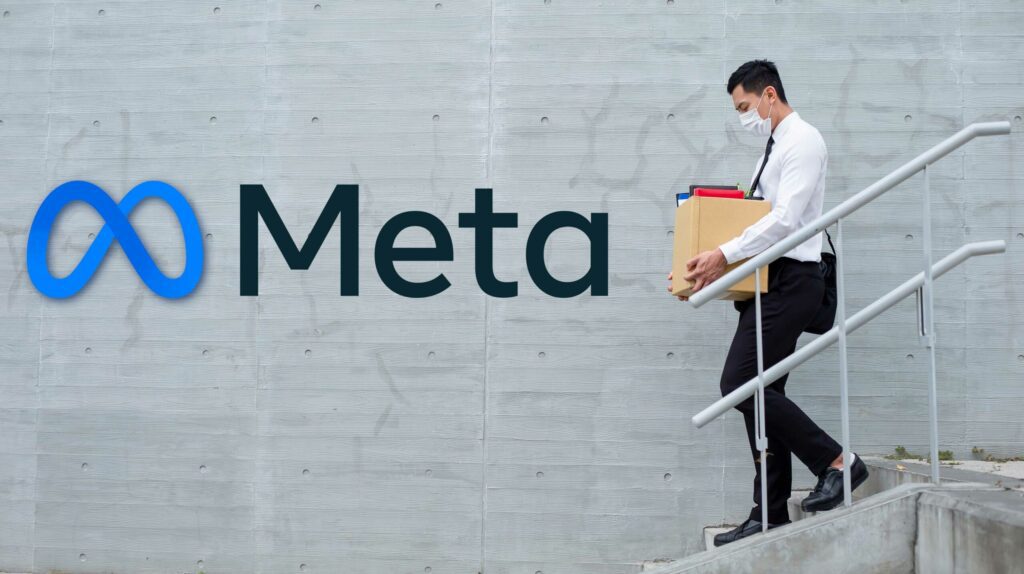
While thousands lost their jobs or were reassigned, a small group of AI researchers and infrastructure engineers were highly sought after, almost like star athletes.
There were rumours of compensation packages worth hundreds of millions. At the same time, HR staff, recruiters, and operations teams were told they were no longer needed. This created two groups of workers: the AI elite and everyone else.
Global Ambitions, Local Sacrifices
In Sub-Saharan Africa, Meta launched the Llama Impact Accelerator in Nigeria, Kenya, Senegal, and South Africa to support startups in agriculture, healthcare, and financial inclusion.
Meanwhile, layoffs took place in the United States and Europe. This contrast highlights a bigger strategy: cutting costs in established markets while expanding AI projects in emerging regions.
A Broader Trend: Industry-Wide Disruption
Meta’s changes are part of a larger trend. Since 2025, Amazon has cut 30,000 jobs, Microsoft 15,000, Google 12,000, Salesforce 8,000, and Accenture 11,000. Worldwide, over 425,000 jobs have been lost to AI since 2023, especially in tech, finance, and logistics.
New Rules, Uncertain Protections
California’s SB 53, the Frontier AI Transparency Act, which took effect in January 2026, now requires companies to disclose their risk-management practices and provide whistleblower protections.
The FTC has also signalled that it will closely monitor deceptive AI practices. Still, oversight is fragmented, leaving workers vulnerable to unclear automation strategies.
Investor Reactions: Hype Meets Doubt
Investors were split. Meta’s shares rose 10 per cent in January 2026 after the AI spending was announced, but later dropped 9 per cent for the year as analysts questioned if the growth could last.
JPMorgan downgraded the stock, saying there was “a challenging path to returns.” Others stayed optimistic, calling Meta “one of the clearest ways to bet on AI.”
Beyond profits and new infrastructure, the emotional impact is clear. Employees who remain say they are competing with machines that never get tired, never ask for raises, and keep getting better.
Creativity is now measured by metrics set by dashboards. Trust in leadership fades as executives announce record revenue while laying off large numbers of staff.
Workers who lost their jobs are moving into fields like professional services, finance, manufacturing, and healthcare.
On average, it takes nearly seventeen months to make the switch, and incomes drop by about 27 per cent unless there are strong retraining programs.
The International Labour Organisation warns that current AI ethics rules are not enough to protect workers during this change.
What Meta’s Gamble Means for Work Everywhere
Meta’s changes offer a look at the future of work: smaller teams, more automation, fewer managers, and AI helping with productivity everywhere.
For executives and investors, this appears to be efficient. For workers, it feels unstable. What is happening at Meta is about more than just one company; it shows how the relationship between people and machines is changing, and the quiet cost for those who help build systems that might one day replace them.