

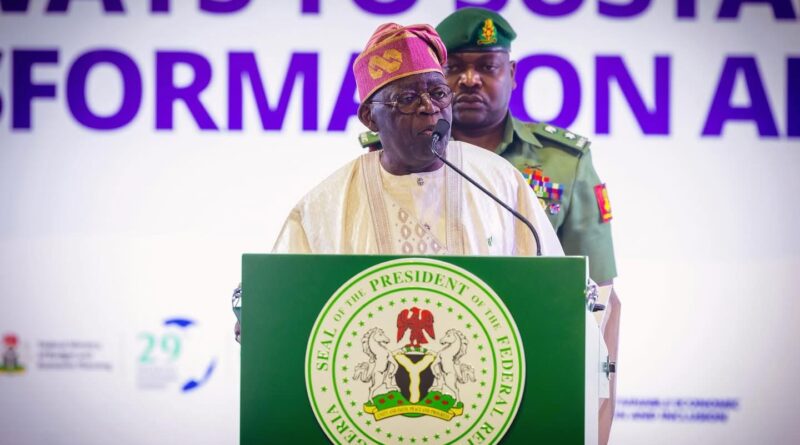
In a lengthy anniversary address, the word “corruption” did not appear once. That single omission reveals everything the speech was designed to conceal. Tinubu asked Nigerians earning ₦70,000 to endure, while the political class feasted undisturbed. That asymmetry is the speech’s most politically dishonest dimension. KEHINDE ADEGOKE takes a clinical dissection of President Tinubu’s three-year-in-office address.
What the Speech Gets Right
Tinubu‘s address is a structurally competent presidential communication. He acknowledges pain upfront, frames reforms as necessary medicine, and catalogues visible infrastructure projects. The invocation of the subsidy regime’s ₦18.4 billion daily cost is a legitimate defence — that fiscal haemorrhage was real and unsustainable. On infrastructure, road construction figures, NLNG Train 7 progress, and NELFUND disbursements are largely verifiable claims, not pure fiction.
Where the Speech Falls Short — and Significantly

The Cost of Living Contradiction
The President’s most glaring vulnerability is the yawning gap between his economic story and the realities of Nigerian life. He notes food prices “have largely come down from their peak” — a carefully qualified, self-serving formulation. Come down to what? From crisis-level to merely unbearable is not a vindication. For the urban poor and rural households, whether a loaf of bread dropped from ₦2,000 to ₦1,700 is academically interesting but practically irrelevant. The hardship remains structurally embedded, and the speech does not adequately address it.
The Federal-State Governance Gap
One of the speech’s most telling evasions is its implicit suggestion that the federation operates as a single implementation machine under presidential direction. It does not. The enormous FAAC allocations flowing to states and local governments — record releases under this administration — have not produced practical, commensurate development at those levels. Governors are largely accountable to no one. Roads in state capitals crumble. Primary schools lack teachers. Primary healthcare centres exist on paper and in presidential speeches.
The President cannot claim credit for federal infrastructure while tactfully ignoring the abject governance failure at sub-national levels funded by the same federal pool.
The Sacrifice Asymmetry
Perhaps the speech’s most politically dishonest dimension is its call to patience. Tinubu asks Nigerians — earning a minimum wage of ₦ 70,000 in an economy where a bag of rice consumes a significant fraction of that — to endure and persevere. Simultaneously, the political class feeds at a trough of officially obscured emoluments, security votes, overseas medical tourism, and constituency allowances that dwarf the imagination of the average Nigerian. The Revenue Mobilisation Allocation and Fiscal Commission (RMAFC) figures on political office holders’ remuneration are themselves contested and incompletely disclosed, wrapped in deliberate obscurity.
Until the political class takes a verifiable, transparent, and proportionate share of the sacrifices it preaches, the call for forbearance rings hollow and is rightly met with cynicism.
The Muteness on Corruption — A Deliberate Omission
This is not an oversight. It is a deliberate editorial decision that conveys much. In a lengthy presidential anniversary address, the word “corruption” did not appear once. Not once. This is from the leader of a country that consistently ranks near the bottom of Transparency International’s Corruption Perceptions Index.
The omission is doubly damning given the political context unfolding in plain sight: people facing active corruption allegations are purchasing expression-of-interest forms, securing party clearances, and positioning for 2027 contests with conspicuous impunity. The implicit operating logic of Nigerian politics remains brutally intact — deliver election results, and your legal troubles evaporate. Positions become compensation for compromise. No presidential speech, however eloquent, can mask that reality when it plays out openly and repeatedly.
The Two-Nigeria Economy
The stock market data President Tinubu cites — the All Share Index rising from 53,000 to 250,000 and market capitalisation reaching ₦160 trillion — is real. It is also largely irrelevant to the bottom 60% of Nigerians. Stock market participation remains the preserve of a thin investor class. Record corporate profits and dividends accrue upward. Meanwhile, the subsidy removal, sold as a poverty-reduction measure — freeing funds for social investment — has not produced visible, scaled, and sustained pro-poor outcomes that ordinary Nigerians can identify in their daily lives.
Some citizens lack access not just to comfort but to the most basic necessities — food, clean water, and shelter. The rich are visibly becoming richer. The poor are being left further behind. The trickle-down mechanism is broken, and the speech does not address how to repair it.
The Security Narrative — Incomplete and Evasive
Tinubu’s treatment of security is perhaps the speech’s most politically calculated section. He speaks of intensified operations against “terrorists, bandits, kidnappers, oil thieves, and criminal networks” in the passive official voice of a government doing its best against faceless adversaries. But this framing is deliberately misleading.
Nigeria’s security and intelligence architecture — the DSS, military intelligence, NIA, and police — is not operating in an information vacuum. There is substantial evidence, including from legislative committee hearings, civil society documentation, and investigative journalism, that the identities of major sponsors of banditry, terrorism, and kidnapping syndicates are known, or knowable, at the highest levels of government.
The reluctance to name, prosecute, and convict these actors is not a capacity failure. It is a political choice. When high-value criminal sponsors enjoy protection by virtue of political utility or ethnic and regional sensitivities, the President’s security address becomes performance rather than policy.
The Telecommunications Blind Spot — A Glaring Accountability Gap
Compounding the security failure is an omission the President did not even gesture toward — the role of telecommunications infrastructure in enabling and sustaining insecurity. Remarkably, Tinubu devoted a dedicated section of his speech to celebrating the stabilisation of the telecoms sector, praising network expansion and widening digital access as economic achievements. What he conspicuously left unsaid is the sector’s undeniable role — whether by negligence, regulatory failure, or worse — in sustaining criminal and insurgent networks.
Bandits coordinate attacks by phone. Kidnappers negotiate ransoms via GSM calls. Terrorists use internet platforms and mobile money channels to move funds and recruit. These are not speculative allegations — they are documented functional realities. Nigeria’s telecom operators sit on a rich source of metadata, call data records, and location intelligence that, properly subpoenaed and forensically analysed, could materially degrade the operational capacity of these networks.
The Nigerian Communications Commission has the regulatory authority. The security agencies have the legal instruments. The question is not capability — it is will. If a kidnapper negotiates a ransom over a SIM-registered line and that trail is never followed to prosecution, the failure is systemic and deliberate. Celebrating telecom expansion while ignoring telecom’s documented role in enabling insecurity is more than an omission — it is a damaging contradiction that exposes the selective nature of the administration’s accountability narrative.
A genuinely accountable government would have announced mandatory real-time lawful intercept compliance systems for all operators, named and sanctioned networks found to have facilitated criminal communications, and committed to a joint security-telecoms intelligence task force with published accountability metrics. None of that appeared in the speech.
The Dig
President Bola Ahmed Tinubu‘s third anniversary speech is the work of a competent communications team deploying the language of reform to construct an account of progress that is partially true, selectively assembled, and strategically incomplete.
The reforms were real. The pain is real. The infrastructure exists. The inequality is deepening. Both things are simultaneously true, and an honest speech would have held that tension squarely rather than papering over it.
A leader genuinely committed to the reform narrative he articulates would have named corruption directly, committed to published disclosure of political office holders’ full remuneration, acknowledged the sub-national governance failure, held the telecoms sector to security account, and said plainly that sacrifice must be shared — beginning from the very top.
He did none of those things.
On security, on corruption, on inequality, and on elite accountability — the silences in this speech are louder than the words.
That silence is its own verdict.
𝐊𝐞𝐡𝐢𝐧𝐝𝐞 𝐀𝐝𝐞𝐠𝐨𝐤𝐞 𝐢𝐬 𝐚𝐧 𝐚𝐰𝐚𝐫𝐝-𝐰𝐢𝐧𝐧𝐢𝐧𝐠 𝐢𝐧𝐯𝐞𝐬𝐭𝐢𝐠𝐚𝐭𝐢𝐯𝐞 𝐣𝐨𝐮𝐫𝐧𝐚𝐥𝐢𝐬𝐭 𝐰𝐢𝐭𝐡 𝐦𝐨𝐫𝐞 𝐭𝐡𝐚𝐧 𝟏𝟓 𝐲𝐞𝐚𝐫𝐬 𝐨𝐟 𝐝𝐢𝐬𝐭𝐢𝐧𝐠𝐮𝐢𝐬𝐡𝐞𝐝 𝐞𝐱𝐩𝐞𝐫𝐢𝐞𝐧𝐜𝐞 𝐞𝐱𝐩𝐨𝐬𝐢𝐧𝐠 𝐬𝐭𝐨𝐫𝐢𝐞𝐬 𝐭𝐡𝐚𝐭 𝐦𝐨𝐮𝐥𝐝 𝐩𝐮𝐛𝐥𝐢𝐜 𝐝𝐢𝐬𝐜𝐨𝐮𝐫𝐬𝐞. 𝐖𝐢𝐭𝐡 𝐭𝐡𝐫𝐞𝐞 𝐢𝐧𝐝𝐮𝐬𝐭𝐫𝐲 𝐧𝐨𝐦𝐢𝐧𝐚𝐭𝐢𝐨𝐧𝐬 𝐭𝐡𝐫𝐨𝐮𝐠𝐡𝐨𝐮𝐭 𝐝𝐢𝐯𝐞𝐫𝐬𝐞 𝐛𝐞𝐚𝐭𝐬, 𝐡𝐞 𝐡𝐚𝐬 𝐞𝐚𝐫𝐧𝐞𝐝 𝐫𝐞𝐜𝐨𝐠𝐧𝐢𝐭𝐢𝐨𝐧 𝐟𝐨𝐫 𝐟𝐞𝐚𝐫𝐥𝐞𝐬𝐬 𝐫𝐞𝐩𝐨𝐫𝐭𝐢𝐧𝐠, 𝐢𝐧𝐜𝐢𝐬𝐢𝐯𝐞 𝐚𝐧𝐚𝐥𝐲𝐬𝐢𝐬, 𝐚𝐧𝐝 𝐚 𝐜𝐨𝐦𝐦𝐢𝐭𝐦𝐞𝐧𝐭 𝐭𝐨 𝐚𝐜𝐜𝐨𝐮𝐧𝐭𝐚𝐛𝐢𝐥𝐢𝐭𝐲. 𝐀𝐬 𝐌𝐚𝐧𝐚𝐠𝐢𝐧𝐠 𝐄𝐝𝐢𝐭𝐨𝐫 𝐚𝐧𝐝 𝐂𝐄𝐎 𝐨𝐟 𝐓𝐡𝐞𝐃𝐢𝐠𝐠𝐞𝐫𝐍𝐞𝐰𝐬.𝐜𝐨𝐦, 𝐀𝐝𝐞𝐠𝐨𝐤𝐞 𝐥𝐞𝐚𝐝𝐬 𝐚 𝐩𝐢𝐨𝐧𝐞𝐞𝐫𝐢𝐧𝐠 𝐧𝐞𝐰𝐬𝐫𝐨𝐨𝐦 𝐝𝐞𝐝𝐢𝐜𝐚𝐭𝐞𝐝 𝐭𝐨 𝐞𝐱𝐩𝐨𝐬𝐢𝐧𝐠 𝐮𝐧𝐬𝐞𝐞𝐧 𝐭𝐫𝐮𝐭𝐡𝐬, 𝐚𝐦𝐩𝐥𝐢𝐟𝐲𝐢𝐧𝐠 𝐦𝐚𝐫𝐠𝐢𝐧𝐚𝐥𝐢𝐬𝐞𝐝 𝐯𝐨𝐢𝐜𝐞𝐬, 𝐚𝐧𝐝 𝐞𝐬𝐭𝐚𝐛𝐥𝐢𝐬𝐡𝐢𝐧𝐠 𝐧𝐞𝐰 𝐬𝐭𝐚𝐧𝐝𝐚𝐫𝐝𝐬 𝐢𝐧 𝐢𝐧𝐯𝐞𝐬𝐭𝐢𝐠𝐚𝐭𝐢𝐯𝐞 𝐣𝐨𝐮𝐫𝐧𝐚𝐥𝐢𝐬𝐦.
𝐓𝐡𝐞𝐃𝐢𝐠𝐠𝐞𝐫𝐍𝐞𝐰𝐬.𝐜𝐨𝐦 | 𝐰𝐰𝐰.𝐭𝐡𝐞𝐝𝐢𝐠𝐠𝐞𝐫𝐧𝐞𝐰𝐬.𝐜𝐨𝐦 | 𝟎𝟖𝟎𝟑𝟗𝟏𝟑𝟓𝟒𝟕𝟐 | 𝐈𝐛𝐚𝐝𝐚𝐧, 𝐍𝐢𝐠𝐞𝐫𝐢𝐚
editor@thediggernews.com