

360
Table of Contents
New data from Euclid and Herschel telescopes reveals a steady decline in galactic heat and star formation, marking the universe’s slow descent into cosmic stillness.
The universe is officially past its prime.
In a sweeping new study, astronomers using data from ESA’s Euclid and Herschel space telescopes have confirmed that star formation has peaked—and the cosmos is now cooling and dimming into a quieter, darker future.
“The universe will just get colder and deader from now on,” said Douglas Scott, cosmologist at the University of British Columbia.
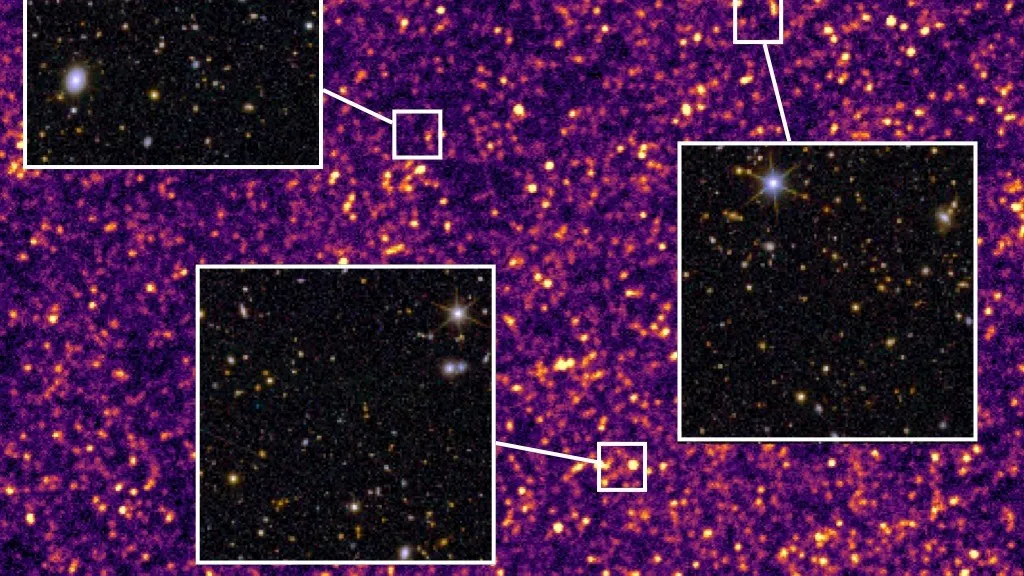
By analysing heat signatures from stardust in over two million galaxies, researchers found that galactic temperatures have dropped slightly over the past 10 billion years, signalling a steady decline in star birth.
The average temperature fell by just 10 kelvins, but the implications are profound: less heat means fewer massive stars, and fewer stars means a fading universe.
“We’re past the epoch of maximum star formation,” Scott added.
The Euclid telescope, launched to build the largest-ever 3D map of the universe, combined its first data release with Herschel’s archival infrared observations to produce the most comprehensive galactic temperature readings ever recorded.
The findings reveal that dust—the raw material for stars—is vanishing, and galaxies are slowly running out of fuel.
Lead researcher Ryley Hill called the dataset “the most statistically robust calculations to date,” offering a sobering glimpse into the universe’s long-term trajectory.
While the final cosmic curtain may be trillions of years away, the decline is already underway. The Milky Way will continue to shine for billions more years, but the universe’s golden age of creation is behind us. What lies ahead is a slow fade into cosmic silence.