

From degraded soils to biodiesel, cosmetics, and biopesticides — how one resilient shrub is redefining Nigeria’s future.
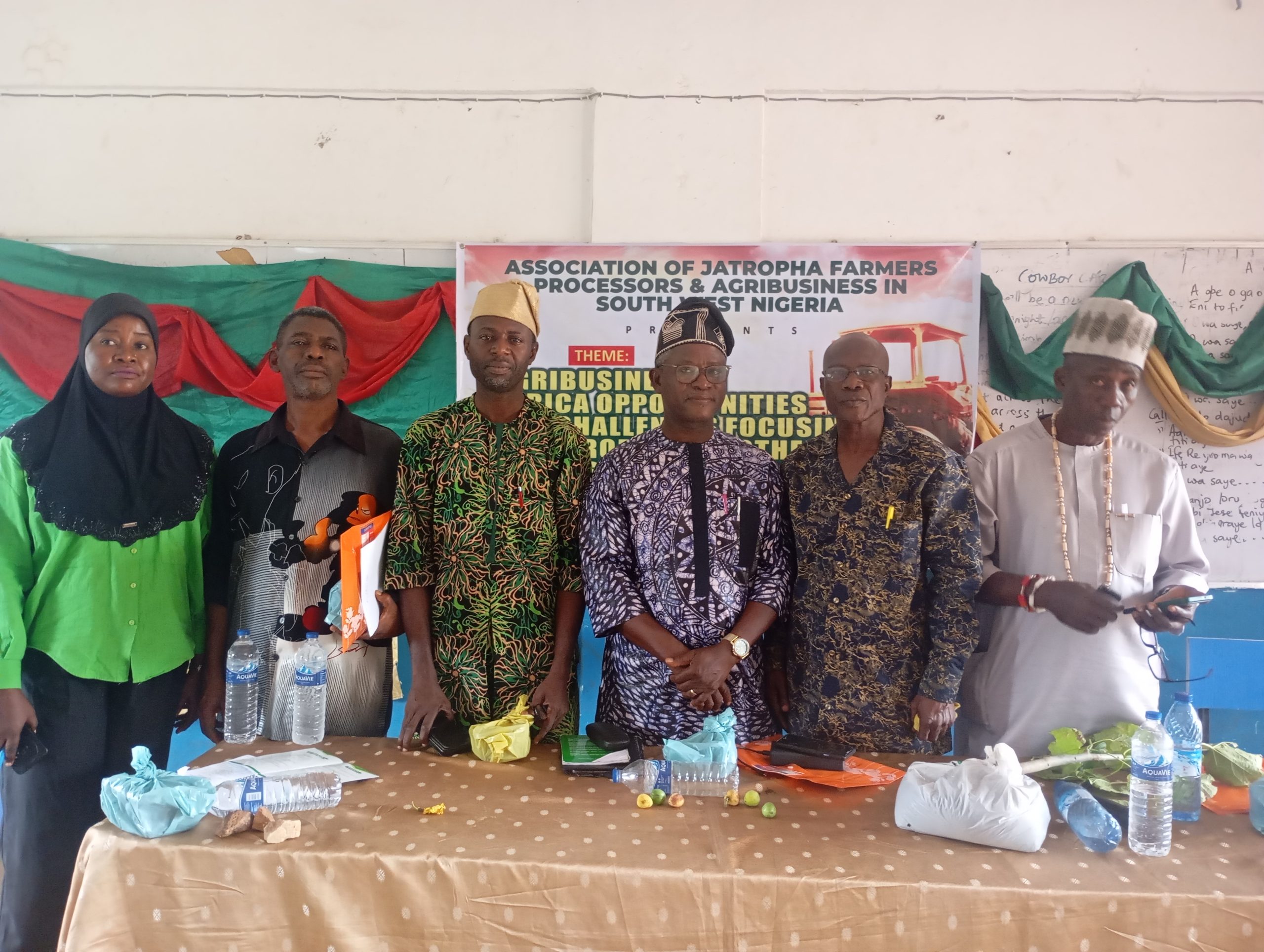
It was the 11th of December, 2025, in Ibadan, Nigeria. The air buzzed with anticipation as farmers, entrepreneurs, stakeholders, students, and policymakers gathered under the banner of the Mega Business Summit, organized by the Association of Jatropha Farmers, Processors, and Agribusiness Leaders in SouthWest Nigeria under the leadership of its Chairman, Mogaji Adeogun Aderemi.
The Summit was themed: “Agribusiness in Africa: Opportunities and Challenges in Jatropha and other commodities.”
The venue, St. Patrick’s Grammar School, Orita Bashorun, Ibadan, brimmed with energy — young agripreneurs clutching tablets filled with digital farm maps, seasoned farmers in traditional attire, and investors from Ibadan, Lagos, and beyond.

At the center of it all stood the guest Lecturer, Professor of Soil Fertility, Consultant in Organic Agriculture, Agroecology, and Sustainable Agriculture Department of Soil Resources Management, University of Ibadan, Professor Olugbenga AdeOluwa, whose voice carried both urgency and hope.
The Challenge
Professor Adeoluwa began with a stark reminder: “Africa holds over 60% of the world’s uncultivated arable land, yet millions go hungry. Our youth seek jobs, our farmers struggle with climate shocks, and our food systems leak value through post-harvest losses.”
The audience nodded. They knew the reality — poor rural roads, unreliable cold storage, and finance gaps that left smallholders vulnerable. Nigeria’s reliance on rain-fed farming meant yields were volatile, and droughts in the north were already reshaping livelihoods.
The Opportunity
Then came the pivot. “But what if a single crop could bridge energy, agriculture, and sustainability? What if Jatropha became our symbol of resilience?”
Slides lit up the screen: images of Jatropha curcas, a hardy shrub thriving on degraded soils. Its seeds, rich in oil, promised biodiesel for Nigeria’s energy needs. Its press cake offered organic fertilizer. Extracts could serve as biopesticides, reducing dependence on chemicals. Even its husks could be turned into biochar and briquettes for rural energy.
The crowd leaned forward. This was more than farming — it was agribusiness reimagined; as they seemingly appeared to have heaved a sigh of relief and hope!

The Vision
The renowned erudite scholar and agribusiness shared success stories of young entrepreneurs. According to him, “a start-up from Kaduna had built a mobile app linking Jatropha growers to biodiesel processors.”
Also, “a women-led cooperative in Ogun was producing organic soaps and cosmetics from Jatropha oil just as a youth group in Oyo had launched a biopesticide enterprise, selling eco-friendly sprays to organic farmers.”
Each testimony painted Jatropha not as a speculative crop, but as a multi-sector commodity — energy, agriculture, industry, and sustainability converging.
The Turning Point
The summit climaxed with a symbolic act: a group of farmers and youth planted rows of Jatropha seedlings outside the venue. The gesture was more than ceremonial — it was a declaration that Nigeria’s agribusiness future would be rooted in innovation, resilience, and value addition.
Professor AdeOluwa closed with a powerful call:
“Jatropha is not just a plant. It is a frontier. It is our chance to reclaim degraded land, empower rural communities, and fuel Africa’s green economy. Let us not abandon this opportunity as others have in the past. Let us scale it, refine it, and own it.”
The convener of the summit, Mogaji Aderemi, thanked the participants for finding time out of their tight schedules to attend the event. He emphasized the need for Nigerians to go back to farming as in the days of old.
He narrated how Agriculture used to be the mainstay of the Western Region during the lifetime of the Late sage, Chief Obafemi Awolowo:
“Agriculture was the main economy of Nigeria before the discovery of crude oil in the 70’s.
“In the south west Nigeria, agricultural activities provided a lot of money for the government of western region during the premiership of Chief Jeremiah Obafemi Awolowo and cash crops like cocoa, palm kernels, coffee, kolanut etc. made a lot of foreign exchange and the resources was well managed to produce place like cocoa house, Obafemi Awolowo University, Liberty Stadium, First Television Station in western even before France Premier, Lafia hotel, Ikeja airport hotel and others beautiful legacies. We can see them to this day.
“But immediately crude oil was discovered, agriculture was put in the background by successive governments of Nigeria, and much money was released by the government of Gen. Gowon. He stated that Nigeria’s problem is not spending the money in the government’s coffers.
“Today, there are a lot of people in poverty, hunger, and diseases because the economic situation in Nigeria is terrible and nothing to write home about, and the situation looks hopeless, and the government is totally confused and only doing abracadabra.”
Mogaji concludes by insisting that “The only way out from this hopeless situation is to go back to agriculture, which almighty God has a special interest in and blesses.”
The event was graced by dignitaries and companies, including: Alhaji Abiola Olaniyan of Labi International Nigeria Ltd.; Chief Taiwo Olaniyan, Prof. Oluwatobi Adeokun, former Provost of College of Agriculture, Olabisi Onabanjo University, Ago-Iwoye; Alhaja Agboola, representative of the Director, Raw Material Research Development Council (RMRDC), Oyo State; Representatives of Farmways and Presto, among others.
As the sun set over Ibadan, participants left with renewed conviction. They carried seedlings, business cards, and dreams of processing hubs, cold chains, and export markets.
The “Jatropha Event” became more than a summit — it was remembered as the day Nigeria’s agribusiness community turned a resilient shrub into a symbol of hope.