Table of Contents
Kehinde Adegoke | ACDC
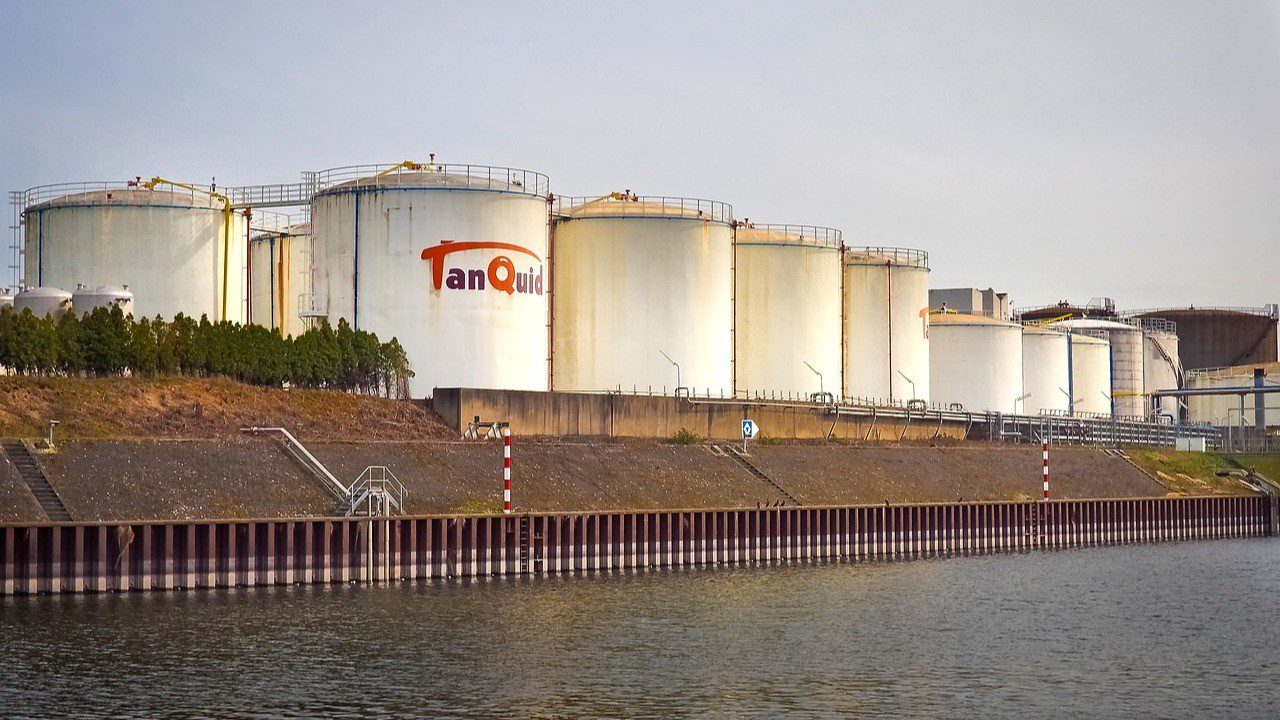
Kelcy Warren, billionaire CEO of Energy Transfer and one of Donald Trump’s most prolific donors, has expanded his empire into Europe. Through Sunoco, Energy Transfer’s subsidiary, Warren acquired TanQuid, Germany’s largest independent fossil gas storage company, for €500 million. TanQuid operates 16 sites across Germany and Poland, with a combined storage capacity exceeding three million cubic metres.
The deal immediately raised alarms in Berlin. TanQuid previously owned 49% of Fernleitungs-Betriebsgesellschaft (FBG), which supplies pipelines to German military bases. Although the German government quickly required TanQuid to divest its stake to the Bundeswehr, critics argue that allowing Sunoco to control such infrastructure remains a strategic blunder.
The Anti-Corruption Data Collective cautioned: “It remains a grave mistake to sell critical infrastructure to an American oil billionaire and friend of Trump.”

Europe’s Growing Reliance on U.S. Energy
The acquisition comes amid Europe’s deepening dependence on American fossil fuels:
Europe now imports over 40% of its gas from the U.S.
The 2025 EU-US trade deal commits Europe to $750 billion in American energy purchases by 2028.
A joint think tank brief warned that this reliance exposes Europe to price volatility, geopolitical leverage, and slower renewable adoption.
Sunoco’s control of gas storage facilities gives Warren a potential chokehold over supply, ensuring profits from the fossil fuel trade even as Europe debates accelerating its green transition.
Energy Policy as Geopolitical Leverage
Energy has long been a tool of foreign policy. Russia’s invasion of Ukraine in 2022 revealed how dependence on Moscow’s gas gave the Kremlin leverage over Europe. Now, similar concerns are surfacing about U.S. influence.
The 2025 U.S. National Security Strategy explicitly stated that oil and gas exports enable Washington to “project power.” Meanwhile, Trump administration officials have threatened tariffs against European allies resisting U.S. ambitions in Greenland and the Arctic.
This intertwining of business and foreign policy has become sharper under Trump’s “America First” doctrine, where allies and adversaries alike are subject to economic pressure aligned with the interests of politically connected business figures.
The Rise of American Oligarchs
The Sunoco-Tanquid deal is part of a broader trend documented in ACDC’s American Oligarchs database, which maps Trump-aligned donors with global business interests.
Warren donated over $12.5 million to MAGA campaigns in 2025.
He gave $5 million to Trump’s 2024 campaign.
He contributed $10 million to a pro-Trump super PAC that financed rallies before the January 6th insurrection.
Trump himself reported shares in Energy Transfer in his 2015–2016 disclosures.
This convergence of political donations and corporate expansion highlights the rise of oligarchs whose fortunes are inseparable from White House access.
Why It Matters
Germany’s decision to allow Sunoco’s acquisition of TanQuid raises urgent questions:
Can Europe safeguard energy independence while tethered to U.S. imports?
What risks arise when critical infrastructure is controlled by politically connected foreign billionaires?
Does this entrench fossil fuel dependency at the expense of Europe’s climate goals?
As Europe recalibrates its energy strategy in the shadow of war and shifting alliances, the Sunoco-Tanquid deal may prove a watershed moment—revealing how deeply intertwined energy, politics, and oligarchic power have become.