

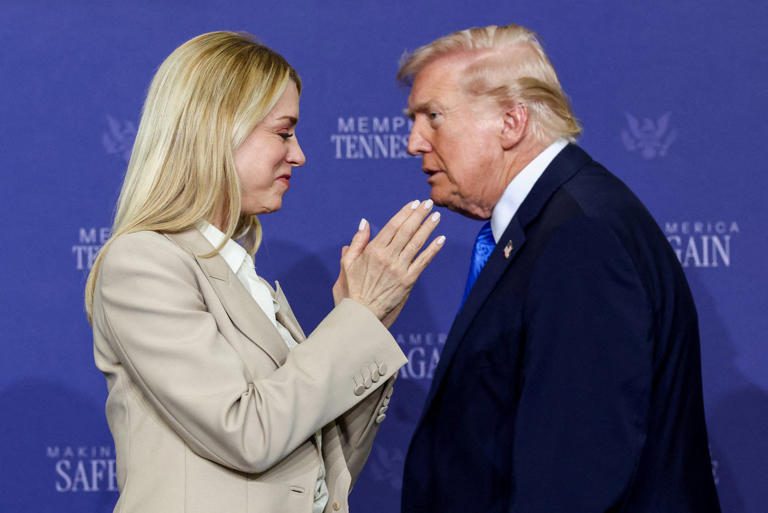
Bondi drew fire for dragging her feet on prosecuting Trump’s critics, fueling claims she failed to act decisively against his adversaries.
Kehinde Adegoke | SCMP
In a dramatic shake‑up, President Donald Trump has fired Attorney General Pam Bondi, a move that comes as newly released Epstein case files ignite a political storm. The dismissal, announced in Washington, D.C., reverberates far beyond U.S. borders, underscoring how the scandal’s fallout is reshaping global perceptions of American justice and accountability.
Trump had also reportedly grown frustrated that Bondi was not moving quickly enough to prosecute critics and adversaries whom he wanted to face criminal charges.

As attorney general, Bondi was a staunch Trump ally, dismantling the Justice Department’s tradition of independence in investigations.
Repeated criticism over the Epstein files, including from Trump allies and Republican lawmakers, defined her tenure.
Bondi was accused of covering up or mishandling the release of records on the DOJ’s sex trafficking investigations into Epstein, a financier with ties to many powerful figures.
The issue created political headaches for Trump and drew renewed scrutiny of his past friendship with Epstein, which he has said ended decades ago.
Her removal could shift Justice Department strategy and potentially renew efforts to use the US legal system against Trump’s targets.
Bondi is the second senior Trump official to be ousted in recent weeks. Previously, Trump removed Homeland Security Secretary Kristi Noem on March 5, following criticism of her management of the agency and Trump’s immigration agenda.
Bondi, a former Republican state attorney general in Florida, said she worked on restoring the Justice Department’s focus on violent crime and rebuilding trust with Trump’s supporters after federal prosecutors twice criminally charged Trump during his years out of power.
Bondi also faced criticism for removing dozens of career prosecutors from Trump-disfavored investigations, with critics accusing her of abandoning the DOJ’s focus on even-handed justice.
Bondi defended the rollout of the Epstein files, saying the Trump administration was more transparent than previous presidents and that DOJ lawyers worked on a tight timeline to review extensive material.
During a combative hearing before a House of Representatives panel in January, Bondi responded to criticism with political attacks directed at lawmakers. She refused to apologise or look at Epstein victims and their relatives, who attended the proceedings.
Bondi, early last year, played into fevered speculation about the Epstein files, saying a client list was on her desk for review. But after an initial release included material that had already been widely publicised, the DOJ and FBI announced in July that the case was closed and that no further disclosures were warranted.
The move prompted an eruption of criticism, and eventually, a bipartisan law was passed in November requiring the Justice Department to release nearly all of its files.
The release of roughly 3 million pages of records still did not quell the controversy, as lawmakers criticised redactions in the files and the disclosure of the identities of some Epstein victims. The Republican-led House Oversight Committee voted to subpoena Bondi, and she was set to testify on April 14.