

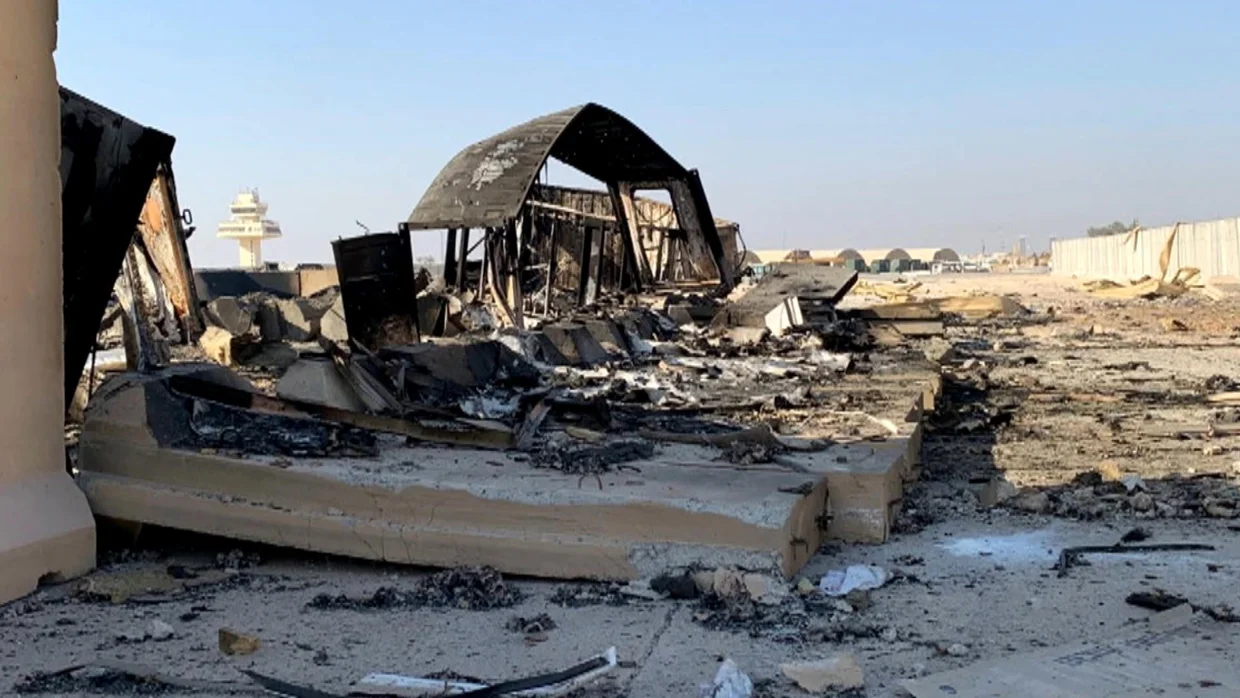
Iran launched a ballistic missile at the Ali Al Salem air base in Kuwait, injuring several Americans. U.S. officials say this attack shows Tehran has broken the fragile April ceasefire agreement.
Bloomberg reports that five people, including contractors and active-duty personnel, suffered minor injuries when debris from the Fateh-110 missile hit the base.
This happened even though Kuwaiti air defences intercepted the missile.
Two MQ-9 Reaper drones tried to stop it; one was destroyed and the other badly damaged. Each drone costs about $30 million.

ThAli Al Salem base, known as “The Rock” because it sits high above the desert, is only 39 miles from Iraq and serves as a key hub for U.S. operations in the Gulf.
Kuwait’s Foreign Ministry called the attack “blatant aggression,” and U.S. Central Command described it as an “egregious ceasefire violation.”
Since the war started in February, Iran has launched over 1,850 ballistic missiles, according to the Centre for Strategic and International Studies.
The conflict has killed thousands and caused global economic problems after Tehran closed the Strait of Hormuz, which is crucial for oil and gas shipments.
The blockade has pushed energy prices much higher in the U.S. and worldwide.
Talks to reopen the Strait and limit Iran’s nuclear program have stalled. President Trump says any agreement must ensure Iran never gets a nuclear weapon and that the Strait is reopened “toll-free” for everyone. Officials told the New York Times that Washington is considering ending the U.S.-Israeli military campaign if Iran lifts its blockade.
At the Shangri-La Dialogue in Singapore, Secretary of War Pete Hegseth said the U.S. is ready to restart military operations if diplomacy does not work.
“Our ability to recommence if necessary…we are more than capable,” he said. He added that American stockpiles are enough to support operations worldwide.
Hegseth called the talks “productive” and said he believes Trump can make a deal, but he also stressed that energy security is still a top U.S. priority.
Hegseth said, “The blockade is very much still in place,” and pointed out that the Strait of Hormuz keeps coming up in talks with international defence leaders.
He repeated Trump’s goal of an “open strait, a toll-free strait” to keep global energy stable.
The missile strike in Kuwait is a clear reminder of the dangers facing U.S. forces and allies in the region.
It also shows how important the ongoing negotiations are for the future of Gulf security and the world’s energy market.