Nigeria has landed a $1 billion investment from India’s Rashmi Metaliks Group, a move the government hopes will catalyse its transformation into Africa’s premier steel industry hub.
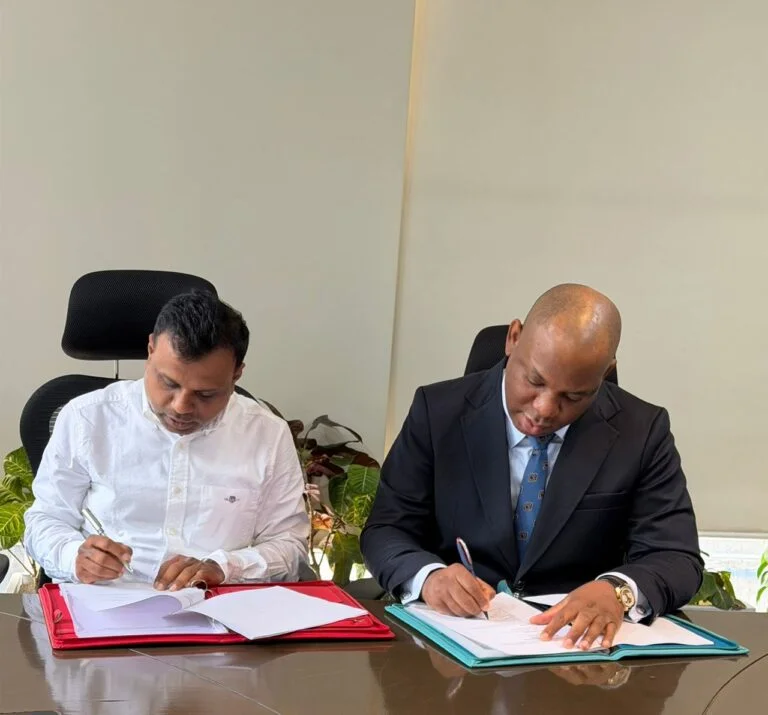
Abuja: On Tuesday, April 14, 2026, Nigeria’s Minister of Steel Development, Prince Shuaibu Abubakar Audu, signed a Memorandum of Understanding with India’s Rashmi Metaliks Group in Kolkata for a projected $1 billion investment to be made between 2026 and 2029. This marks the latest development in Nigeria’s efforts to revive its long-dormant steel sector.
The agreement was signed following Prince Shuaibu Abubakar Audu, Minister of Steel Development’s tour of the Rashmi Metaliks Steel Plant in Kolkata, where he observed the company’s integrated operations spanning Direct Reduced Iron, pig iron, billets and finished ductile iron pipes. The minister described the facility as a model of industrial efficiency and a template for what Nigeria’s own sector must become.
“Nigeria’s proactive investment drive is already attracting significant global capital. This MoU is a major milestone in our efforts to reposition the steel sector and reaffirm President Tinubu’s commitment to revitalising the industry.”

The deal in detail
The Rashmi Metaliks Group, headquartered in Kolkata, is one of India’s largest integrated steel producers. Vice Chairman Sunil Kumar Patwari welcomed the Nigerian delegation and expressed confidence in the partnership. “We appreciate the Nigerian delegation for visiting our facility. It demonstrates the seriousness of this partnership. With the right support, we are committed to delivering on the objectives of this MoU,” he said.
Audu used the occasion to outline Nigeria’s industrial ambition. The country, he noted, possesses over three billion tonnes of high-grade iron ore reserves — some deposits grading as high as 67 per cent iron content — while domestic steel consumption is estimated at $10 billion annually. Nigeria, he said, aims to become Africa’s leading steel hub, targeting crude steel production of approximately 10 million tonnes per annum by 2030 under President Bola Ahmed Tinubu’s Renewed Hope Agenda.
“We are transitioning from a raw-materials exporter to a value-adding industrial economy,” Audu said. “We are open to credible investors willing to partner with us for mutual growth.” He assured investors of policy stability, fiscal incentives and other reforms designed to protect their investments.
Part of a larger surge
The Rashmi Metaliks deal, signed in April 2026, is the most recent in a string of major foreign commitments since President Tinubu assumed office in May 2023, bringing total FDI into Nigeria’s steel sector to more than $2.2 billion as of April 2026.
Key recent deals include a $400 million Chinese-Nigerian joint venture (Stellar Steel, Ogun State) for a hot-rolled coil plant launching in November 2026.
African Industries Group recently committed $300 million to integrated plants in Kaduna State, which were recently commissioned.
A $500 million mini-LNG project (Ajaokuta, Kogi State) will boost gas supply to the industry with five new plants.
The $1 billion MoU with Rashmi Metaliks adds to a cumulative steel investment pipeline now exceeding $2.2 billion.
What comes next
Before returning to Nigeria after the April 2026 signing, Audu is scheduled to hold bilateral discussions with India’s Minister of Steel, Shri H.D. Kumaraswamy, to explore further areas of collaboration between the two countries in steel, mining and manufacturing.
The Nigerian delegation to Kolkata included senior ministry officials and representatives of the Nigerian High Commission in New Delhi, led by Acting High Commissioner Ambassador Ubong Akpan Johnny.
Ministry statement
“Nigeria’s proactive investment drive has attracted more than $2.2 billion in foreign direct investment,” the ministry said in a statement on Tuesday. The minister separately noted that Nigeria holds over three billion tonnes of iron ore reserves, with some deposits grading as high as 67 per cent iron content, and that domestic steel consumption stands at approximately $10 billion annually.
Recent investment commitments indicate Nigeria may finally turn its iron ore reserves into a robust domestic steel industry.