
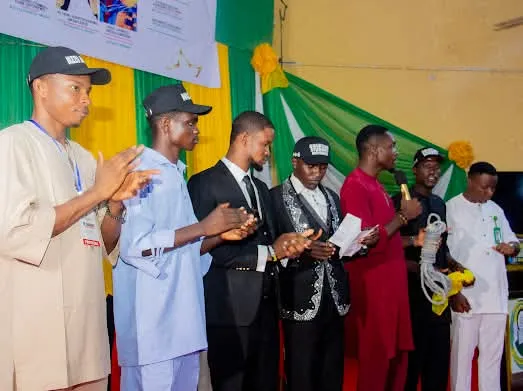
The students were the presenters, not the donors — and the arithmetic proves it.
By Kehinde Adegoke
Ten million, seven hundred and thirty-five thousand, five hundred naira. That is the amount a group of Nigerian Education Loan Fund beneficiaries in Anambra State claim to have donated toward President Bola Tinubu‘s 2027 expression of interest form — money they say came from students who rely on government loans to pay their school fees. But at the core of this story is my clear argument: this endorsement is not genuine student activism, but a politically orchestrated transaction using students as a public front.
The arithmetic and the story don’t add up.

In this context, the students’ actions require closer inspection. To unpack its significance, we must examine several germane questions:
Who Are These ‘Students’?
The first and most crucial question to ask is: Are these actually students?
The event was organised by the National Association of Nigerian Students (NANS) Joint Campus Council, an organisation long notorious in Nigeria’s political economy as a tool of political mobilisation rather than genuine student advocacy. NANS and its affiliates have a well-documented history of being deployed by politicians for rallies, endorsements, and counter-protests — with student leaders functioning more as political contractors than academic representatives.
The chairman who spoke, Ifeanyichukwu Chukwuemeka, did not speak in the language of a student expressing spontaneous gratitude. He spoke in the rehearsed cadences of a political briefing — complete with talking points about “profound effect,” “bold educational reforms,” and “youth-oriented policies.” That is not how a student speaks. That is how a sponsored mouthpiece speaks.
This leads directly to the next, and perhaps most pressing, issue: the money itself. Where did ₦10,735,500 truly come from?
This is the crux of the matter that calls for critical assessment.
Consider the arithmetic:
NELFUND loans to individual students range from approximately ₦100,000 to ₦200,000 per student per session, depending on institution and course. To raise ₦10.7 million purely from NELFUND beneficiaries, you would need between 53 and 107 students contributing their entire loan disbursement to a political donation — students who, by the nature of the loan, are financially constrained enough to require government assistance in the first place.
This is not simply improbable. It is economically absurd.
The NELFUND loan is designed to cover tuition and basic upkeep. It is not discretionary income. No student who genuinely depends on a government education loan wakes up one morning and donates ten million naira to an incumbent president’s expression of interest form. The suggestion that they did is an insult to basic logic.
The far more credible explanation — and the one that responsible journalism must state plainly — is that this money came from political sponsors, most presumably from within the APC structure, the South-East Coordinator of the City Boys Movement (tellingly identified as Obi Cubana), or from the state’s APC-aligned political machinery. The students were the presenters, not the donors.
The Political Fingerprints Are Everywhere
The story all but names its own sponsors. Consider the acknowledgements made by the students themselves:
Obi Cubana — South-East Coordinator, City Boys Movement, a known APC-aligned mobilisation outfit
Adaora Soludo — State Women Leader, City Boys Movement; note the surname carefully
Nonso Ozoemena — State Coordinator, City Boys Movement
Okoye Mathew — former Special Assistant to Governor Charles Soludo on Student Matters
Governor Soludo’s name and apparatus are woven throughout this event. The City Boys Movement is explicitly political. The presence of a former gubernatorial aide at what is being presented as a spontaneous student appreciation gesture is not a coincidence — it is a signature. Someone in Anambra’s political establishment conceived this event, assembled the cast, provided the funds, and ensured media coverage. The students did not organise this. They were organised.
It is also worth noting the deliberate geographic and ethnic optics at play. Anambra is in the South-East — a region that largely did not vote for Tinubu in 2023, and where his 2027 strategy requires aggressive penetration. A high-profile student endorsement from a South-East campus, amplified by Obi Cubana’s network, is not grassroots appreciation. It is a carefully choreographed regional outreach operation — funded by political interests and laundered through the credibility of student identity.
The Intellectual Credibility Question
These are university students. They are, by definition, members of the nation’s emerging intellectual class — the cohort that Nigeria’s future leadership will draw from. The question must therefore be asked with the importance it deserves: what does this action say about them?
A student of authentic intellectual standing, receiving a government education loan, would ask several foundational questions before endorsing any president for a second term:
Has the NELFUND loan been disbursed equitably and transparently across all states and institutions?
What are the repayment terms, and are they structured in a way that does not become a debt trap for young graduates entering a collapsed job market?
What is the wider economic record of this administration — inflation, unemployment, cost of living — against which NELFUND must be measured?
Is it appropriate to use a loan scheme — which students must repay — as the basis for a political endorsement?
None of these questions was asked or even gestured at. Instead, the students delivered a political benediction and handed over ten million naira that was not theirs. This is not the behaviour of intellectually sovereign young people. It is the behaviour of recruited instruments — young men and women whose student identity was borrowed for a political transaction they may not fully understand, or whose leaders understood perfectly but chose personal advancement over institutional integrity.
If these are Nigeria’s future leaders, the nation has cause for serious concern. If they are merely being used by older political actors — which is the more charitable interpretation — then those actors have committed an even graver offence: the corruption of youth for electoral purposes.
After exploring the students’ motives, another question arises: Is a political donation the best way to say “thank you” for NELFUND?
Let us, for the sake of argument, accept the stated premise at face value — that these students are sincerely grateful for NELFUND and wish to express that appreciation. The question then becomes: is donating ₦10.7 million toward a presidential expression of interest form the most rational, most impactful, and most honourable way to do so?
The answer is an unambiguous no — on multiple grounds.
First, on logic: The NELFUND scheme exists because Nigerian students cannot afford their own education. If these students somehow had ₦10.7 million to spare, the most direct sign of gratitude would have been to repay their loans early, freeing up the funds for the next generation of students who need it. That would have been a genuine tribute to the scheme’s purpose.
Second, on impact: ₦10.7 million invested in a student services project — a library, a scholarship fund, a hostel renovation, and a skills-acquisition programme — would have produced tangible, lasting value for Chukwuemeka Odumegwu Ojukwu University and its students. Instead, it faded into the political machinery of an expression of interest form that costs what it costs because Nigerian politics has made the price of desire obscenely high.
Third, on propriety: An expression of interest form is not a public good. It is a partisan political instrument. Using government loan beneficiaries — people receiving public funds — to finance a partisan political process raises serious questions about the boundaries between state resources and electoral activity. If the money truly came from NELFUND disbursements, the transaction borders on a misapplication of public funds for political purposes. If it came from political sponsors, it is clear that it is money laundering through student cover.
Either way, it is not gratitude. It is politics.
The Dig
Strip away the bunting, the student union titles, and the carefully worded statements of appreciation, and what remains is this:
A group of young Nigerians — some genuinely students, others likely political operatives wearing student clothing — gathered on a South-East university campus and presented ₦10.7 million, sourced almost certainly from APC-aligned political figures, including Obi Cubana and elements of the Soludo political network, as a student donation in support of President Tinubu’s 2027 re-election bid.
The NELFUND scheme was the narrative vehicle. The students were the human shield. The City Boys Movement was the operational backbone. And the cameras were there to guarantee the message reached its target audience — the presidency, which needed to see that its South-East outreach investment was delivering returns.
This was neither gratitude, student activism, nor spontaneous civic expression.
This was a political transaction — cynically packaged, poorly disguised, and uncritically reported. The students whose names are attached to it may or may not understand what they participated in. But the architects of the event understood perfectly.
And so should we.
𝗞𝗲𝗵𝗶𝗻𝗱𝗲 𝗔𝗱𝗲𝗴𝗼𝗸𝗲 𝗶𝘀 𝗮𝗻 𝗮𝘄𝗮𝗿𝗱-𝘄𝗶𝗻𝗻𝗶𝗻𝗴 𝗶𝗻𝘃𝗲𝘀𝘁𝗶𝗴𝗮𝘁𝗶𝘃𝗲 𝗷𝗼𝘂𝗿𝗻𝗮𝗹𝗶𝘀𝘁 𝘄𝗶𝘁𝗵 𝗺𝗼𝗿𝗲 𝘁𝗵𝗮𝗻 𝟭𝟱 𝘆𝗲𝗮𝗿𝘀 𝗼𝗳 𝗱𝗶𝘀𝘁𝗶𝗻𝗴𝘂𝗶𝘀𝗵𝗲𝗱 𝗲𝘅𝗽𝗲𝗿𝗶𝗲𝗻𝗰𝗲 𝘂𝗻𝗰𝗼𝘃𝗲𝗿𝗶𝗻𝗴 𝘀𝘁𝗼𝗿𝗶𝗲𝘀 𝘁𝗵𝗮𝘁 𝘀𝗵𝗮𝗽𝗲 𝗽𝘂𝗯𝗹𝗶𝗰 𝗱𝗶𝘀𝗰𝗼𝘂𝗿𝘀𝗲. 𝗪𝗶𝘁𝗵 𝘁𝗵𝗿𝗲𝗲 𝗶𝗻𝗱𝘂𝘀𝘁𝗿𝘆 𝗻𝗼𝗺𝗶𝗻𝗮𝘁𝗶𝗼𝗻𝘀 𝗮𝗰𝗿𝗼𝘀𝘀 𝗱𝗶𝘃𝗲𝗿𝘀𝗲 𝗯𝗲𝗮𝘁𝘀, 𝗵𝗲 𝗵𝗮𝘀 𝗲𝗮𝗿𝗻𝗲𝗱 𝗿𝗲𝗰𝗼𝗴𝗻𝗶𝘁𝗶𝗼𝗻 𝗳𝗼𝗿 𝗳𝗲𝗮𝗿𝗹𝗲𝘀𝘀 𝗿𝗲𝗽𝗼𝗿𝘁𝗶𝗻𝗴, 𝗶𝗻𝗰𝗶𝘀𝗶𝘃𝗲 𝗮𝗻𝗮𝗹𝘆𝘀𝗶𝘀, 𝗮𝗻𝗱 𝗮 𝗰𝗼𝗺𝗺𝗶𝘁𝗺𝗲𝗻𝘁 𝘁𝗼 𝗮𝗰𝗰𝗼𝘂𝗻𝘁𝗮𝗯𝗶𝗹𝗶𝘁𝘆. 𝗔𝘀 𝗠𝗮𝗻𝗮𝗴𝗶𝗻𝗴 𝗘𝗱𝗶𝘁𝗼𝗿 𝗮𝗻𝗱 𝗖𝗘𝗢 𝗼𝗳 𝗧𝗵𝗲𝗗𝗶𝗴𝗴𝗲𝗿𝗡𝗲𝘄𝘀.𝗰𝗼𝗺, 𝗔𝗱𝗲𝗴𝗼𝗸𝗲 𝗹𝗲𝗮𝗱𝘀 𝗮 𝗽𝗶𝗼𝗻𝗲𝗲𝗿𝗶𝗻𝗴 𝗻𝗲𝘄𝘀𝗿𝗼𝗼𝗺 𝗱𝗲𝗱𝗶𝗰𝗮𝘁𝗲𝗱 𝘁𝗼 𝗲𝘅𝗽𝗼𝘀𝗶𝗻𝗴 𝗵𝗶𝗱𝗱𝗲𝗻 𝘁𝗿𝘂𝘁𝗵𝘀, 𝗮𝗺𝗽𝗹𝗶𝗳𝘆𝗶𝗻𝗴 𝗺𝗮𝗿𝗴𝗶𝗻𝗮𝗹𝗶𝘇𝗲𝗱 𝘃𝗼𝗶𝗰𝗲𝘀, 𝗮𝗻𝗱 𝘀𝗲𝘁𝘁𝗶𝗻𝗴 𝗻𝗲𝘄 𝘀𝘁𝗮𝗻𝗱𝗮𝗿𝗱𝘀 𝗶𝗻 𝗶𝗻𝘃𝗲𝘀𝘁𝗶𝗴𝗮𝘁𝗶𝘃𝗲 𝗷𝗼𝘂𝗿𝗻𝗮𝗹𝗶𝘀𝗺.
TheDiggerNews.com | www.thediggernews.com | 08039135472 | Ibadan, Nigeria