A global investigation into Merck’s Keytruda pricing exposes a deadly pattern — and Nigeria’s own regulator has already confirmed it is unfolding right here.
KEHINDE ADEGOKE unearths.
When the International Consortium of Investigative Journalists (ICIJ) published its Cancer Calculus investigation this month—documenting how Merck’s steep pricing for its cancer drugKeytruda is pushing patients toward cheaper, counterfeit versions in Mexico and elsewhere—it might have seemed distant to Nigerians.
This is urgent. It is our reality.

TheDiggerNews.com can report that the dangerous pattern ICIJ revealed in Mexico is also documented in Nigeria by our own regulator, linking unaffordable cancer drug prices to the rise of counterfeits—an urgent, local crisis.
WHAT THE ICIJ FOUND
The Cancer Calculus investigation — conducted by ICIJ and 47 media partners across 37 countries — exposed how Merck generated $31.7 billion from Keytruda in 2025 alone while pricing out patients and governments worldwide. In Mexico, ICIJ and media partners identified three incidents of counterfeit Keytruda supplied to public hospitals. At least one Mexican patient died after being administered a counterfeit batch. Merck’s own associate vice president for global security confirmed that the company is aware of the death.
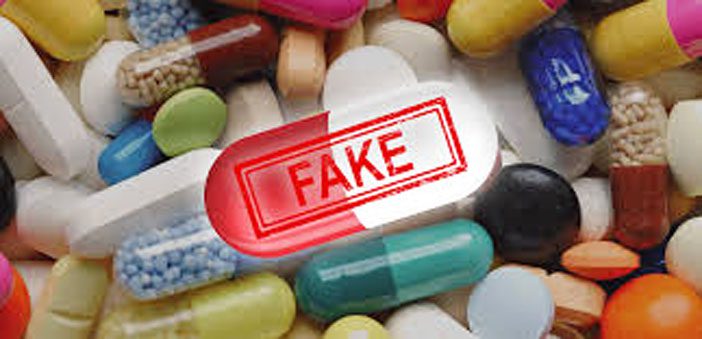
ICIJ’s key finding is clear: when cancer drugs are unaffordable, counterfeits fill the gap. Desperate patients seek cheaper sources, which are often fake. Fake cancer drugs not only fail to treat cancer but can also kill.
WHAT NIGERIA’S OWN REGULATOR HAS ALREADY CONFIRMED
While the ICIJ investigation was being published, Nigeria’s National Agency for Food and Drug Administration and Control (NAFDAC) had already issued its own alarm — one that went largely unreported amid the global cancer drug pricing scandal.
In March 2026, NAFDAC confirmed the discovery of falsified batches of Avastin and Tecentriq — two widely used cancer immunotherapy drugs — circulating across Nigeria’s pharmaceutical supply chain. Patients had already purchased and presented the drugs at medical facilities, at prices ranging from ₦180,000 to ₦350,000 — figures significantly lower than the cost of genuine versions.
NAFDAC warned counterfeit cancer drugs may have incorrect dosages, no active ingredients, or toxic substances—causing treatment failure, severe complications, or death.
The agency told regional directors and coordinators to step up surveillance and remove counterfeits. Still, the drugs had reached patients—some had already been administered.
THE CONNECTION NOBODY HAS MADE — UNTIL NOW
The ICIJ found that Merck’s pricing strategy causes patients to seek counterfeit alternatives out of financial necessity. NAFDAC has verified the presence of counterfeit cancer drugs in Nigeria. These two developments are not separate—they are directly connected: unaffordable prices push patients toward fake products that are now documented in the Nigerian market.
NAFDAC surveys estimate that 16.7% of medicines in circulation in Nigeria are counterfeit or substandard — nearly double the global average of 10%. The last comprehensive survey was conducted in 2005, meaning Nigeria has been operating without updated data on the true scale of its counterfeit medicine problem for two decades.
In a country where the average monthly income is below $200, where cancer kills an estimated 78,000 people annually, and where 16.7% of circulating medicines may already be fake, the arrival of a ₦6 million per-dose cancer drug does not create demand for legitimate alternatives. It creates demand for whatever is affordable. And what is affordable is increasingly what is counterfeit.
LUTH: THE CRISIS AT NIGERIA’S PREMIER TEACHING HOSPITAL
The counterfeit cancer drug crisis has already reached Nigeria’s most prestigious medical institution.
NAFDAC issued a separate alert regarding counterfeit batches of Phesgo — a breast cancer drug — following complaints from Lagos University Teaching Hospital, where patients brought in suspected counterfeit products for administration. The fake batch was linked to confirmed counterfeit cases across multiple countries, including Nigeria, Turkey, and the Philippines, indicating a coordinated international distribution network operating within Nigerian hospitals.
This is not a future risk. It’s documented and happening now—at LUTH, Nigeria’s leading teaching hospital.
THE SYSTEMIC FAILURE
ICIJ detailed an eleven-step process from prescription to cancer drug disposal. Each step risks the entry of counterfeits. In Nigeria, this process operates within a supply chain that has not been fully audited for counterfeits since 2005.
The combination is catastrophic:
A blockbuster cancer drug priced at $850 per dose, even in lower-income countries
A Nigerian population with an average monthly income below $200
A counterfeit medicine prevalence rate of 16.7% — nearly double the global average
No updated national survey on counterfeit drug prevalence in two decades
Confirmed counterfeit cancer drugs are already circulating in hospitals, including LUTH
No Nigerian lawmaker has raised any of this on the floor of the National Assembly
THE QUESTIONS NIGERIA MUST NOW ASK
TheDiggerNews.com is seeking an audience with NAFDAC, the Federal Ministry of Health, the National Health Insurance Authority, and the Senate Committee on Health on the following:
To NAFDAC: How many confirmed cases of counterfeit cancer drugs have been intercepted in Nigeria since 2020? What is the current estimated counterfeit medicine prevalence rate — and when will the 2005 survey be updated?
To the Federal Ministry of Health: Has Nigeria engaged Merck on differential pricing for cancer immunotherapy drugs? Does the government have any active programme to make Keytruda or equivalent immunotherapy drugs accessible to Nigerian cancer patients?
To the National Health Insurance Authority: Is Keytruda or any equivalent immunotherapy drug covered under Nigeria’s Basic Health Care Provision Fund? If not, why not — and when will it be?
To the Senate Committee on Health: Lawmakers in the Netherlands, Belgium, Austria, Finland, and the United States have formally demanded hearings and investigations into Keytruda pricing following the ICIJ investigation. When will Nigerian lawmakers ask the same questions on behalf of the 78,000 Nigerians who die of cancer every year?
EDITORIAL POSITION
The ICIJ Cancer Calculus report is a major piece of global health journalism in 2026. It led to inquiries across Europe and America. The report lists the drug, the company, pricing, and the human cost.
Nigeria wasn’t among the 37 countries studied. But Nigeria isn’t excluded from ICIJ’s findings. Counterfeit cancer drugs, unaffordable prices, and dying patients are already realities here.
The only thing missing is a Nigerian institution—regulatory, legislative, or executive—that is willing to declare, “This is unacceptable.”
TheDiggerNews.com is saying it. Loudly. And we will not stop until someone in authority answers.
TheDiggerNews.com is seeking an audience with NAFDAC, the Federal Ministry of Health, the National Health Insurance Authority, and the Senate Committee on Health. Responses will be published in full upon receipt. This is the third in TheDiggerNews.com’s continuing series on the global cancer drug pricing scandal and its implications for Nigeria.
Read previous reports: NEWS ANALYSIS: The Cancer Drug Impacting Nigerian Patients Through Disease and Affordability.