

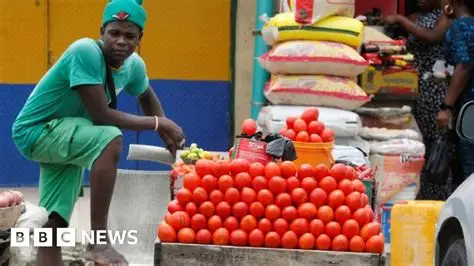
Abuja: Nigeria’s food inflation rate fell into negative territory in December 2025, according to the National Bureau of Statistics (NBS), which reported a ‑0.36 per cent month‑on‑month decline — a sharp 1.49 percentage point drop from the 1.13 per cent recorded in November 2025.
The bureau attributed the decline to reduced average prices of staples, including tomatoes, garri, eggs, potatoes, carrots, millet, vegetables, plantain, beans, wheat grain, ground pepper and fresh onions.
A market survey conducted by the News Agency of Nigeria (NAN) across major markets in the Federal Capital Territory (FCT) confirmed the NBS data, showing notable price drops after the festive season.
At Garki Model Market, a dustbin basket of big red tomatoes now sells for between ₦5,000 and ₦5,500, down from ₦6,000–₦7,000, while fresh pepper dropped from ₦4,500–₦5,000 to about ₦2,500. Tatashe fell to ₦3,000 from ₦5,000–₦6,000, and onions declined to ₦4,000 from ₦4,500. Sweet potatoes dropped to ₦1,000–₦1,800 from ₦3,000.

Similar declines were recorded in Nyanya, Gwagwalada, Apo Resettlement, Orange Market in Mararaba, Dei‑Dei, Karu, Lugbe and Wuse markets, with tomatoes, peppers, onions, yams and beans showing sharp reductions. At Orange Market, a big basket of tomatoes plunged from ₦23,000–₦25,000 to ₦10,000–₦11,000, while fresh pepper dropped from ₦15,000 to ₦10,000. At Dei‑Dei, a 50kg bag of fresh pepper collapsed from ₦60,000 to ₦15,000–₦20,000.
However, some items bucked the trend. Irish potatoes rose to ₦9,000–₦10,000 per basket from ₦5,000–₦6,000, while a bag of brown beans increased in Orozo Market from ₦42,000 to ₦49,000. Rice prices remained relatively stable, with local 50kg bags selling for ₦52,000–₦57,000 and foreign rice at ₦64,000.
Residents expressed relief at the price drops but urged the government to ensure sustainability, citing low incomes and irregular salary payments as constraints. “The reduction is encouraging, but many people still cannot afford these items. Government should ensure the prices are sustained,” said Yemisi, a civil servant.
Farmers and experts warned that the decline was largely harvest‑driven and could reverse without structural reforms. Kabir Ibrahim, President of the All Farmers Association of Nigeria (AFAN), said deliberate policies on dry‑season farming, food security, and transport costs were needed to sustain the trend.
The NBS data confirms a rare negative food inflation rate of ‑0.36%, mirrored by sharp market‑level price drops across Abuja. But without long‑term reforms, experts caution the relief may be short‑lived, leaving households vulnerable to another surge in food costs.