A covert armada keeps Russian crude flowing, distorting global markets—and leaving Nigeria exposed. KEHINDE ADEGOKE writes.
Russia’s covert “shadow fleet” of sanctioned tankers is keeping its oil moving despite Western sanctions—reshaping global energy trade and driving down Nigeria’s revenues.
From Wagner-linked crews to Royal Marines boarding in the English Channel, the clandestine system is rewriting the rules of oil commerce, with Nigeria paying the price.
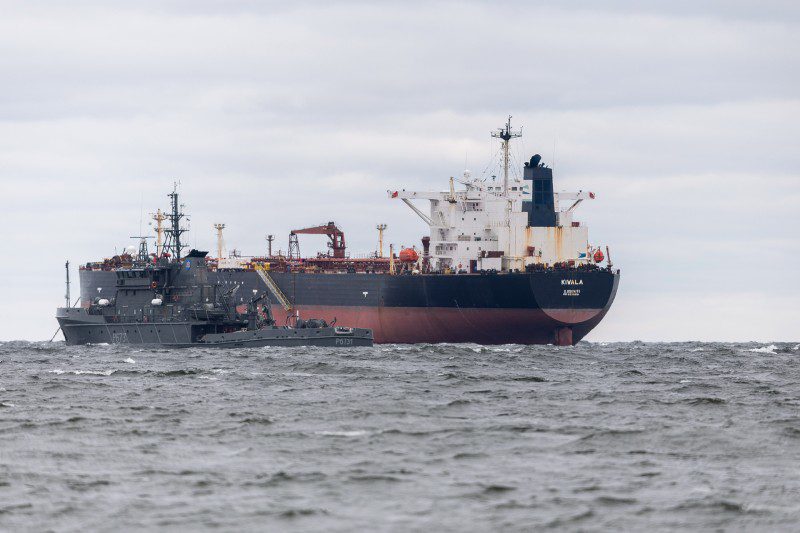
In the early hours of Sunday, June 14, 2026, Royal Marine Commandos and National Crime Agency officers boarded a Russian shadow fleet oil tanker — the SMYRTOS — as it attempted to pass through the English Channel. British Prime Minister Keir Starmer personally directed the operation, describing it as “another blow to Russia” and a warning to those fuelling Putin’s war that they could not hide.

It is the most dramatic public enforcement action yet against the covert maritime network that has kept Russian oil flowing to global markets despite Western sanctions — and it brings into sharp focus an investigation published by the Organised Crime and Corruption Reporting (OCCRP) Project that reveals how militarised and sophisticated that network has become.
For Nigeria, the story of Russia’s shadow fleet is not a European maritime security story. It is an oil revenue story. And it has been playing out in plain sight.
Wagner on the Water
The OCCRP investigation — conducted in collaboration with Delfi, Helsingin Sanomat, and the independent Russian outlet iStories — uncovered a systematic pattern of militarisation across Russia’s shadow fleet that goes far beyond the use of opaquely owned vessels.
Analysing crew lists from 757 shadow fleet tankers operating between January 2023 and April 2026, investigators identified 83 individuals embedded aboard sanctioned vessels with no formal maritime qualifications — but with documented ties to the Wagner Group, Russian military intelligence — the GRU — and Russian paratrooper units.
These men, typically listed on crew manifests as “technicians” or “supernumeraries,” were not there to sail the ship. According to one watchman who spoke to OCCRP reporters, his role was to monitor the crew: “I was finding out who was snitching, who they were working for, what information was coming from the ship to shore — to the Indian authorities, or maybe even to NATO countries.”
European intelligence officials told OCCRP that these covert vessel protection teams are deliberately deployed to deter Baltic Sea authorities from boarding or seizing sanctioned ships. The strategy appears to be working. “If we know that there are armed people on board, we will avoid boarding,” one European security service officer told investigators. “We still want to avoid an armed confrontation.”
The presence of these personnel began increasing sharply in May 2025. By the time of Sunday’s SMYRTOS interception, the shadow fleet had evolved from a sanctions evasion mechanism into something closer to a covert military maritime operation.
Sunday’s Royal Marines boarding suggests that calculation may be changing.
18.2% of Global Tanker Tonnage
The scale of the shadow fleet is itself the most important economic context.
Shipping broker BRS estimated in August 2025 that vessels engaging in illicit trading — many of them part of Russia’s shadow fleet — represent 18.2% of global oil tanker tonnage. Nearly one in five oil tankers on the world’s oceans is operating outside the conventional Western-regulated shipping framework.
That figure matters for Nigeria in a way that goes beyond the headline.
When 18.2% of global tanker capacity operates outside normal insurance, classification, and sanctions frameworks, it creates a two-tier shipping market — one with higher costs and regulatory burdens for compliant operators, and one offering discounted rates to buyers willing to operate in the grey zone.
Nigerian crude, exported through conventional channels, competes in the first tier. Russian shadow fleet crude, arriving in India and China at discounted prices, dominates the second.
The result is a structural price disadvantage for Nigerian oil that is not the product of market forces — it is the product of sanctions evasion underwritten by Wagner mercenaries and GRU operatives on tanker decks.
India — Where Nigeria Lost
The economic mechanism is straightforward, and its consequences for Nigeria are documented.
Since the outbreak of the Russia-Ukraine war, Indian refiners have increasingly purchased discounted Russian crude — redirecting buying power that had historically flowed toward alternative suppliers, including African exporters. Nigeria, which had cultivated India as a growing market for its Bonny Light and Forcados grades, found itself competing against oil that was being sold at below-market prices, specifically because it was moving through a network designed to circumvent the pricing mechanisms of the international market.
The OCCRP investigation confirms that the Baltic route — the primary channel for shadow fleet operations — runs directly to Indian ports. The tanker Kira K, one of the vessels examined in detail, was carrying 734,000 barrels of Lukoil crude when it departed Ust-Luga in December 2025 with two additional Russian “supernumeraries” aboard — men whose backgrounds included Wagner service and GRU-linked contractor roles.
Those 734,000 barrels did not need to compete on quality, reliability, or price. They arrived in India at a discount that conventional exporters — including Nigeria — could not match without sacrificing revenue they cannot afford to lose.
The Budget Consequences
Nigeria’s 2026 federal budget was predicated on an oil price benchmark of $75 per barrel and a production target of 2.06 million barrels per day. Both assumptions are vulnerable to the dynamics the shadow fleet creates.
Every additional barrel of discounted Russian crude that reaches Asian markets displaces a potential buyer for Nigerian oil or forces Nigerian producers to lower prices to remain competitive. In a market where Nigeria’s OPEC production quota already constrains volume, the price per barrel becomes the primary variable determining federal revenue.
A sustained $5 per barrel discount on Nigerian crude — the kind of pricing pressure that shadow fleet competition can generate — translates directly into billions of naira in reduced federation account receipts, reduced FAAC allocations to states, and reduced capacity for the federal government to meet its budget targets.
This is not hypothetical. Nigeria’s foreign exchange crisis, its debt servicing pressures, and the persistently weak naira are all partially traceable to oil revenue underperformance — and oil revenue underperformance is partially traceable to the global pricing dynamics that Russia’s shadow fleet has been systematically reshaping since 2022.
What the SMYRTOS Boarding Changes
Sunday’s Royal Marines operation is significant beyond its immediate operational effect.
It signals that at least one major Western power — the United Kingdom — is prepared to move from monitoring shadow fleet operations to physically interdicting them. The EU recently updated its naval mission’s mandate to allow the boarding of dark fleet ships. The US has been conducting seizures of sanctioned vessels for months.
If enforcement against the shadow fleet intensifies — and Sunday’s operation suggests it will — the economics of Russian oil exports begin to change. The cost of shadow fleet operations rises. The discount Russian crude can offer narrows. The competitive disadvantage Nigerian oil faces in Asian markets potentially eases.
For Nigeria, the most important development in global oil market dynamics right now is not happening in Abuja or in OPEC meeting rooms in Vienna. It is happening in the English Channel, the Baltic Sea, and the Gulf of Finland — where the world is finally beginning to enforce the rules that Russia’s shadow fleet has been evading for three years.
The Question Nigeria Must Ask
Nigeria is a member of OPEC. It has a seat at the table where global oil production decisions are made. It has diplomatic relationships with the United States, the European Union, and the United Kingdom — all of which are active in shadow fleet enforcement.
What Nigeria does not appear to have is a formal policy position on the shadow fleet and its impact on Nigerian oil revenues.
The Federal Ministry of Finance, the Nigerian National Petroleum Company Limited, the Central Bank of Nigeria, and the Ministry of Foreign Affairs should all be actively monitoring shadow fleet developments — not as a geopolitical curiosity but as a direct determinant of Nigeria’s fiscal position.
TheDiggerNews.com is formally asking: Does Nigeria have a documented assessment of how much the shadow fleet’s price-suppressing effect has cost Nigerian oil revenues since 2022? And if not — why not?
The Dig
A Wagner mercenary on a sanctioned tanker in the Baltic Sea. Royal Marines boarding in the English Channel. An Indian refinery is buying discounted Russian crude. A Nigerian budget is missing its oil revenue target.
These are not separate stories. They are one story — a story about how the rules of the international oil market are being rewritten by covert military operations on the high seas, and how the countries least involved in that rewriting are paying the highest price.
Nigeria did not create the shadow fleet. Nigeria did not sanction Russian oil. Nigeria did not deploy Wagner mercenaries to tanker decks. But Nigeria is absorbing the consequences — in its oil revenues, its foreign exchange earnings, and its federal budget — while the global response to the shadow fleet plays out in waters thousands of miles from the Niger Delta.
The OCCRP investigation exposed the network. Sunday’s Royal Marines operation began dismantling it.
Nigeria needs to be part of the conversation about what comes next.
𝐊𝐞𝐡𝐢𝐧𝐝𝐞 𝐀𝐝𝐞𝐠𝐨𝐤𝐞 𝐢𝐬 𝐚𝐧 𝐚𝐰𝐚𝐫𝐝-𝐰𝐢𝐧𝐧𝐢𝐧𝐠 𝐢𝐧𝐯𝐞𝐬𝐭𝐢𝐠𝐚𝐭𝐢𝐯𝐞 𝐣𝐨𝐮𝐫𝐧𝐚𝐥𝐢𝐬𝐭 𝐰𝐢𝐭𝐡 𝐦𝐨𝐫𝐞 𝐭𝐡𝐚𝐧 𝟏𝟓 𝐲𝐞𝐚𝐫𝐬 𝐨𝐟 𝐝𝐢𝐬𝐭𝐢𝐧𝐠𝐮𝐢𝐬𝐡𝐞𝐝 𝐞𝐱𝐩𝐞𝐫𝐢𝐞𝐧𝐜𝐞 𝐞𝐱𝐩𝐨𝐬𝐢𝐧𝐠 𝐬𝐭𝐨𝐫𝐢𝐞𝐬 𝐭𝐡𝐚𝐭 𝐦𝐨𝐮𝐥𝐝 𝐩𝐮𝐛𝐥𝐢𝐜 𝐝𝐢𝐬𝐜𝐨𝐮𝐫𝐬𝐞. 𝐖𝐢𝐭𝐡 𝐭𝐡𝐫𝐞𝐞 𝐢𝐧𝐝𝐮𝐬𝐭𝐫𝐲 𝐧𝐨𝐦𝐢𝐧𝐚𝐭𝐢𝐨𝐧𝐬 𝐭𝐡𝐫𝐨𝐮𝐠𝐡𝐨𝐮𝐭 𝐝𝐢𝐯𝐞𝐫𝐬𝐞 𝐛𝐞𝐚𝐭𝐬, 𝐡𝐞 𝐡𝐚𝐬 𝐞𝐚𝐫𝐧𝐞𝐝 𝐫𝐞𝐜𝐨𝐠𝐧𝐢𝐭𝐢𝐨𝐧 𝐟𝐨𝐫 𝐟𝐞𝐚𝐫𝐥𝐞𝐬𝐬 𝐫𝐞𝐩𝐨𝐫𝐭𝐢𝐧𝐠, 𝐢𝐧𝐜𝐢𝐬𝐢𝐯𝐞 𝐚𝐧𝐚𝐥𝐲𝐬𝐢𝐬, 𝐚𝐧𝐝 𝐚 𝐜𝐨𝐦𝐦𝐢𝐭𝐦𝐞𝐧𝐭 𝐭𝐨 𝐚𝐜𝐜𝐨𝐮𝐧𝐭𝐚𝐛𝐢𝐥𝐢𝐭𝐲. 𝐀𝐬 𝐌𝐚𝐧𝐚𝐠𝐢𝐧𝐠 𝐄𝐝𝐢𝐭𝐨𝐫 𝐚𝐧𝐝 𝐂𝐄𝐎 𝐨𝐟 𝐓𝐡𝐞𝐃𝐢𝐠𝐠𝐞𝐫𝐍𝐞𝐰𝐬.𝐜𝐨𝐦, 𝐀𝐝𝐞𝐠𝐨𝐤𝐞 𝐥𝐞𝐚𝐝𝐬 𝐚 𝐩𝐢𝐨𝐧𝐞𝐞𝐫𝐢𝐧𝐠 𝐧𝐞𝐰𝐬𝐫𝐨𝐨𝐦 𝐝𝐞𝐝𝐢𝐜𝐚𝐭𝐞𝐝 𝐭𝐨 𝐞𝐱𝐩𝐨𝐬𝐢𝐧𝐠 𝐮𝐧𝐬𝐞𝐞𝐧 𝐭𝐫𝐮𝐭𝐡𝐬, 𝐚𝐦𝐩𝐥𝐢𝐟𝐲𝐢𝐧𝐠 𝐦𝐚𝐫𝐠𝐢𝐧𝐚𝐥𝐢𝐬𝐞𝐝 𝐯𝐨𝐢𝐜𝐞𝐬, 𝐚𝐧𝐝 𝐞𝐬𝐭𝐚𝐛𝐥𝐢𝐬𝐡𝐢𝐧𝐠 𝐧𝐞𝐰 𝐬𝐭𝐚𝐧𝐝𝐚𝐫𝐝𝐬 𝐢𝐧 𝐢𝐧𝐯𝐞𝐬𝐭𝐢𝐠𝐚𝐭𝐢𝐯𝐞 𝐣𝐨𝐮𝐫𝐧𝐚𝐥𝐢𝐬𝐦.
𝐓𝐡𝐞𝐃𝐢𝐠𝐠𝐞𝐫𝐍𝐞𝐰𝐬.𝐜𝐨𝐦 | 𝐰𝐰𝐰.𝐭𝐡𝐞𝐝𝐢𝐠𝐠𝐞𝐫𝐧𝐞𝐰𝐬.𝐜𝐨𝐦 | 𝟎𝟖𝟎𝟑𝟗𝟏𝟑𝟓𝟒𝟕𝟐 | 𝐈𝐛𝐚𝐝𝐚𝐧, 𝐍𝐢𝐠𝐞𝐫𝐢𝐚