

Table of Contents
Scientists reveal how dying cells leave trails that guide the immune system — but also give viruses a hidden way to infect new cells
TheDigger Intelligence Unit
What Happens When Cells Die
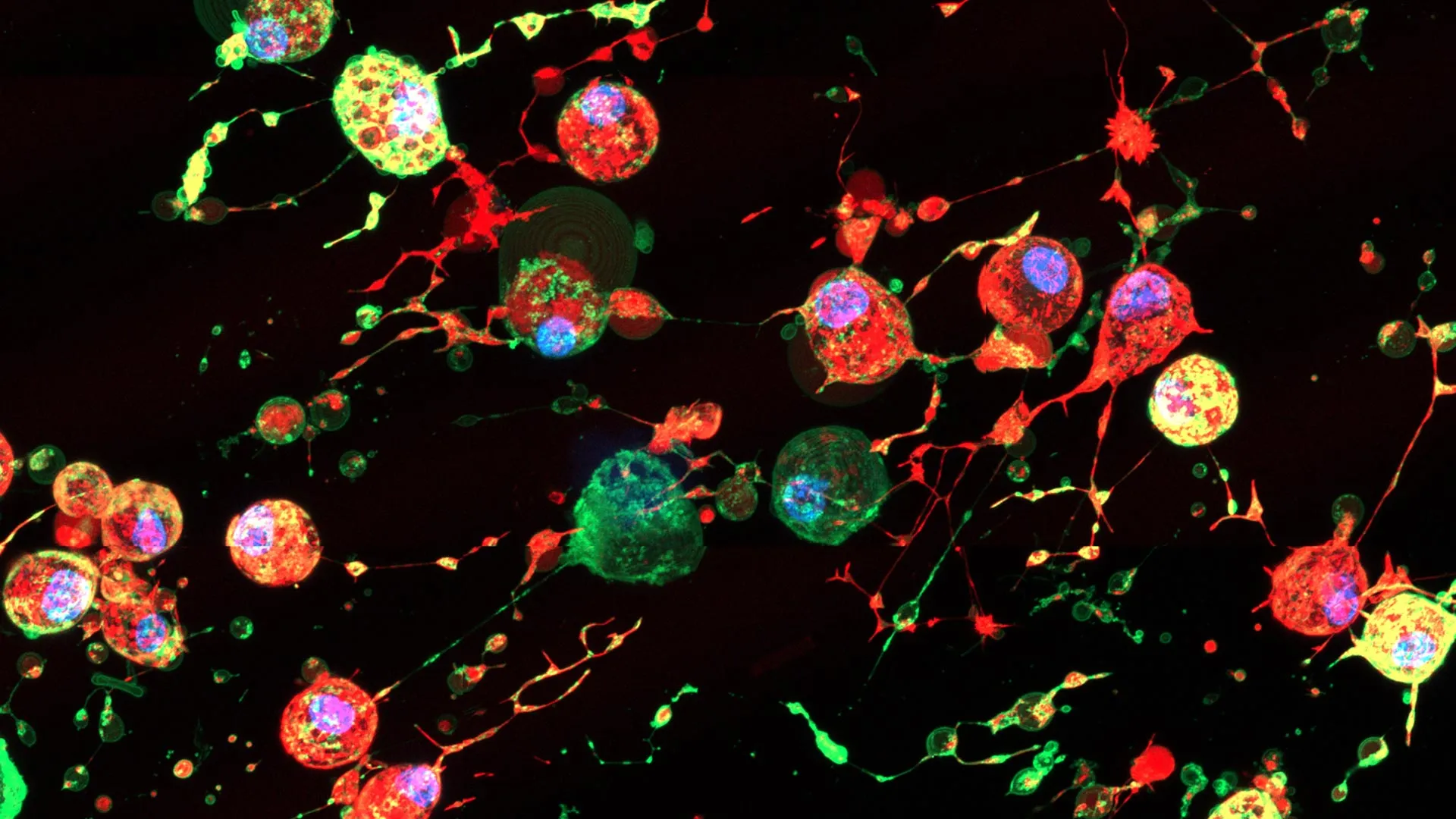
When a cell reaches the end of its life, it doesn’t simply vanish. Instead, it breaks apart in a carefully organised way, leaving behind tiny particles scientists call “footprints of death.”
These particles, known as F-ApoEVs, act like breadcrumb trails that help the immune system find and clear away dead cell fragments.

This cleanup is vital because if debris lingers, it can spark inflammation or even autoimmune diseases.
How Viruses Exploit the System
Here’s the unsettling twist: viruses can hijack this process. In experiments with influenza, researchers discovered that viral particles can hide inside the F-ApoEVs.
Because the immune system sees these vesicles as part of its normal garbage disposal, it doesn’t attack them.
That means viruses can move silently, almost like stowaways inside trash bags being carried away.
Once the vesicles reach nearby cells, the viruses slip out and begin new infections — all while bypassing the body’s usual defences.
In simple terms, the virus uses the body’s own housekeeping system as an invisibility cloak, spreading quietly from one cell to the next without raising alarms.
Why This Matters
The study, published in Nature Communications, shows that cell death is far more complex than scientists once believed.
Professor Ivan Poon explained that billions of cells die every day, and until now, the process was thought to be random. Instead, each step plays a critical role in keeping the body balanced — and in some cases, giving viruses an opportunity to spread.
Lead researcher Stephanie Rutter noted that while F-ApoEVs help prevent inflammation and autoimmune conditions like lupus, viruses can manipulate the same process to their advantage.
Co-leader Dr Georgia Atkin-Smith added that dying cells “can continue to communicate from the grave,” influencing immune function in ways that may reshape future therapies.
A New Path for Research
By uncovering these hidden “footprints of death,” scientists hope to better understand how infections spread and how autoimmune diseases develop.
The findings could open new doors for treatments that strengthen the immune system, block viral exploitation, and improve overall health.
This discovery is striking because it shows how even protective systems designed to keep us safe can be turned against us — and why understanding these hidden pathways is key to fighting both infection and disease.