

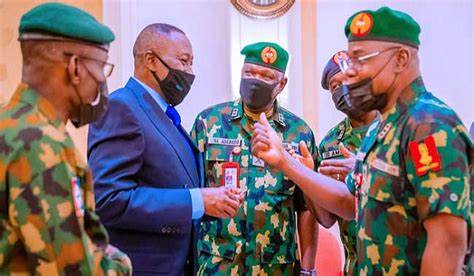
Abuja: Experts at the just concluded maiden Defence Headquarters Civil-Military Relations Conference have called for a reduced reliance on the military in internal security to allow them to focus on their core constitutional mandate.
This call was made by the stakeholders as part of the Communique issues at the conference’s closing on Friday in Abuja.
They said that there was an over-reliance on military solutions, often at the expense of addressing root causes, such as poverty, unemployment, and food insecurity that serve as triggers for insecurity.
The experts stressed the need for the Federal Government, National Security Council (NSC), and State Governments to proactively address governance gaps by promoting the rule of law, good governance, inclusive economic policies, and access to social services to enhance security.

They urged the federal government, NSC, and MDAs to adopt a comprehensive human security framework that integrates economic, food, health, environmental, personal, community, and political dimensions into national planning, ensuring freedom from fear and want across Nigeria’s diverse populations.
Other recommendations are: “The Federal Ministry of Agriculture, Armed Force Nigeria (AFN), State Governments, and National Emergency Management Agencies (MDAs) should intensify efforts to ensure food security by investing in agricultural recovery, facilitating access to farming inputs, and providing protection for farmers in conflict-prone areas.
“The AFN, Office of the National Security Adviser (ONSA), and Ministry of Humanitarian Affairs should expand non-kinetic operations by strengthening initiatives such as Operation Safe Corridor (OPSC), the Northeast Development Commission (NEDC), and the Victim Support Fund, to address the root causes of insecurity and reintegrate more ex-combatants into the society.
“The Ministry of Information, Defence Headquarters, and Media Houses should ensure adequate media engagement by accrediting and deploying reputable media personnel to conflict zones for accurate, real-time reporting that builds public trust while safeguarding operational security.”
They emphasised the role of the Ministry of Defence, DHQ, and National Human Rights Commission to drive security sector reform by strengthening training on human rights, rules of engagement, and accountability measures, including real-time monitoring and penalties for misconduct.
They also recommended that the armed forces and Ministry of Defence prioritise civilian protection and uphold international humanitarian laws in all operations, ensuring the preservation of civilian lives, cultural heritage, and public infrastructure.
“The DHQ and the AFN should take responsibility for operational failures by issuing prompt apologies, initiating restitution, and preventing recurrence – especially in the case of erroneous airstrikes,” they added.