
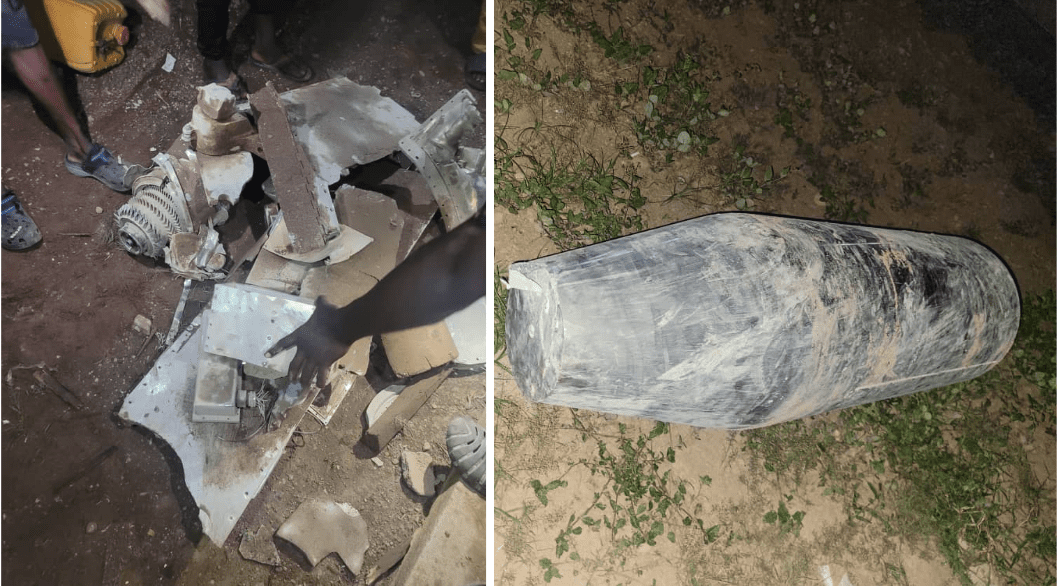
Nigeria’s military has asked civilians in Sokoto not to touch unexploded ordnance left after recent U.S.-backed strikes. This highlights how counterterrorism operations in the northwest are becoming more complicated.
The American drone strike on December 25, which targeted Islamic State-linked camps, shows closer cooperation between Abuja and Washington. However, it also raises concerns about civilian safety, national sovereignty, and the long-term effects of foreign involvement.
Looming Danger
The warning followed online videos showing locals picking through debris at strike sites, including unexploded munitions. Nigeria’s armed forces are worried that a tactical win against extremists could become a tragedy if civilians handle dangerous remains.

Major General Michael Onoja, director of Defence Media Operations, said that special ordnance teams are responsible for collecting debris and urged residents not to touch it.
This shows a common problem in modern warfare. Precision strikes can destroy militant camps, but they often leave behind dangers that last long after the fighting ends. In communities already facing insecurity, unexploded ordnance creates even more risk.
A Necessary Collaboration to Stave off Terrorism
The December 25 strike was one of the few times U.S. forces have operated deep inside Nigeria. Sixteen GPS-guided bombs were dropped from MQ-9 Reaper drones on two Islamic State-linked camps in Sokoto. Nigerian officials asked for this help, underscoring the seriousness of the threat and Abuja’s willingness to rely on outside military support.
For Washington, this operation is part of a larger plan to fight Islamic State groups across Africa. For Nigeria, though, it raises tough questions about national control and reliance on foreign military help.
The government called the strike a needed partnership, but some critics see it as a sign that Nigeria’s own counterterrorism efforts may be lacking.
Challenge of Balancing Success with Humanitarian Realities
Videos of civilians searching through strike debris show how hard it is to balance military wins with humanitarian needs. Experts say Nigeria’s military should combine battlefield success with better communication in communities, so people know about the dangers of unexploded ordnance. If not, accidental explosions could erode public trust in security efforts.
This incident also shows why quick checks after strikes are important. Removing debris and teaching communities are just as important as defeating militant camps. If these steps are missed, short-term wins could become long-term problems.
Divergences over US Involvement
The strikes also have wider effects in the region. Sokoto, in northwest Nigeria, borders Niger and lies in an area where extremist groups take advantage of open borders. By using U.S. drones, Nigeria showed it wants to increase pressure on militants who move across these borders.
However, these operations may spark debate in West Africa about the role of foreign militaries. Some governments see U.S. support as helpful, while others worry it could create dependency or cause local people to push back against outside involvement.
The Path Forward
Nigeria’s military faces two main challenges: maintaining the fight against extremist groups and protecting civilians from harm. The warning to avoid strike debris reminds us that modern warfare affects communities long after the fighting stops.
For Abuja, the next steps could include strengthening its ordnance disposal teams, running more public awareness campaigns, and ensuring that foreign-backed operations also build local skills.
For Washington, the strike shows what is possible but also points to the need for careful planning to prevent civilian harm.
In the end, the December 25 operation may be remembered for its military accuracy, but also for the questions it raised about sovereignty, safety, and the human cost of fighting terrorism.