Table of Contents
For decades, promises have not been kept. Weak infrastructure, climate challenges, and slow political action still prevent millions of people in Africa from getting safe water.
TheDigger Intelligence Unit
Abuja: Africa’s missing place in the 2026 global water rankings is not just a mistake in the numbers. It shows that millions of people still do not have safe drinking water, even after billions in aid and many government programs.
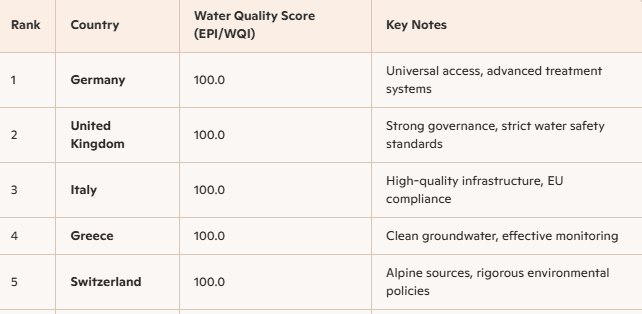
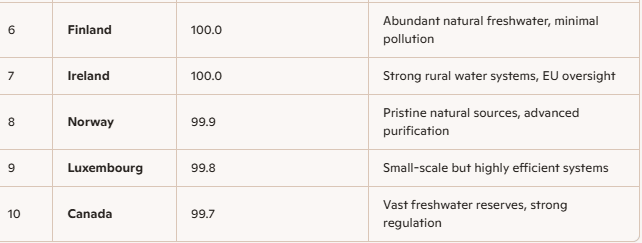
The 2026 global water rankings were conducted under the Environmental Performance Index (EPI) framework, jointly produced by Yale University and Columbia University, in collaboration with the World Economic Forum. These rankings evaluate countries on access to safe drinking water, sanitation, and water quality standards.
The top ten countries according to the EPI framework are Germany, United Kingdom, Italy, Greece, Switzerland, France, Netherlands, Sweden, Denmark, and Austria.

2026 Global Water Rankings (Top 10)
Scarcity behind Numbers
In many parts of Africa, there are still not enough modern water treatment plants or reliable ways to deliver water. Most people live in rural areas, and these communities are often overlooked. While Europe has strict rules, many African countries do not always enforce water quality standards.
“Water projects are competing with healthcare, education, and security budgets. The result is fragmented progress and communities left exposed,” said a senior analyst at UN-Water in its 2026 Global WASH report. Climate change is making the crisis worse. Droughts, floods, and unpredictable rain are
making it even harder to provide clean water. The African Development Bank recently warned, “Without resilient infrastructure, climate shocks will continue to erase fragile gains.”Bank in a recent briefing.
The Human Toll
The numbers are still alarming. UNICEF says that nearly 400 million people in sub-Saharan Africa, which has about 1.1 billion people, still do not have basic drinking water in 2026. Waterborne diseases are still a leading cause of child deaths. For many families, not having clean water is not just a problem—it is a daily risk to their lives.
Nigeria’s Struggle
Nigeria, the most populated country in Africa, shows these challenges clearly. Even though it has a lot of water, cities struggle with old pipes and systems, and people in rural areas often use unsafe water. The government has promised to make things better, but progress is slow.
“Policy pronouncements are not translating into pipelines and taps,” said a Nigerian civil society advocate. “The gap between rhetoric and reality is widening.”
A Call for Accountability
Africa’s absence from global rankings shows deeper problems like weak rules, not enough funding for infrastructure, and slow political action. Experts say that fixing this will take more than just aid. It means making water security a top priority, enforcing standards, and investing in infrastructure that helps rural areas.
The Bigger Picture
The African Union’s decision to make water and sanitation its main focus for 2026 underscores how urgent the issue is. But unless governments quickly turn their promises into real, lasting action, Africa will keep being left out of global reports. Now is the time to break this cycle. Millions of people need more than just promises.