

By Franca Ofili, News Agency of Nigeria (NAN)
The World Health Organisation has declared the Ebola outbreak in parts of the Democratic Republic of Congo (DRC) and Uganda a Public Health Emergency of International Concern (PHEIC), reflecting heightened global concern.
The declaration also highlights fears surrounding the rare virus strain, weak health systems and persistent cross-border vulnerabilities in Central Africa.
To begin with, the outbreak is concentrated in eastern DRC’s conflict-affected Ituri Province and is linked to the Bundibugyo strain of the Ebola virus.

So far, health authorities have reported eight laboratory-confirmed cases, about 246 suspected cases and approximately 80 suspected deaths.
However, despite the relatively low number of confirmed cases, the WHO and the Africa Centres for Disease Control and Prevention (Africa CDC) have warned that the outbreak may be significantly underreported.
The agencies attributed this to insecurity, weak surveillance systems and limited access to affected communities.
In particular, concern has grown over infections among healthcare workers, with at least four reported deaths.
This development raises the risk of nosocomial transmission, which has historically accelerated Ebola outbreaks where infection prevention and control systems are weak.
Meanwhile, the virus’s geographic spread has widened concerns.
Confirmed cases have been reported not only in eastern DRC but also in major urban centres such as Kinshasa and Goma, as well as in Uganda, where infections have been linked to travel from the DRC.
Consequently, health experts warn that population mobility, cross-border trade and porous borders across the DRC–Uganda–South Sudan corridor are key drivers of regional transmission risk.
Accordingly, the WHO said its decision to declare a PHEIC was based on rising infections, confirmed cross-border spread and persistent uncertainty about the true scale of transmission.
Importantly, the designation signals a coordinated international public health alert but does not constitute a pandemic declaration.
Furthermore, experts note that the Bundibugyo strain adds an additional layer of complexity to the response.
This is because it is less frequently studied, with limited vaccine and treatment coverage compared to other Ebola variants, thereby prompting renewed calls for accelerated research.
At the same time, the outbreak is unfolding in a highly fragile operational environment.
Ituri Province remains affected by militia activity, displacement and insecurity, all of which continue to obstruct contact tracing, delay investigations and limit humanitarian access.
In addition, Africa CDC has warned that urbanisation, mining activities and high population mobility along border corridors are increasing transmission risks, especially where informal movement bypasses health screening systems.
Nevertheless, the WHO has not recommended travel or trade restrictions.
Instead, it has urged countries to focus on surveillance, preparedness and community engagement, reflecting a broader strategy of containing outbreaks at source rather than restricting movement.
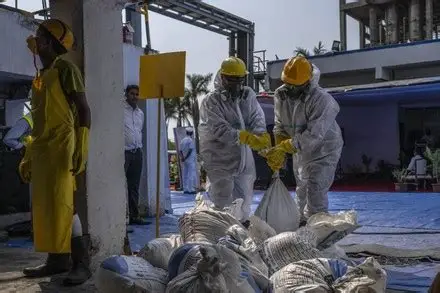
In response, health agencies have deployed emergency teams, expanded treatment centres and intensified contact tracing, Infection Prevention and Control (IPC) measures, and risk communication efforts.
Similarly, cross-border coordination between DRC, Uganda and South Sudan has been strengthened to improve early detection and monitoring.
Meanwhile, the United Nations (UN) has called on the international community to urgently scale up support for both the Ebola response and broader humanitarian operations in the DRC.
UN Spokesperson, Stephane Dujarric, made the appeal while briefing journalists in New York on the latest developments surrounding the outbreak.
According to Dujarric, WHO believes the outbreak constitutes a public health emergency of international concern due to the high risk of further spread and indications that the outbreak may be larger than currently detected.
He warned that without immediate international action, life-saving assistance may not reach vulnerable populations and existing humanitarian gains could be reversed.
Dujarric noted that the 1.4 billion dollars Humanitarian Needs and Response Plan for the DRC is currently only 34 per cent funded, with approximately 478 million dollars received so far.
He added that UN peacekeeping teams on the ground had reaffirmed their support to the DRC authorities, the WHO and humanitarian partners involved in the Ebola response.
For Nigeria, the development has prompted heightened vigilance, although no confirmed cases have been reported as of May 18.
However, the Nigeria Centre for Disease Control and Prevention (NCDC) has warned that the country remains at risk due to regional travel and cross-border movement across West and Central Africa.
To address this, NCDC Director-General, Dr Jide Idris, said surveillance has been reinforced at points of entry, including airports, seaports and land borders.
In addition, screening procedures, laboratory preparedness and stockpiling of infection prevention and control materials have been strengthened.
Moreover, simulation exercises and risk communication campaigns are ongoing to enhance national preparedness and counter misinformation.
Importantly, Idris urged the public to maintain strict hygiene practices, avoid contact with bodily fluids of sick persons, and refrain from consuming bushmeat from unknown sources.
He also emphasised the need to report unusual illnesses promptly to health authorities.
Similarly, he advised healthcare workers to maintain a high index of suspicion for Ebola in patients presenting with compatible symptoms and relevant travel history.
Above all, he stressed strict adherence to infection prevention and control protocols, including proper use of Personal Protective Equipment (PPE) and hand hygiene.
Meanwhile, WHO has accelerated research efforts focused on the Bundibugyo strain, noting that effective containment will depend on rapid detection, timely isolation of cases and aggressive contact tracing.
In conclusion, while the outbreak remains a serious public health challenge, health authorities emphasise that with sustained international collaboration, vigilant surveillance, and rapid response measures, containment is attainable.
Ultimately, the outcome will hinge on the ability of affected countries and their partners to overcome operational barriers, sustain surveillance, and mobilise resources promptly, ensuring a robust and coordinated response moving forward.