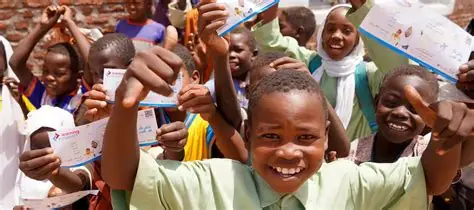
Philip Mamman, who leads the NLP team in Kaduna State at the Ministry of Education, shared this news during the National Children’s Day event at the Air Force Institute of Technology in Kaduna. He explained that the initiative is part of a broader effort to reduce learning poverty in Nigeria.
The Learning Passport was created with help from UNICEF and the Global Partnership for Education, and is managed by the Federal Ministry of Education. It gives students across Nigeria online access to quality education.
Mamman pointed out that the platform focuses on literacy and numeracy, offering resources for students in both rural and urban areas. Learners can use the platform on different devices by downloading the NLP app and signing up with their email address.
The programme started in Abuja on March 24, 2022, and has now grown to include 24 states, with Gombe joining in April.
Mamman called it Africa’s largest online learning platform and said that enrollment and usage keep increasing.
He acknowledged challenges in reaching learners in remote communities without internet access and revealed that offline hubs are being introduced to allow children in such areas to benefit from the platform.
Kaduna State is expected to be among the first to benefit from this innovation.
UNICEF has been important in supporting the programme, especially with teacher training and digital learning. Since the start, around 70,000 teachers in Nigeria have learned how to use the platform. Mamman also said that UNICEF is encouraging blended learning, which mixes regular classroom teaching with technology tools like artificial intelligence and generative AI to help teachers.
Looking ahead, he said the next step is to bring the programme to more states and help more out-of-school children get access. “Our goal is to extend the programme to over 30 states plus the FCT so every child can access education with just a click,” he said.