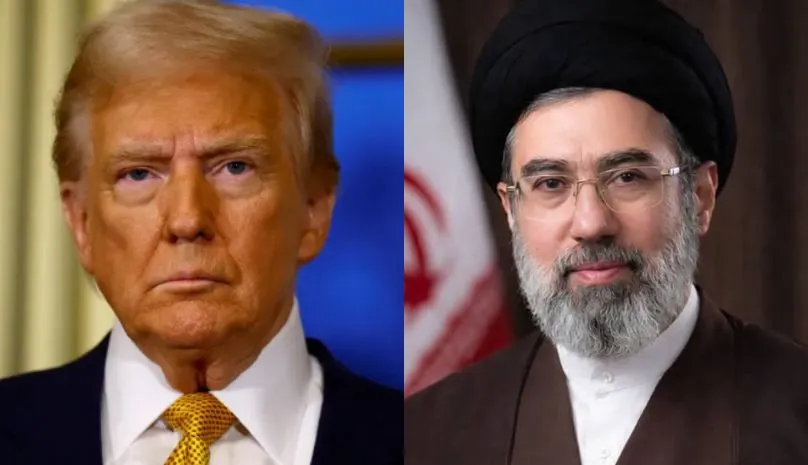
Iran’s recent commitment to forgo nuclear weapons under U.S. pressure marks a significant shift in Middle Eastern diplomacy, with far-reaching consequences for Tehran, Washington, the Gulf region, and beyond. TOYE FALEYE delves into what this agreement means for Iran, the United States, the Gulf Region, and the world at large.
The Deal at a Glance
In June 2026, Iran officially agreed to abandon its pursuit of nuclear weapons in exchange for substantial concessions from the United States.
This agreement, facilitated by Pakistan, includes stringent limits on uranium enrichment, real-time monitoring of nuclear facilities, and the reduction of existing stockpiles.

In return, Washington will release $25 billion in frozen Iranian assets, temporarily lift oil sanctions, and reopen the Strait of Hormuz for global shipping. A 60-day period has been established to finalise the comprehensive framework.
Implications for Iran
For Tehran, this deal brings immediate economic relief. Years of sanctions have severely impacted Iran’s economy, leading to soaring inflation and unemployment.
The release of frozen assets and the chance to resume oil exports offer a much-needed lifeline. Politically, moderates are likely to tout the agreement as a pragmatic win, while hardliners may criticise it as a sign of weakness.
Strategically, Iran gains some breathing room to rebuild its economy and steer clear of direct confrontations with the U.S. and Israel.
However, the commitment to not pursue nuclear weapons is a significant concession that could limit Tehran’s influence in future regional power dynamics.
Implications for the United States
For Washington, this deal represents a notable success in foreign policy. It allows the U.S. to assert its effectiveness in curbing nuclear proliferation while reducing tensions in the Gulf.
Reopening the Strait of Hormuz helps stabilise global oil prices, which is a win for American consumers and allies alike.
Moreover, the agreement enhances U.S. geopolitical standing. By sidelining Russia and China—key players in the 2015 JCPOA—Washington is reinforcing its direct control over the situation.
Implications for the Gulf Region
For Gulf monarchies like Saudi Arabia and the UAE, this deal brings a sigh of relief by lowering immediate security threats.
The Strait of Hormuz, a crucial route for global energy, is back in action, which helps ease worries about potential disruptions.
This is a win for regional trade and commerce. However, there’s still a cloud of scepticism hanging over the situation.
Gulf states are concerned that Iran might keep backing its proxies in Lebanon, Syria, and Yemen, even as it tones down its nuclear ambitions.
While the deal does stabilise the nuclear situation, it doesn’t wipe out Iran’s influence in ongoing regional conflicts.
Implications for the World
On a global scale, this agreement helps stabilise energy markets, which in turn reduces inflationary pressures and calms fears of supply shocks.
Oil prices are expected to level off, providing some much-needed relief to economies that are still grappling with the aftermath of the pandemic.
From a non-proliferation standpoint, the deal strengthens international norms and helps prevent an arms race in the Middle East.
It also sets a positive example for future negotiations with other countries looking to develop nuclear capabilities, like North Korea, by demonstrating that a mix of pressure and incentives can lead to progress.
Compared to the 2015 JCPOA
This new deal is tougher, quicker, and more unilateral compared to the JCPOA. While the 2015 agreement limited enrichment and stockpiles, the 2026 deal demands that Iran completely abandon nuclear weapons.
Enforcement is more stringent, featuring real-time monitoring and automatic sanctions that can snap back into place.
In contrast to the multilateral approach of the JCPOA, this new deal is primarily bilateral, with Pakistan stepping in as a mediator.
This shift reflects Washington’s aim to minimise outside influence and take direct control over compliance. Economically, the relief is immediate, highlighting Iran’s more severe crisis compared to 2015.
Risks and Challenges
Even with a sense of hope in the air, there’s still a cloud of mistrust hanging over the situation. Hardliners in Tehran might push back against compliance, while critics back in the U.S. could exploit the deal for their own political agendas.
Meanwhile, Iran’s regional proxies are still up to their destabilising antics, leaving us wondering if a commitment to nuclear restraint will actually lead to a more peaceful environment.
The real test will come during implementation. If either side feels that the other is stepping out of line, we could see sanctions snap back into place, reigniting old tensions.
A Turning Point in Global Security
Iran’s choice to yield to U.S. pressure and abandon its nuclear ambitions marks a significant turning point.
For Tehran, it’s a matter of survival; for Washington, it’s a diplomatic win; for the Gulf states, it offers a break from the threat of nuclear escalation; and for the world, it serves as a stabilising influence in both energy and security.
The success of this deal hinges on trust, effective enforcement, and both sides’ commitment to choosing peace over conflict.
If it stands the test of time, this agreement could transform the Middle East and strengthen the global non-proliferation framework for many years ahead.