CNN
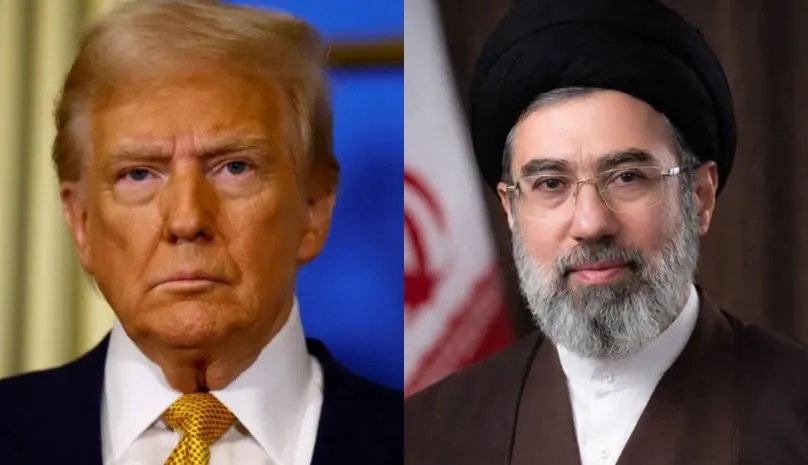
The big news out of the Middle East is that we have the text of the Memorandum of Understanding, MOU, between Iran and the US. I went through it line-by-line with CNN’s Abbas Al Lawati. See an interactive version of that here, or read it below.
The MOU between the US and Iran aims to expand on the ceasefire and get traffic flowing through the Strait of Hormuz.
But at less than 800 words in English, the 14-point outline leaves a lot of details for later, including the touchy subject of Iran’s nuclear program. But it does promise Iran a lot of money — by lifting sanctions to Iran can sell its oil to the world, but also potentially giving Iran access to billions in frozen assets and $300 billion in financing.

The Trump administration is a great fan of multipoint agreements. The agreement that sought to end hostilities in the Gaza strip was a 20-point plan, and the administration’s unrealized plan to end Russia’s war on Ukraine was a 28-point plan.
It’s worth going line by line through the draft agreement, which was read out by a senior Trump administration official in a call with reporters.
Official text, with annotations:
The United States of America and the Islamic Republic of Iran have jointly agreed in good faith on [ __ date] on the following:
1 — The United States of America and the Islamic Republic of Iran and their allies in the current war are signing this MOU to declare the immediate and permanent termination of military operations on all fronts, including in Lebanon, and undertake from now on not to initiate any war or any military operation against each other, and to refrain from the threat or use of force against each other, and ensuring the territorial integrity and sovereignty of Lebanon. The final deal will confirm the permanent termination of the war on all fronts, including in Lebanon and other provisions of this paragraph.
While this first point mentions “their allies,” it does not explicitly mention Israel or Hezbollah. That is important since even though the US government launched the war on Iran in tandem with Israel, Israel’s military action in Lebanon against Hezbollah has complicated efforts to reach this peace deal, so the Jewish state’s cooperation — or desire to be a spoiler — will be a key factor.
Vice President JD Vance told CNN’s Jake Tapper that this paragraph also means, “the Iranians have to stop funding violent terrorist organizations, they have to stop funding regional instability.”
2 — The United States of America and the Islamic Republic of Iran undertake to respect each other’s sovereignty and territorial integrity and to refrain from interfering in each other’s internal affairs.
This is a symbolically important point. It suggests the US is agreeing not to foment opposition to the Iranian regime or push for regime change. In launching the war Trump had told Iranians that their moment of freedom from the regime was at hand. That no longer appears to be the thinking of the US government.
3 — The United States of America and the Islamic Republic of Iran commit to negotiating and achieving the final deal in maximum 60 days, extendable with mutual consent.
This MOU is an agreement to reach a final agreement. If the agreement is signed on Friday, the 60-day clock would end on August 18, but of course could be extended.
There are some key dates coming up in the Iranian calendar that might impact pace of cadence of talks, including the Islamic religious holiday Ashura on June 25 and the multiday burial of Supreme Leader Ayatollah Ali Khamenei, who was killed in some of the first strikes of the war. That process will last in Iran from July 4 until July 9.
4 — Immediately upon the signing of this MOU, the United States of America will begin the removal of its naval blockade and any disturbances or impediments against the Islamic Republic of Iran, and will fully end the naval blockade within 30 days. During this period, the traffic of vessels will be in proportion to the numbers of pre-war traffic being restored by the Islamic Republic of Iran. The United States of America further undertakes to remove its forces from the proximity of the Islamic Republic of Iran within 30 days after the final deal.
Left unaddressed here is whether Iran will ultimately retain control over the Strait of Hormuz. The US has until Jully 19 to fully lift its naval blockade. This point also suggests the US will withdraw forces from the “surrounding areas.” It seems unlikely this refers to the US forces stationed in multiple countries across the Persian Gulf, but might allude to the roughly 50,000 additional US servicemembers deployed to the region during the war.
5 — Upon the signing of this MOU, the Islamic Republic of Iran will make arrangements using its best efforts for the safe passage of commercial vessels with no charge, for 60 days only, from the Persian Gulf to the Sea of Oman and vice versa. The traffic of commercial vessels will immediately start, and considering the need for removing the technical and military obstacles and demining by the Islamic Republic of Iran will be instated within 30 days. The Islamic Republic of Iran will conduct dialog with the Sultanate of Oman to define the future administration and maritime services in the Strait of Hormuz in discussion with other Persian Gulf littoral states in line with the applicable international law and the sovereign rights of coastal states of the Strait of Hormuz.
Iran is agreeing to allow tanker traffic to pass unobstructed through the Strait of Hormuz with no fee or toll, but only for the 60 days covered by the MOU. In the future, Iran and its Persian Gulf neighbors, including Oman, will determine a new system that the MOU says will comply with international law. This suggests there could be new fees for Strait of Hormuz traffic in the future, potentially a major concession by the US and a permanent new revenue stream for Iran, if it happens.
6 — The United States of America undertakes with regional partners to develop a definitive, mutually agreed plan with at least USD 300 billion for the reconstruction and economic development of the Islamic Republic of Iran. The mechanism for the implementation of this plan will be finalized as part of a final deal within 60 days. All required licenses, waivers, and permissions needed for the relevant financial transactions will be granted by the United States of America.
So by the end of the summer Iran could have access to $300 billion for economic development. This is a huge sum of money that far exceeds the value of Iran’s frozen assets or what it would make through years of charging fees for ships to pass through the Strait of Hormuz. It is also a large figure considering Trump frequently complains that Iran was given access to a much smaller amount of its own money after signing the Joint Comprehensive Plan of Action. It’s notable that this financed $300 billion — investment money that Trump has said would come from Gulf states — appears to be distinct from money Iran could raise through the sale of its oil, but no details have been provided.
7 — The United States of America undertakes to terminate all types of sanctions against the Islamic Republic of Iran, including the United Nations Security Council resolutions, IAEA Board of Governors resolutions, all unilateral US sanctions, primary and secondary in an agreed upon schedule as part of the final deal. The Islamic Republic of Iran and the United States of America acknowledge the critical importance of the sanctions termination issue above mentioned, and expressed their intentions to immediately address these issues in the negotiations in order to achieve mutual agreement on them.
The US has imposed sanctions of various types on Iran since the 1979 Revolution. This pledge to both end US sanctions and international sanctions would enable the Islamic Republic to tap its oil wealth in new ways.
Removing all sanctions would go much further than the JCPOA, the Obama-era deal Trump tore up during his first term. That agreement only lifted secondary sanctions related to Iran’s nuclear program.
The move would also go well beyond oil. Current sanctions prevent Iran from accessing the international banking sector, for instance, among other things. Many US sanctions are related to Iran’s sponsorship of groups the US has designated as terrorist organizations, like Hezbollah. This could be a very broad concession.
8 — The Islamic Republic of Iran reaffirms that it shall not procure or develop nuclear weapons. The United States of America and the Islamic Republic of Iran have agreed to resolve the disposition of stockpile enriched material pursuant to a mechanism that will be mutually agreed upon in accordance with the schedule mentioned in paragraph seven with the minimum methodology to be down blended on site under the supervision of the IAEA. The two parties also agreed to discuss the issue of enrichment and other mutually agreed matters related to the Islamic Republic of Iran’s nuclear needs, based on a satisfactory framework being agreed upon in the final deal. The final deal will confirm the provisions of this paragraph. The United States of America and the Islamic Republic of Iran acknowledge the critical importance of the nuclear issues above mentioned. They express their intention to immediately address these issues in the negotiations in order to achieve mutual agreement on them.
Trump will argue this pledge is a win since Iran is agreeing it will never have a nuclear weapon. Iran will argue that it already made this pledge when it signed the Nuclear Non-Proliferation Treaty. But details of the nuclear issue — and Iran’s ability to pursue nuclear power — remain unresolved in this agreement. It’s notable that Iran does not pledge to abandon the goal of nuclear power in this MOU. And the language is not as strong as what was in the JCPOA, where Iran reaffirmed “that under no circumstances will Iran ever seek, develop or acquire nuclear weapons.”
9 — Pending the final deal, the United States of America and the Islamic Republic of Iran agree to maintain the status quo. The Islamic Republic of Iran will maintain the current status quo of its nuclear program, and the United States of America will not impose any new sanctions and will not deploy additional forces in the region.
The status quo is that Iran’s uranium stockpiles are buried underground and the US is not actively trying to take them. As for new sanctions, the US has imposed multiple new sanctions since the outset of the war. These have targeted digital assets and shipping networks, for instance.
10 — The United States of America undertakes that immediately upon the signing of this MOU and until the termination of sanctions, US Department of Treasury will issue waivers for the export of Iranian crude oil, petroleum products, and derivatives, and all associated services, including banking transactions, insurances, transportation, etc.
The US will let Iran sell its oil, despite sanctions, while a final agreement is being negotiated. This is a lucrative concession that will bring immediate relief to the Iranian economy. It will also help the world economy by restoring the oil supply that has been choked off by the war.
11 — The United States of America undertakes to make fully available for use the frozen or restricted funds and assets of the Islamic Republic of Iran upon the implementation of this MOU. The United States of America and the Islamic Republic of Iran will mutually agree on the procedures related to the release of these funds during negotiations. Such funds, whether retained in the original account or transferred, shall be made fully usable for payment to any ultimate beneficiary designated by the Central Bank of the Islamic Republic of Iran. The United States of America undertakes to issue all necessary licenses and authorizations accordingly.
Unfreezing these assets is not an insubstantial gesture. Iran had been insisting on the release of $24 billion, as Mohsen Rezaei, military adviser to Supreme Leader Ayatollah Mojtaba Khamenei, told CNN before the agreement was finalized.
But the figure could end up being much larger. While the precise value of Iran’s frozen funds is not publicly available, Iranian media outlets and analysts estimate it ranges between $124 billion and $167 billion. A large portion of whatever funds are ultimately unfrozen would likely be spent outside of Iran on goods and imports.
12 — The United States of America and the Islamic Republic of Iran agree that an executive mechanism will be established to monitor the successful implementation of this MOU and the future compliance of the final deal.
The two sides will agree on a process to verify the agreement is being adhered to. If they want a model, they could look back to the JCPOA, which Trump tore up in his first term and Iran subsequently also abandoned.
13 — After signing this MOU, and subject to the beginning of the implementation of paragraphs 1, 4, 5, 10, and 11 of this MOU, and the continuing implementation of these measures, the United States of America and the Islamic Republic of Iran will start negotiations regarding the final deal exclusively on the other paragraphs.
To make good on this MOU, the US must drop its naval blockade and allow Iran to access its frozen or restricted funds and assets. Iran must open the Strait of Hormuz. Realizing those commitments is required to achieve a larger agreement.
Vance has been clear that deals will come in phases and rely on performance. “We have the ability to welcome them into the world economy if they perform,” Vance told Tapper. “We also have the ability to say, you know what, you don’t get anything if you don’t meet your end of the obligation.”
14 — The final deal will be endorsed by a binding UNSC resolution.
Interestingly, given that the MOU is only between Iran and the US, the sides agree that a final agreement will need to be blessed by the entire UN Security Council, which includes five permanent members with veto power: the US, the UK, France, China and Russia. This would make reneging on the deal more of a global concern and more difficult for a future US administration or Iranian regime.