Table of Contents
An international probe has pushed lawmakers in Europe and the United States to question the soaring price of a top cancer drug. In Nigeria, where tens of thousands die of cancer every year, no senator or representative has yet raised the issue in the National Assembly. KEHINDE ADEGOKE reports.
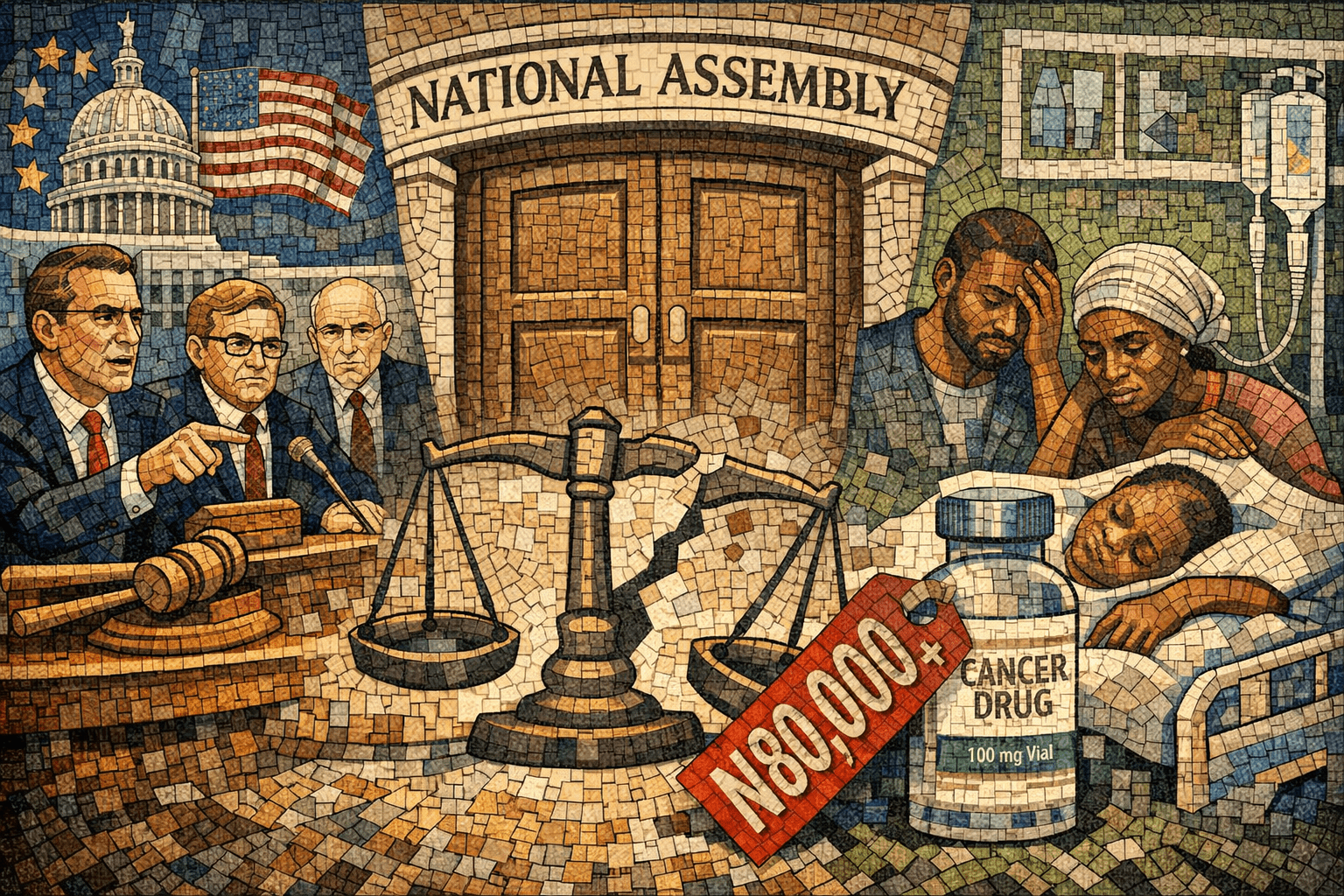
An international investigation by the International Consortium of Investigative Journalists (ICIJ) has peeled back the curtain on Keytruda, Merck’s flagship cancer immunotherapy drug, revealing how its price can soar above $200,000 per patient per year in some markets while its true cost remains hidden behind layers of corporate secrecy and regulatory opacity. In the Netherlands, Belgium, Austria, Finland, and the United States, lawmakers have not stayed silent. They have summoned hearings, demanded investigations, and pressed regulators to justify why a drug that can cost the equivalent of a decade’s salary for an average worker remains in the hands of only a fraction of those who need it.
“In Europe and the U.S., lawmakers are demanding answers on Keytruda pricing. In Nigeria, not one has spoken.”
In Nigeria, by contrast, the picture is starkly different. An estimated 78,000 Nigerians die of cancer every year, yet the country was not among the 37 nations covered in the ICIJ probe, and no Nigerian lawmaker—at either the Senate or the House of Representatives—has raised the issue of Keytruda pricing on the floor of the National Assembly. The silence is not technical; it is political. It is the silence of a legislature that has not yet asked the simple questions: Who decides how much a life‑saving cancer drug should cost in Nigeria? Who benefits when prices are set abroad and merely absorbed at home? And why, in a country where tens of thousands die of cancer annually, has no senator or representative forced the state to confront this global pricing crisis?
The Global Spotlight on Keytruda
Keytruda, known generically as pembrolizumab, is one of the most successful cancer drugs in history. It belongs to a class of medicines called immune checkpoint inhibitors, which work by releasing the brakes on the body’s immune system so it can better recognise and attack cancer cells. Keytruda is used in several solid‑tumour cancers, including lung, melanoma, head and neck, bladder, and some forms of gastrointestinal and cervical cancers.
Because of its broad indications and clinical impact, Keytruda has become Merck’s best‑selling drug, generating revenues that outstrip the annual earnings of large multinational corporations. In 2024, the drug alone pulled in tens of billions of dollars globally, making it one of the most profitable pharmaceutical products of the 21st century. Yet, as the ICIJ investigation shows, the price patients pay is not tied to a transparent calculation of research, development, or production costs; instead, it is often the outcome of intense lobbying, market segmentation, and regulatory‑system manipulation.

In the United States, where Keytruda pricing has been most aggressively scrutinised, the drug can cost well over $200,000 per patient per year, even though analyses suggest the actual manufacturing cost is orders of magnitude lower. In Europe, prices vary by country, but even in public‑health systems, the drug is expensive enough to force ministries to cap or ration its use. Prices are masked by confidential rebates, “secret” contracts between insurers and manufacturers, and opaque tender processes that keep the public in the dark about how much is really paid.
Lawmakers Step Up—Outside Nigeria
In response, politicians in several countries have begun treating Keytruda not just as a medical product but also as a political and fiscal issue. In the Netherlands, Belgium, Austria, Finland, and the United States, parliaments and congressional committees have launched formal probes into how Keytruda is priced, how discounts are negotiated, and whether taxpayers are being overcharged.
Lawmakers in the United States have held hearings in which regulators and drug‑company executives have been asked to justify why a drug that can cost the equivalent of a mid‑sized house in parts of the U.S. is priced so high. In Belgium, politicians have demanded transparency into secret rebates and pushed for legislation requiring pharmaceutical companies to disclose the true cost of their cancer drugs. In the Netherlands, parliamentarians have linked high drug prices to hospital‑budget shortfalls and patient denial of care, arguing that unchecked pricing threatens the sustainability of the entire health‑care system.
In Austria and Finland, similar questions have been raised: Why should the state pay premium prices for a drug that may extend survival by only a few months in some patients? Why should public‑health budgets be forced to make trade‑offs between funding Keytruda and other life‑saving interventions? These debates have sharpened the global scrutiny of how pharmaceutical companies protect their profit margins while patients are pushed into financial ruin or denied treatment altogether.
The ICIJ investigation has amplified this pressure, documenting how Merck uses every lever—lobbying, regulatory‑system loopholes, and market exclusivity—to keep its pricing high. The story is clear: in rich democracies, legislators are beginning to treat high‑cost cancer drugs as a matter of public accountability, not just health policy.
The Nigerian Silence
Against this backdrop, Nigeria’s silence is striking. The ICIJ probe did not include Nigeria among its 37‑country sample, meaning Nigerian lawmakers have not even had the opportunity to respond to any Nigeria‑specific findings. Yet, even in the absence of a dedicated Nigerian chapter, the broader narrative of exorbitant drug pricing is directly relevant to a country where cancer already exacts a heavy toll.
“Nigeria records 78,000 cancer deaths a year—yet no senator has asked who decides how much a life‑saving cancer drug should cost.”
According to the World Health Organisation and Nigerian health‑system analyses, Nigeria records an estimated 78,000 deaths from cancer every year, with the true number likely higher due to weak cancer‑registration systems. Breast cancer, cervical cancer, prostate cancer, and liver cancer are among the leading causes of cancer‑related deaths, and many of these can be treated, at least in part, with modern therapies like Keytruda or similar immunotherapies.
Yet, in Nigeria, access to such drugs is tightly constrained. Keytruda, where available, is largely priced beyond the reach of all but a narrow segment of the population that can afford private‑hospital bills or has access to high‑cost international insurance schemes. Most Nigerian cancer patients still rely on older, cheaper chemotherapy regimens, even when newer immunotherapies offer better outcomes. The gap between what is available abroad and what is available in Nigeria is not only clinical; it is also political.
What is particularly troubling is that, despite this disparity, no Nigerian senator or member of the House of Representatives has raised the Keytruda‑pricing issue on the floor of the National Assembly. There has been no motion demanding a probe into whether Nigeria is paying fair prices for imported cancer drugs, whether donor‑driven schemes are inadvertently subsidising global pharmaceutical profits, or whether the government should negotiate bulk‑purchase agreements or local‑production partnerships. There has been no public clarion call for the National Assembly Committee on Health to invite the Ministry of Health, the National Drug Pricing Control Committee, and major private‑hospital chains to testify on how cancer‑drug prices are set in Nigeria.
The closest legislators have come is occasional general complaints about the rising cost of cancer treatment and the lack of access to oncology services. But these statements rarely drill down into the specific pricing of branded drugs like Keytruda, and they do not translate into sustained legislative pressure. In the absence of such pressure, the Nigerian state remains passive in the face of a global pricing architecture that was not designed with African budgets in mind.
Why Lawmakers Are Not Asking
Several factors help explain why Nigerian legislators have not yet seized on the Keytruda story.
First, cancer‑care policy is often treated as a technical, medical issue, not a legislative or fiscal one. Many lawmakers defer to doctors, regulators, and procurement officers, assuming that drug pricing is a matter of contracts and bids rather than public policy. This technocratic mindset allows pharmaceutical companies and suppliers to operate with little political scrutiny, even when prices are clearly out of sync with what the average Nigerian patient can afford.
“In Nigeria, cancer is treated as a medical issue, not a legislative one — and patients pay the price.”
Second, campaign‑finance and lobbying dynamics in Nigeria are opaque. Unlike in the United States, where pharmaceutical companies’ contributions to political campaigns are publicly disclosed, there is little transparency into how drug makers influence Nigerian politics. Without that visibility, it is difficult for lawmakers to feel political pressure to challenge high‑priced cancer drugs, and even more difficult for voters to hold them accountable.
Third, cancer still lacks the same level of public outrage as other health issues like HIV/AIDS or maternal mortality. In Nigeria, HIV campaigners have successfully pushed politicians to demand cheaper antiretroviral drugs and to negotiate with global donors and manufacturers. Similar pressure has not yet coalesced around cancer, even though the numbers are comparable and, in some cases, worse.
Finally, the global‑justice framing of drug pricing—common in Europe and the United States—has yet to take hold in Nigeria. In rich countries, lawmakers frame high‑cost drugs as threats to public‑health budgets and social‑equity goals. In Nigeria, the conversation is still dominated by questions of availability, not affordability. Legislators are more likely to ask whether Keytruda is available at all, not whether the price paid for it is fair or sustainable.
The Cost of Silence
The consequence of this silence is that Nigerian patients are left to bear the burden of global pricing decisions that are made thousands of miles away. In the United States and Europe, Merck negotiates with insurers and governments over rebates, discounts, and capped reimbursement rates. In Nigeria, those same drugs are often sold at or near list prices, with little room for negotiation, because the government lacks the bargaining power—and the political will—to demand better terms.
Private‑sector hospitals in Nigeria may pass on these high prices to patients, while donor‑funded or international‑partnership schemes may absorb the costs, effectively using Nigerian‑sourced or donor funds to subsidise global profit margins. The result is a system in which Nigeria pays for the privilege of being on the global cancer‑treatment map, even as the number of its citizens who actually benefit remains small.
At the same time, Nigeria’s health‑care system wrestles with limited budgets, fragmented cancer‑care infrastructure, and a long‑standing shortage of oncologists and radiotherapy machines. Without a legislative push to prioritise funding, train specialists, and negotiate fair drug prices, the country risks being locked into a cycle where high‑cost drugs are available to a few, while the majority remain dependent on older, less effective treatments or no treatment at all.
What Nigerian Lawmakers Could Do
If the National Assembly were to treat Keytruda and similar high‑cost cancer drugs as a legislative issue, several concrete steps could be taken.
First, lawmakers could demand an audit of how cancer‑drug prices are set in Nigeria, including the role of importers, distributors, and private hospitals. This would require summoning the Ministry of Health, the National Drug Pricing Control Committee, and major private‑hospital chains to explain how much they pay for Keytruda and similar drugs, what mark‑ups are applied, and whether there is any room for negotiation or bulk‑purchase agreements.
Second, legislators could push for transparency in drug‑pricing contracts. Nigeria could adopt measures similar to those being debated in Europe, such as requiring pharmaceutical companies to disclose the real cost of their cancer drugs and the nature of any rebates or discounts. This would make it harder for companies to hide behind “commercial‑in‑confidence” arguments and would give the public a clearer picture of how much is being paid for each treatment.
Third, Nigeria could leverage its regional and international partnerships to negotiate better prices. The African Union and the West Africa Health Organisation already discuss regional approaches to drug procurement; Nigerian lawmakers could press the government to join or lead coalitions that buy cancer drugs in bulk, using the collective bargaining power of multiple countries to drive prices down.
Fourth, the National Assembly could mandate the Ministry of Health to produce a national cancer‑drug‑access plan that specifically addresses how high‑cost immunotherapies like Keytruda will be financed, who will be eligible, and how the system will prevent catastrophic out‑of‑pocket spending. Such a plan would bring the issue from the shadows of hospital procurement offices into the light of public policy debate.
A Call for Accountability
The ICIJ investigation has shown that when lawmakers in rich democracies begin to ask tough questions about Keytruda, the conversation shifts from technical pricing details to moral and fiscal accountability. They ask: Is this drug worth the price? Who pays? And who benefits?
“Nigeria records 78,000 cancer deaths a year—yet no senator has asked who decides how much a life-saving cancer drug should cost.”
Nigerian lawmakers have not yet joined that conversation, even though their constituents pay the same human cost: 78,000 deaths every year, often in silence. Until the National Assembly begins to treat Keytruda and similar high‑cost cancer drugs as a matter of legislative urgency, the script will remain unchanged: thousands of Nigerians will die of cancer, while billions in global drug profits are debated in other capitals—and not in Abuja.
Editor’s Note:
In 2024, President Bola Tinubu issued an executive order aimed at reducing drug costs by cutting tariffs and VAT on pharmaceutical inputs. While this was a broad measure, it did not specifically address cancer immunotherapies such as Keytruda, nor has the National Assembly debated their pricing.
𝗞𝗲𝗵𝗶𝗻𝗱𝗲 𝗔𝗱𝗲𝗴𝗼𝗸𝗲 𝗶𝘀 𝗮𝗻 𝗮𝘄𝗮𝗿𝗱-𝘄𝗶𝗻𝗻𝗶𝗻𝗴 𝗶𝗻𝘃𝗲𝘀𝘁𝗶𝗴𝗮𝘁𝗶𝘃𝗲 𝗷𝗼𝘂𝗿𝗻𝗮𝗹𝗶𝘀𝘁 𝘄𝗶𝘁𝗵 𝗺𝗼𝗿𝗲 𝘁𝗵𝗮𝗻 𝟭𝟱 𝘆𝗲𝗮𝗿𝘀 𝗼𝗳 𝗱𝗶𝘀𝘁𝗶𝗻𝗴𝘂𝗶𝘀𝗵𝗲𝗱 𝗲𝘅𝗽𝗲𝗿𝗶𝗲𝗻𝗰𝗲 𝘂𝗻𝗰𝗼𝘃𝗲𝗿𝗶𝗻𝗴 𝘀𝘁𝗼𝗿𝗶𝗲𝘀 𝘁𝗵𝗮𝘁 𝘀𝗵𝗮𝗽𝗲 𝗽𝘂𝗯𝗹𝗶𝗰 𝗱𝗶𝘀𝗰𝗼𝘂𝗿𝘀𝗲. 𝗪𝗶𝘁𝗵 𝘁𝗵𝗿𝗲𝗲 𝗶𝗻𝗱𝘂𝘀𝘁𝗿𝘆 𝗻𝗼𝗺𝗶𝗻𝗮𝘁𝗶𝗼𝗻𝘀 𝗮𝗰𝗿𝗼𝘀𝘀 𝗱𝗶𝘃𝗲𝗿𝘀𝗲 𝗯𝗲𝗮𝘁𝘀, 𝗵𝗲 𝗵𝗮𝘀 𝗲𝗮𝗿𝗻𝗲𝗱 𝗿𝗲𝗰𝗼𝗴𝗻𝗶𝘁𝗶𝗼𝗻 𝗳𝗼𝗿 𝗳𝗲𝗮𝗿𝗹𝗲𝘀𝘀 𝗿𝗲𝗽𝗼𝗿𝘁𝗶𝗻𝗴, 𝗶𝗻𝗰𝗶𝘀𝗶𝘃𝗲 𝗮𝗻𝗮𝗹𝘆𝘀𝗶𝘀, 𝗮𝗻𝗱 𝗮 𝗰𝗼𝗺𝗺𝗶𝘁𝗺𝗲𝗻𝘁 𝘁𝗼 𝗮𝗰𝗰𝗼𝘂𝗻𝘁𝗮𝗯𝗶𝗹𝗶𝘁𝘆. 𝗔𝘀 𝗠𝗮𝗻𝗮𝗴𝗶𝗻𝗴 𝗘𝗱𝗶𝘁𝗼𝗿 𝗮𝗻𝗱 𝗖𝗘𝗢 𝗼𝗳 𝗧𝗵𝗲𝗗𝗶𝗴𝗴𝗲𝗿𝗡𝗲𝘄𝘀.𝗰𝗼𝗺, 𝗔𝗱𝗲𝗴𝗼𝗸𝗲 𝗹𝗲𝗮𝗱𝘀 𝗮 𝗽𝗶𝗼𝗻𝗲𝗲𝗿𝗶𝗻𝗴 𝗻𝗲𝘄𝘀𝗿𝗼𝗼𝗺 𝗱𝗲𝗱𝗶𝗰𝗮𝘁𝗲𝗱 𝘁𝗼 𝗲𝘅𝗽𝗼𝘀𝗶𝗻𝗴 𝗵𝗶𝗱𝗱𝗲𝗻 𝘁𝗿𝘂𝘁𝗵𝘀, 𝗮𝗺𝗽𝗹𝗶𝗳𝘆𝗶𝗻𝗴 𝗺𝗮𝗿𝗴𝗶𝗻𝗮𝗹𝗶𝘇𝗲𝗱 𝘃𝗼𝗶𝗰𝗲𝘀, 𝗮𝗻𝗱 𝘀𝗲𝘁𝘁𝗶𝗻𝗴 𝗻𝗲𝘄 𝘀𝘁𝗮𝗻𝗱𝗮𝗿𝗱𝘀 𝗶𝗻 𝗶𝗻𝘃𝗲𝘀𝘁𝗶𝗴𝗮𝘁𝗶𝘃𝗲 𝗷𝗼𝘂𝗿𝗻𝗮𝗹𝗶𝘀𝗺.
TheDiggerNews.com | www.thediggernews.com | 08039135472 | Ibadan, Nigeria