A landmark pact between Africans for Africa (AFA) and Steron International Resources Ltd. fuses regulators, financiers, and miners into a continental force to command the energy transition’s mineral core. KEHINDE ADEGOKE reports.
From Kaduna’s “World‑Class” Province to Blockchain Lithium
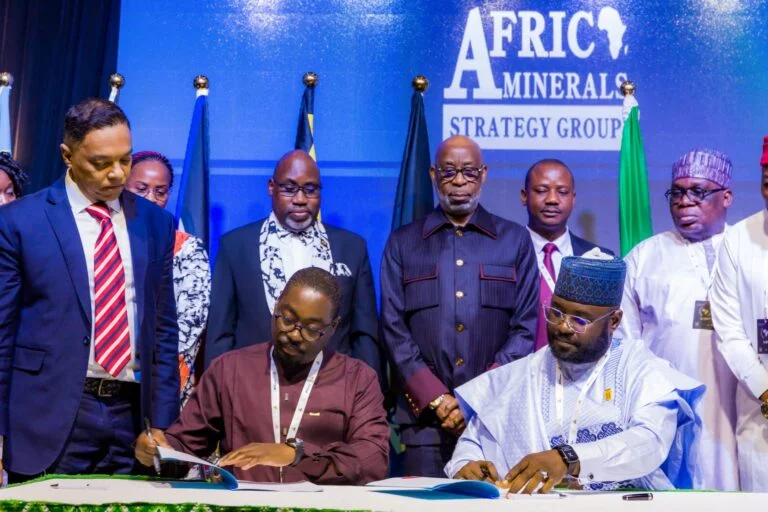
On the main stage of the 2026 African Natural Resources and Energy Investment Summit (AFNIS), a single pen stroke on a Memorandum of Understanding (MoU) between the Africans for Africa (AFA) Initiative and Steron International Resources Ltd. did more than seal a business deal.
It activated a multi-layered institutional machine, designed to capture the “nervous system” of the global energy transition — lithium and rare earth elements — through a model unseen in international extraction.

Investigations by TheDiggerNews.com reveal the creation of a sovereign parallel economy where regulators, financiers, and miners operate as one.
The timing is striking: on June 25, Minister of Solid Minerals Dr Dele Alake announced the discovery of a “world-class polymetallic mineral province” in Kaduna, containing platinum group metals, lithium, gold, nickel, and copper of exceptional grades.
At the same time, Steron unveiled 3.3 million metric tonnes of lithium reserves in Abuja, verified by the Nigerian Geological Survey Agency, to support the launch of the $1 billion AFA Mining Fund.
The Sovereignty Machine
Alake, both regulator and chairman of the Africa Minerals Strategy Group, sits at the nexus of power, enabling diaspora remittances to be redirected into mining equity through Mauritius’ Variable Capital Company framework. At the core lies the Madini Protocol, a blockchain backbone encoding Western compliance standards into every gram of lithium, ensuring access to premium markets.
The MoU’s 51% Total African Benefit mandate forces domestic processing, already lifting Nigeria’s mining revenues from ₦6 billion to over ₦70 billion in 2025.
Together, these moves signal the end of Africa’s “pit‑to‑port” era and the birth of a New Resource Order — one where African capital, not just African soil, dictates the terms of the global green revolution.
FATF 2026: The Hidden Compliance Battlefield
While headlines celebrated Nigeria’s exit from the Financial Action Task Force (FATF) grey list in October 2025, exclusive findings by TheDiggerNews.com reveal that the June 2026 FATF amendments quietly reshape Africa’s mineral sovereignty project.
1. Recommendation 8 – Non‑Profit Organisations
FATF now demands focused, risk‑based oversight of NGOs. In mining zones, community trusts and environmental NGOs are suddenly compliance flashpoints. If left unsupervised, they could be hijacked to launder mineral wealth — undermining the very sovereignty AFA seeks to protect.
2. Recommendation 1 – Risk‑Based Approach
Extractives are automatically classified as high‑risk sectors. Every lithium contract, diaspora remittance, and beneficial ownership structure must now undergo enhanced due diligence. This forces Nigerian banks and regulators to confront politically exposed persons embedded in mining deals.
3. Recommendation 10 – Customer Due Diligence
Expanded obligations for politically exposed persons and complex corporate structures.
Mining elites cannot hide behind shell companies. FATF’s new rules demand transparency, directly challenging opaque deals‑making in Nigeria’s mineral sector.
4. Recommendation 15 – Virtual Assets
Virtual asset service providers must mitigate proliferation financing risks. Nigeria’s fintech boom — crypto exchanges, blockchain remittance platforms — is now bound to FATF’s proliferation standards. This collides with the Madini Protocol, which encodes blockchain compliance into mineral flows, making Africa’s lithium sovereignty inseparable from global AML/CFT rules.
The Unreported Gaps
Nigeria remains only partially compliant on three FATF recommendations:
R.8 (NPOs) — NGOs in mining zones.
R.22 & R.23 (DNFBPs) — lawyers, accountants, brokers, and real estate agents who structure mining deals.
These are the choke points where sovereignty can be lost or secured. They have not been reported. Yet they are the very spaces where Africa’s Lithium ‘COUP’ will be tested.
The Dig
Africa’s bold bid to rewrite the global resource order is not just about geology and capital. It is about compliance, transparency, and the ability to fuse sovereignty with global standards. The FATF’s June 2026 amendments are the hidden battlefield where Africa’s mineral renaissance will either consolidate or collapse.
The Lithium ‘COUP’ is therefore both a resource revolution and a compliance coup: Africa seizing control of its mineral destiny while navigating the world’s toughest financial standards.
𝐊𝐞𝐡𝐢𝐧𝐝𝐞 𝐀𝐝𝐞𝐠𝐨𝐤𝐞 𝐢𝐬 𝐚𝐧 𝐚𝐰𝐚𝐫𝐝-𝐰𝐢𝐧𝐧𝐢𝐧𝐠 𝐢𝐧𝐯𝐞𝐬𝐭𝐢𝐠𝐚𝐭𝐢𝐯𝐞 𝐣𝐨𝐮𝐫𝐧𝐚𝐥𝐢𝐬𝐭 𝐰𝐢𝐭𝐡 𝐦𝐨𝐫𝐞 𝐭𝐡𝐚𝐧 𝟏𝟓 𝐲𝐞𝐚𝐫𝐬 𝐨𝐟 𝐝𝐢𝐬𝐭𝐢𝐧𝐠𝐮𝐢𝐬𝐡𝐞𝐝 𝐞𝐱𝐩𝐞𝐫𝐢𝐞𝐧𝐜𝐞 𝐞𝐱𝐩𝐨𝐬𝐢𝐧𝐠 𝐬𝐭𝐨𝐫𝐢𝐞𝐬 𝐭𝐡𝐚𝐭 𝐦𝐨𝐮𝐥𝐝 𝐩𝐮𝐛𝐥𝐢𝐜 𝐝𝐢𝐬𝐜𝐨𝐮𝐫𝐬𝐞. 𝐖𝐢𝐭𝐡 𝐭𝐡𝐫𝐞𝐞 𝐢𝐧𝐝𝐮𝐬𝐭𝐫𝐲 𝐧𝐨𝐦𝐢𝐧𝐚𝐭𝐢𝐨𝐧𝐬 𝐭𝐡𝐫𝐨𝐮𝐠𝐡𝐨𝐮𝐭 𝐝𝐢𝐯𝐞𝐫𝐬𝐞 𝐛𝐞𝐚𝐭𝐬, 𝐡𝐞 𝐡𝐚𝐬 𝐞𝐚𝐫𝐧𝐞𝐝 𝐫𝐞𝐜𝐨𝐠𝐧𝐢𝐭𝐢𝐨𝐧 𝐟𝐨𝐫 𝐟𝐞𝐚𝐫𝐥𝐞𝐬𝐬 𝐫𝐞𝐩𝐨𝐫𝐭𝐢𝐧𝐠, 𝐢𝐧𝐜𝐢𝐬𝐢𝐯𝐞 𝐚𝐧𝐚𝐥𝐲𝐬𝐢𝐬, 𝐚𝐧𝐝 𝐚 𝐜𝐨𝐦𝐦𝐢𝐭𝐦𝐞𝐧𝐭 𝐭𝐨 𝐚𝐜𝐜𝐨𝐮𝐧𝐭𝐚𝐛𝐢𝐥𝐢𝐭𝐲. 𝐀𝐬 𝐌𝐚𝐧𝐚𝐠𝐢𝐧𝐠 𝐄𝐝𝐢𝐭𝐨𝐫 𝐚𝐧𝐝 𝐂𝐄𝐎 𝐨𝐟 𝐓𝐡𝐞𝐃𝐢𝐠𝐠𝐞𝐫𝐍𝐞𝐰𝐬.𝐜𝐨𝐦, 𝐀𝐝𝐞𝐠𝐨𝐤𝐞 𝐥𝐞𝐚𝐝𝐬 𝐚 𝐩𝐢𝐨𝐧𝐞𝐞𝐫𝐢𝐧𝐠 𝐧𝐞𝐰𝐬𝐫𝐨𝐨𝐦 𝐝𝐞𝐝𝐢𝐜𝐚𝐭𝐞𝐝 𝐭𝐨 𝐞𝐱𝐩𝐨𝐬𝐢𝐧𝐠 𝐮𝐧𝐬𝐞𝐞𝐧 𝐭𝐫𝐮𝐭𝐡𝐬, 𝐚𝐦𝐩𝐥𝐢𝐟𝐲𝐢𝐧𝐠 𝐦𝐚𝐫𝐠𝐢𝐧𝐚𝐥𝐢𝐬𝐞𝐝 𝐯𝐨𝐢𝐜𝐞𝐬, 𝐚𝐧𝐝 𝐞𝐬𝐭𝐚𝐛𝐥𝐢𝐬𝐡𝐢𝐧𝐠 𝐧𝐞𝐰 𝐬𝐭𝐚𝐧𝐝𝐚𝐫𝐝𝐬 𝐢𝐧 𝐢𝐧𝐯𝐞𝐬𝐭𝐢𝐠𝐚𝐭𝐢𝐯𝐞 𝐣𝐨𝐮𝐫𝐧𝐚𝐥𝐢𝐬𝐦.
𝐓𝐡𝐞𝐃𝐢𝐠𝐠𝐞𝐫𝐍𝐞𝐰𝐬.𝐜𝐨𝐦 | 𝐰𝐰𝐰.𝐭𝐡𝐞𝐝𝐢𝐠𝐠𝐞𝐫𝐧𝐞𝐰𝐬.𝐜𝐨𝐦 | 𝟎𝟖𝟎𝟑𝟗𝟏𝟑𝟓𝟒𝟕𝟐 | 𝐈𝐛𝐚𝐝𝐚𝐧, 𝐍𝐢𝐠𝐞𝐫𝐢𝐚