

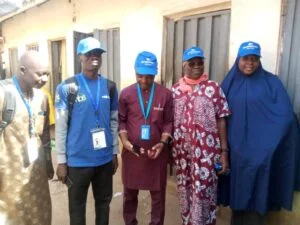
Kaduna: The Multiple Indicator Cluster Survey (MICS) on Monday conducted fieldwork in the Rigasa and Tudun Wada communities in Igabi and Kaduna South Local Government Areas of Kaduna State, as part of efforts to generate reliable data to enhance citizens’ well-being.
The national exercise is being implemented by the National Bureau of Statistics (NBS) in collaboration with UNICEF and other development partners to equip the government with accurate, evidence-based data for targeted interventions, particularly in health, education, and household welfare.
UNICEF Kaduna commended the conduct of the exercise in the state, describing the level of cooperation from residents as encouraging and reflective of the state’s commitment to improving citizens’ well-being.
“What we have seen so far is very good. I am impressed, and I believe that at the end of the day, we will have, if not 100 per cent, something close to full cooperation,” he said.

Habu added that the data generated would enable the government to better understand community needs and allocate limited resources effectively.
“The data will guide the government to direct resources to where the real issues are. Given that resources are limited, it is important that whatever is available goes to those who truly need it,” he noted.
Also speaking, the NBS State Officer, Mr Johnathan Bako, said the indicators generated by the survey would support the government and donor agencies in designing effective interventions, especially those addressing maternal and child health.
Bako, represented by Mr Raymond Yohana, explained that a robust mobilisation strategy was deployed from the local government to the community level, leading to encouraging responses despite occasional resistance.
Bako further emphasised the financial magnitude of the survey, stressing that without donor support, the cost would run into billions of Naira due to personnel requirements, extensive training, logistics, and field deployment.
“It is a huge financial commitment, and we appreciate UNICEF and all donor agencies for making this survey a reality,” he said.
According to him, the Kaduna State component targets 20 respondents per enumeration area across 50 areas, for a total of about 1,000 respondents, and the fieldwork is expected to continue until March.
Some residents interviewed, including Ali Hudu and Aisha Aliyu of Danmadami in Rigasa, expressed appreciation for the exercise, saying the survey teams’ visit showed that the government was becoming more concerned about improving people’s living conditions.
They called on their fellow residents to cooperate and provide accurate information, stressing that the data would help the government plan better and deliver more effective interventions.
MICS is conducted every four years to produce a broad set of indicators covering household living conditions, maternal health, child survival, education, immunisation, and illnesses affecting children under five.