

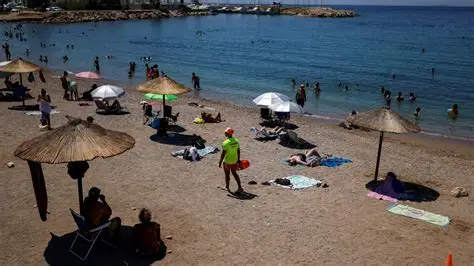
Emergency rooms flood, cardiac arrests surge, London records its busiest day ever
Scientists say human-driven warming made this catastrophe “virtually impossible” to avoid
Highways rupture, rail travel disrupted, outdoor events cancelled
In Spain, 212 people died in just four days, while France mourns 40 drownings and the heartbreaking loss of a three-year-old boy left in a car.

Italy reported five deaths, including farm workers who collapsed in the fields.
Hospitals are at the breaking point. Paris police chief Patrice Faure admitted, “We are reaching a saturation point in hospital facilities.”
London Ambulance Service said Wednesday saw the highest number of life-threatening calls ever recorded.
The heat has not spared Europe’s infrastructure. In Germany, the A2 motorway buckled, damaging dozens of vehicles.
Rail operators across France and Britain urged people to stay home, while outdoor events were cancelled as temperatures soared past 40°C.
Scientists are unequivocal: this disaster bears the fingerprints of climate change.
The World Weather Attribution group confirmed the heatwave is the most severe ever recorded in the region, made 100 times more likely by human-driven warming.
Beyond the immediate tragedy, the economic scars are deepening. A study found heatwaves and droughts have already reduced household incomes across Europe by nearly 3%, pushing 5.6 million more Europeans toward poverty.
“This is the new normal,” warned climate experts. Sleepless nights, sweltering days, and overwhelmed hospitals are no longer rare shocks — they are Europe’s future.