


As violence and tragedy persist in Nigeria, politicians often respond with gestures that appear helpful but lack real substance. Communities have begun to turn down token gifts like rice and cash, raising an urgent question: Can symbolic acts ever substitute for genuine accountability and lasting security? TOYE FALEYE reports.
A Community’s Defiant Stand
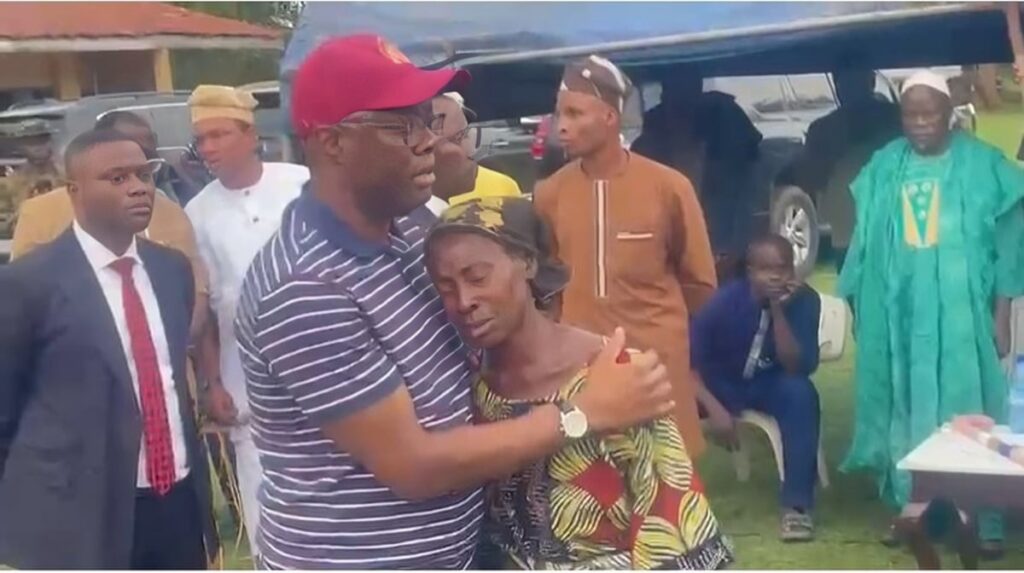
In Oyo State, families affected by a recent terror attack turned down the rice and cash sent by Governor Seyi Makinde.
Their refusal shows they believe the government is more interested in making a show than in solving real problems like insecurity and injustice.

For families who are grieving, the gesture was not enough. It did not address their concerns about safety or justice.
One survivor, a mother who lost her teenage son, told local reporters: “Rice cannot help after loss. We seek protection and justice.” Her words show the frustration of communities who want real action.
The Politics of Performance
In Nigeria, food and cash are now the usual ways politicians show empathy. Governors often show up with trucks of rice and envelopes of money, making sure these moments are photographed and shared to prove they are responding.
But these gestures often make people feel that leaders care more about appearances than real change.
Relief looks like a performance, while harder tasks like improving security and rebuilding communities are ignored.
Governor Makinde himself defended his gesture, saying, “We cannot bring back the lives lost, but we must show compassion. These items are a way to say the government stands with the people.”
Similarly, Mallam Nasir El-Rufai once said after a bandit attack when he was Kaduna State Governor: “We provide immediate relief because families need something tangible in the short term. Security reforms take time, but compassion must be instant.”
These statements show that these gestures are meant to be seen right away and send a message, even if they do not solve deeper problems.
A Pattern Across States
The rejection in Oyo is not unique. In Benue, survivors of herdsmen attacks were given food and small payments, but many criticized these as empty gestures and called for real security and help to rebuild their villages.
In Kaduna State, victims who received cash and grains after bandit attacks said they were frustrated because this aid did not help them find housing or rebuild their lives.
Across several states, people often turn down food, cash, and supplies when they feel these are just stand-ins for real accountability and security. Survivors keep asking for justice and long-term help.
To understand why people reject token relief, it helps to look at how serious Nigeria’s insecurity is.
According to UNHCR, Amnesty International, and Nigeria’s National Emergency Management Agency (NEMA), Boko Haram and ISWAP have killed tens of thousands of civilians in the North East since 2009, kidnapped over 2,000 children, and forced millions from their homes.
In 2025 alone, moIn just the first half of 2025, more than 2,266 civilians were killed in bandit and insurgent attacks.
This number is already higher than the total number of deaths recorded in 2024. The abduction of 402 schoolchildren across four states in 2025 illustrated the vulnerability of schools as soft targets, surpassing even the infamous Chibok kidnapping of 2014.
The economic impact is just as severe. Armed groups often burn homes, loot shops, and take over farmland, forcing farmers to leave and stopping food production.
In Kwara State, an attack in February 2026 killed over 160 villagers, kidnapped dozens, and destroyed homes and shops, leaving survivors with nothing.
These attacks have made food insecurity worse. People who have been forced to leave their homes cannot farm or trade, which leads to more hunger and malnutrition.
Displacement is now a crisis.
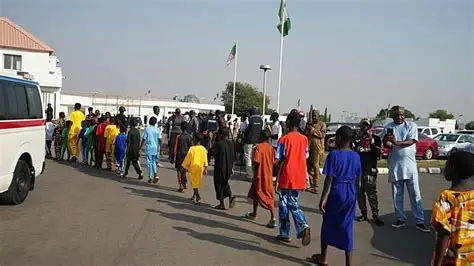
By late 2025, more than 3.6 million people in Nigeria had been forced from their homes, including 2.2 million in the North East, 650,300 in the North West, and 601,700 in the North Central region, while refugees spilt into neighbouring Chad, Cameroon, and Niger.
The displacement has fractured communities, disrupted education, and left survivors vulnerable to further exploitation.
Voices from the Aftermath
In Kaduna, a farmer who lost his wife and two children in a bandit raid lamented: “They gave us rice, but who will eat it with me? My family is gone. What I need is safety so that I can farm again.”
In Plateau, a widow whose home was burned said, “Mattresses and cash cannot replace my husband.” These stories show that token relief does not help people deal with deep personal loss.
Where Government Falls Short
When government help is not enough, NGOs and civil society groups step in to fill the gap.
Organisations like the International Rescue Committee (IRC), Médecins Sans Frontières (MSF), and local NGOs such as CLEEN Foundation and Women’s Rights Advancement and Protection Alternative (WRAPA) provide trauma counselling, medical care, and livelihood support.
In Borno State, MSF has run clinics for displaced families, offering healthcare where government facilities collapsed.
The IRC has supported displaced farmers with seeds and tools, helping them restart livelihoods. Local NGOs have organised community dialogues to rebuild trust and cohesion in areas fractured by violence.
These efforts show that NGOs focus on practical, long-term assistance, addressing the needs left unmet by government gestures. Many survivors note that without NGOs, their communities would be left entirely unsupported.
Other Nations Respond
Globally, governments facing terror attacks often respond with structured compensation and long-term rehabilitation instead of token gestures. After the 2015 Paris attacks, France provided survivors and families with financial compensation, psychological counselling, and lifelong support programs.
In the United States, victims of 9/11 received billions in compensation through the Victim Compensation Fund, alongside memorials and extensive counselling services. In Kenya, after the Westgate Mall attack in 2013, survivors were offered counselling and community rebuilding initiatives, although critics noted gaps in compensation.
When compared to the structured, long-term support provided in other countries, Nigeria’s emphasis on rice and cash reveals a preference for appearances over meaningful change.
Families across Nigeria are not asking for charity. They want leaders to take responsibility. They want security forces to stop future attacks, trauma counselling for survivors, rebuilding of homes and schools, and open investigations that bring justice.
Towards Real Relief and Accountability
When people in Oyo, Benue, Kaduna, and Plateau reject rice and cash, it shows they are losing patience with politicians who only care about appearances.
Communities devastated by violence are sending a clear message to their leaders: end the token gestures and take meaningful action that addresses their need for safety, justice, and lasting support.
The toll of terrorism—seen in lives lost, property destroyed, and millions displaced—shows why token relief is no longer enough. Survivors say that rice and cash cannot restore their dignity. While governors speak of compassion, NGOs step in to provide real assistance.
International comparisons demonstrate that Nigeria is behind in giving organised, effective help to victims of terror.
Looking at other countries shows that Nigeria is behind in giving organised, effective help to victims of terror. Unless there is real change, families will likely keep rejecting token relief and push for better support.